 Vipin PG
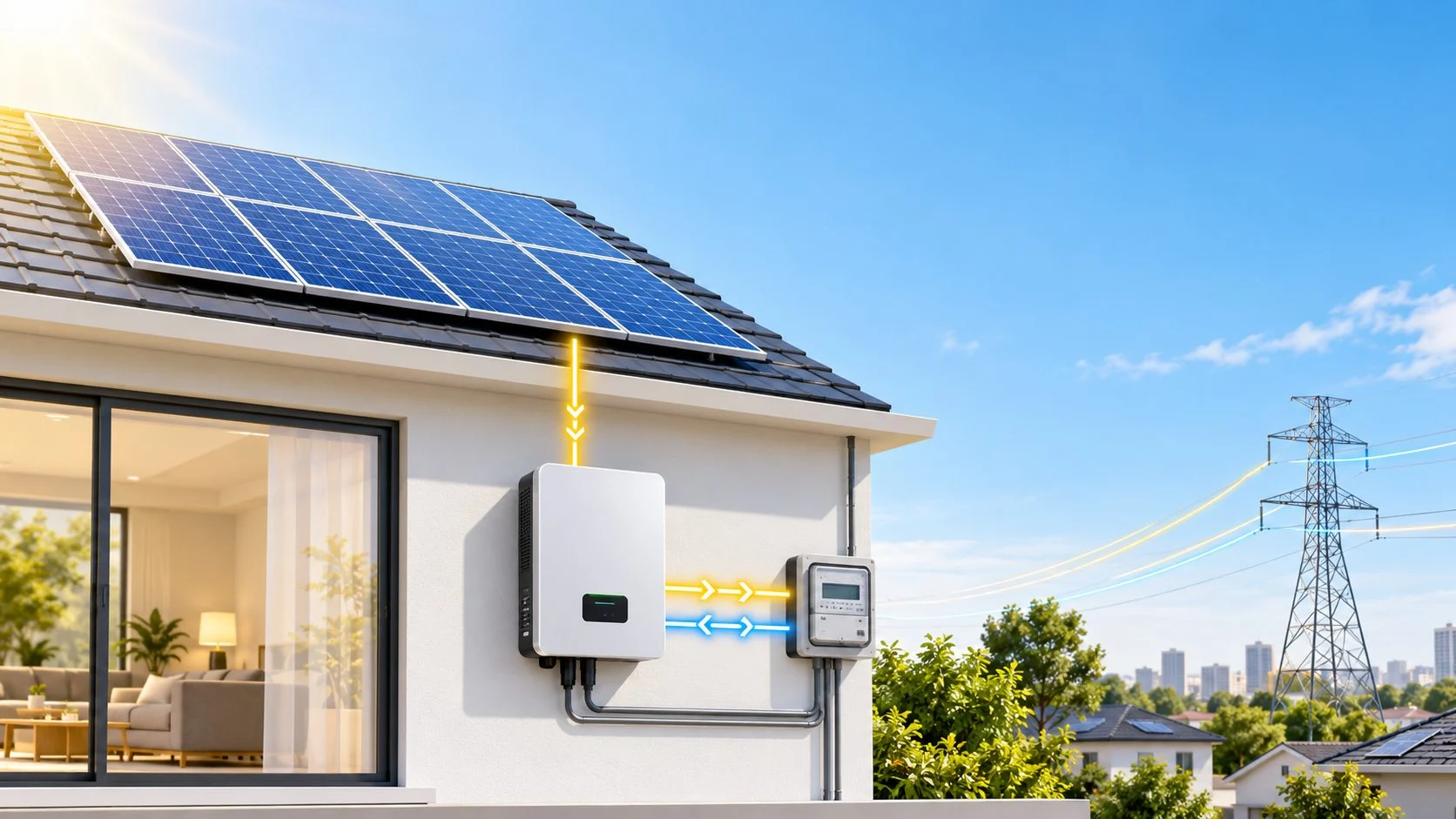
An on-grid solar system helps reduce electricity bills by using solar energy during the day and sending surplus power back to the grid through net metering. How much electricity the system can generate, use, and export depends partly on choosing equipment with the right capacity.
The inverter is an important part of this setup. If it is too small, some of the solar energy produced during peak sunlight hours may go unused. Choosing a much larger inverter, on the other hand, can increase installation costs without providing a matching increase in electricity generation.
When selecting an on-grid inverter, you need to consider the solar panel capacity, household electricity consumption, grid connection, and local net-metering requirements.
Why does inverter capacity matter for net metering?
Solar panels produce direct current (DC) electricity, but homes and the electricity grid use alternating current (AC). The inverter converts the DC power generated by the panels into AC power that can be used in the home or exported to the grid.
For this process to work efficiently, the inverter’s capacity must be reasonably matched to the solar panel array. An unsuitable capacity can affect how much of the generated electricity is available for use or export.
Here is how different sizing choices can affect system performance:
| Inverter sizing | Possible impact |
|---|---|
| Too small | Peak solar generation may exceed the inverter’s output capacity, resulting in power clipping. |
| Correctly matched | The inverter can convert solar power efficiently within its supported operating range. |
| Too large | The additional inverter capacity may remain unused if the solar panel array cannot produce enough electricity to take advantage of it. |
For example, an inverter with insufficient AC output capacity may limit the power delivered by the solar panels during periods of strong sunlight. This is known as inverter clipping. Some clipping can occur in a properly designed system, but excessive clipping can reduce the electricity available for consumption and net-metering export.
How to choose the right inverter capacity
Before comparing inverter specifications, it helps to understand how much electricity your property consumes and how much solar energy you can realistically generate. The inverter should then be selected to suit that planned solar installation.
1. Check your electricity consumption
Start by reviewing your recent electricity bills. Look at the number of units consumed each month, usually measured in kilowatt-hours (kWh). This gives you a starting point for estimating the solar system capacity your home may need.
If your household has relatively low electricity consumption, installing a much larger solar system may offer limited financial benefits unless you expect demand to increase or your electricity provider permits worthwhile surplus exports.
Also consider how your electricity usage changes throughout the year. For example, a home using air conditioners regularly during summer may have noticeably different consumption compared with cooler months.
Once you have a reasonable estimate of your electricity requirements, you can plan the solar array and select an inverter capable of handling its expected output.
2. Determine the required solar panel capacity
The next step is to estimate how much solar panel capacity is needed to meet your electricity requirements.
Solar panels do not produce their rated output continuously throughout the day. Actual generation depends on several conditions, including:
- Solar irradiation available at your location
- Roof direction and panel orientation
- Shading from nearby buildings or trees
- Solar panel efficiency
- Seasonal weather conditions
- Electrical and other system losses
Suppose you are planning a rooftop solar installation with approximately 3 kW of panel capacity. The inverter should be chosen after checking the expected DC output of those panels and the input capacity supported by the inverter manufacturer.
A 3 kW solar array does not automatically mean every 3 kW inverter will be suitable. The inverter’s supported DC input, operating voltage range, and AC output rating must also be considered.
3. Understand the DC-to-AC capacity relationship
Solar panels are rated according to their DC generation capacity, while an on-grid inverter has a rated AC output capacity. These ratings describe different parts of the system.
If the solar array produces more DC power than the inverter can convert into AC output, some available energy may be clipped during periods of high generation.
Conversely, using an inverter with substantially more AC capacity than the solar panels require may leave part of that capacity unused.
The aim is to choose a suitable balance between the solar array’s rated DC capacity and the inverter’s AC output. The manufacturer’s permitted DC input specifications should guide this decision.
This relationship is particularly important in a net-metered system because the inverter’s usable AC output influences how much solar electricity is available to the property and how much surplus can be exported.
4. Verify your grid connection and sanctioned load
Before finalising the inverter capacity, check the rooftop solar installation rules set by your local electricity distribution company (DISCOM).
Depending on the state and electricity provider, net-metering approval may be influenced by factors such as:
- The property’s sanctioned electrical load
- Whether the connection is single-phase or three-phase
- The proposed rooftop solar system capacity
- Applicable transformer capacity limits
- Local net-metering regulations
For residential installations, it is sensible to confirm the permitted solar capacity with the relevant DISCOM before purchasing the equipment.
An inverter that technically supports your solar panels must also meet the electrical and regulatory requirements of the grid connection.
Other factors to check before buying an on-grid inverter
Inverter capacity is only one part of choosing suitable equipment. Several other specifications can affect how effectively your rooftop solar system operates throughout the year.
MPPT capability
Maximum Power Point Tracking (MPPT) allows the inverter to adjust its operation as sunlight conditions change, helping the solar panels deliver suitable power output.
Some inverters include multiple MPPT inputs. These can be useful when solar panels are installed on different roof sections with varying orientations or shading conditions.
For example, panels facing different directions may receive different amounts of sunlight at the same time. Separate MPPT inputs can help manage those differences more effectively.
Inverter conversion efficiency
During the conversion from DC to AC, some energy is lost. An inverter with higher conversion efficiency can turn a greater proportion of the available solar power into usable AC electricity.
When comparing models, review their efficiency specifications along with the supported input and output capacities. A higher capacity rating alone does not tell you how efficiently an inverter will operate with your solar array.
Single-phase or three-phase compatibility
On-grid inverters are available in single-phase and three-phase configurations. The correct choice depends on your property’s electrical connection, the proposed solar system size, and local utility requirements.
Check the existing grid connection and confirm the appropriate inverter configuration with your installer and electricity provider.
Net-metering compatibility
Net metering allows eligible solar consumers to export surplus electricity to the grid and have that electricity accounted for against imported energy according to the applicable billing rules.
Before installation, confirm that the selected inverter and the overall solar system satisfy your DISCOM’s technical requirements.
It is also worth checking the local rules for system capacity, export limits, and net-metering approval, as these conditions can affect the benefits of the installation.
Future electricity requirements
Your electricity consumption may increase over time. Adding air conditioners, installing more appliances, or purchasing an electric vehicle can change how much power your household needs.
If you expect any of these changes, consider them while planning the system capacity. A reasonable allowance for future demand may help avoid the need for major equipment changes later.
However, any additional capacity should remain within the inverter manufacturer’s specifications and the limits permitted by the electricity provider.
Choosing inverter capacity for better net-metering benefits
Getting the most from a net-metered solar installation depends on how well the entire system is designed. A larger inverter will not automatically increase electricity generation or improve the return from net metering.
Start with your electricity consumption, estimate a suitable solar panel capacity, and check how much power the inverter can handle. Your rooftop conditions and local DISCOM regulations should also be considered before making the final choice.
A properly sized inverter can help reduce unnecessary power clipping while avoiding the cost of capacity that may remain unused.
Solar solution providers such as Eastman Auto & Power Limited offer grid-connected solar solutions for different residential requirements. Comparing the available inverter specifications against your planned solar array and electricity needs can help you select a suitable system.