 Vipin PG
A small laser welder pays off when you need clean welds, easy movement, and less grinding after the job. It won't replace heavy structural welding, but it fits well for repair work, thin sheet, custom parts, and mobile maintenance.
For small workshops, the question is not "how powerful is it?" The better question is whether it fits the space, materials, operators, and daily job mix.
Small Laser Welder Comparison Table
A compact shop usually has to balance welding quality, floor space, operator skill, and setup time. That is where a compact laser welder can be useful, especially when visible welds and low distortion matter.
| Welding Option | Mobility | Heat Input | Finishing Work | Space Requirement | Best Use Case |
| Small laser welder | High | Low to medium, concentrated | Less grinding on suitable parts | Compact | Thin sheet, repair, visible welds, mobile work |
| Traditional welding machine | Low to medium | Depends on process | Varies | Larger setup | General welding and heavier shop work |
| Portable TIG | Medium | Controlled but slower | Low when done well | Moderate | Fine manual welding, precision repair |
| Compact MIG | Medium | Medium to high | Spatter cleanup may be needed | Moderate | General fabrication and steel parts |
A portable laser welder is not automatically the better tool for every weld. TIG and MIG still have their place, especially on poor fit-up, thick plate, or structural jobs. Laser welding is more useful when the shop wants cleaner seams, less heat distortion, and faster handling on suitable parts.
Why Small Workshops Need Compact Welding Solutions
Small workshops rarely have unlimited floor space. Orders also change quickly. One day may involve stainless brackets, the next aluminum frames, then a repair job that needs to be done near the customer's equipment. A large fixed setup can slow this kind of work down.
A small laser welding machine helps when a team needs to move between benches, repair areas, and short-run production. For many small shops, efficiency is not just welding speed. It is less setup, less grinding, easier movement, and fewer machines fighting for space.
Why Dynalasers Works Well for Small Laser Welding Jobs
Dynalasers handheld laser systems are designed for practical workshop use. Depending on the series, they can support welding, cleaning, light cutting, repair, and surface preparation in one compact platform.
For users looking for a laser welder for small shop work, Dynalasers offers several options across the M, D, and S Series. The right fit depends on material thickness, portability, daily workload, and whether cleaning or light cutting is also needed.
Compact Body for Limited Workshop Space
In a small shop, machine size matters. A unit that can be moved between work areas is often more useful than a large station that stays in one corner.
Dynalasers systems use compact machine bodies for flexible workshop movement. This helps when operators need to shift between fabrication benches, repair zones, storage areas, and production corners during the same day.
Lightweight Gun for Flexible Operation
A small machine still needs to feel manageable in the operator's hand. Long seams, corners, field repair, and awkward welding positions all become harder when the handheld part is heavy.
Dynalasers selected welding guns weigh less than 0.48 kg. For users who need a lightweight laser welder, this helps reduce fatigue and gives better control during repair work, cabinet welding, and small-batch production.
Welding, Cleaning, and Light Cutting Support
Small workshops often need one machine to cover more than one task. A part may need cleaning before welding. A repair job may need rust removal. A small adjustment may require light cutting before assembly.
The Dynalasers M Series supports welding, cutting, and cleaning. The D Series supports welding, cutting, cleaning, spot welding, and rust removal. This can reduce machine switching and make the workflow easier for smaller teams.
Suitable for Small-Batch and Repair Work
A laser welder for repair work should handle changing parts without needing a fixed automated line. Dynalasers handheld systems suit repair tasks, custom parts, cabinet work, thin-to-medium sheet, and small production runs.
The final weld still depends on process control. Material thickness, joint fit-up, shielding gas, wire feeding, focus position, travel speed, and operator technique all affect the result.
Dynalasers Small and Portable Laser Welder Series
Dynalasers offers three main handheld welding series: M, D, and S. Each series serves a different type of user, from small workshop production to higher-power repair and mobile welding.
A mixed-job shop may prefer the M Series. A team that needs more process coverage may choose the D Series. A mobile repair user or compact workshop may benefit most from the S Series.
M Series: Flexible Option for Small-to-Medium Workshops
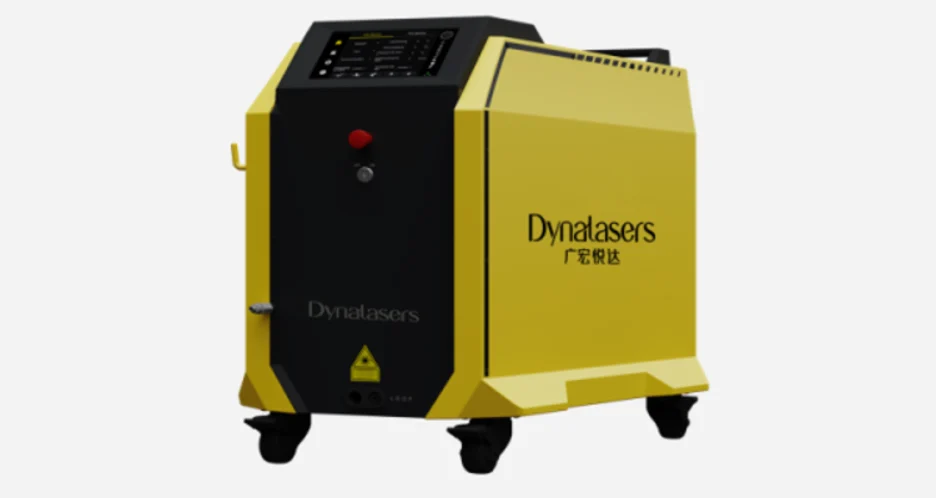
The M Series includes M30, M50, and M70, with 800 W, 1200 W, and 1800 W power options. It supports welding, cutting, and cleaning, so it fits shops that handle different job types during the week.
It is suitable for sheet metal assemblies, precision parts, repair work, medium-thickness components, and small-to-medium production. Under suitable conditions, the M70 can weld up to about 7.0 mm on stainless steel and carbon steel.
D Series: Stronger Choice When More Power Is Needed
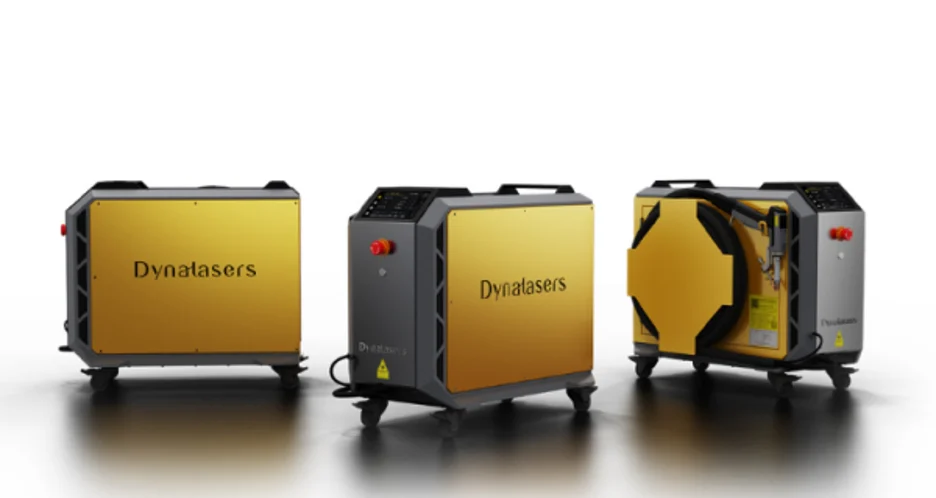
The D Series includes D50 and D70, with 1200 W and 1800 W power options. It is a better fit when the shop needs stronger welding capability and wider process coverage.
This series supports welding, cutting, cleaning, spot welding, and rust removal. It works well for industrial repair, thicker stainless steel, carbon steel structures, aluminum parts, and shops that move between fabrication and maintenance.
S Series: Lightweight Small Laser Welder for Mobility
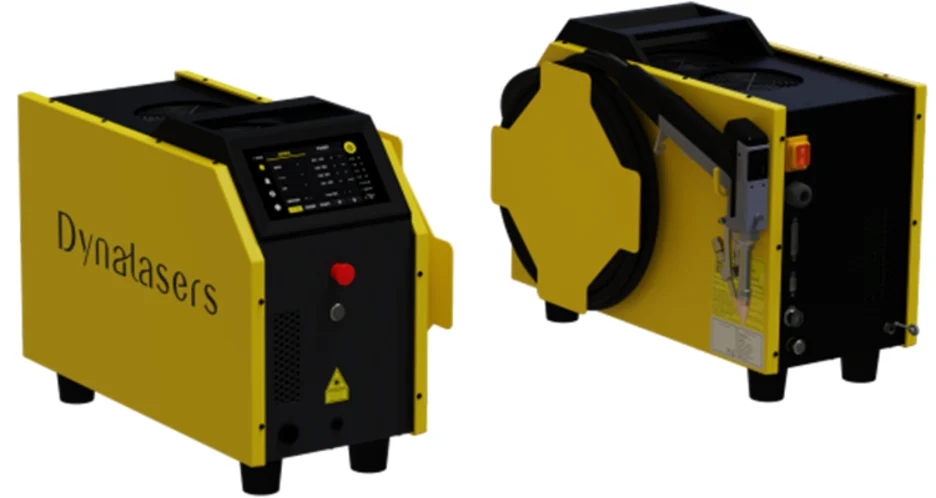
The S Series is the most portable Dynalasers welding option. The S30 weighs less than 21 kg, and the S40 weighs less than 22 kg, making this series suitable for field maintenance, compact shops, and mobile repair.
It supports continuous, pulse, and burst welding modes. Under suitable conditions, the S30 reaches about 2.5 mm welding depth, while the S40 reaches about 3.5 mm. For users who need a small handheld laser welder, this is the most mobility-focused series.
Where a Small Laser Welder Fits Best
A handheld fiber laser welder is commonly used in repair shops, custom fabrication, metal furniture production, stainless steel parts, thin sheet welding, field maintenance, machinery covers, kitchen equipment, aluminum frames, and small OEM parts.
It fits best when the job involves thin-to-medium metals, visible welds, lower heat input, and less finishing after welding. Before production, users should test real materials, check joint fit-up, choose suitable shielding gas, adjust focus, and record stable parameters.
FAQs
1. Is a small laser welder useful for repair work?
Yes. A small laser welder is useful for repair work on suitable metal parts, especially when clean seams, controlled heat input, and flexible access matter. It is commonly used for machinery repair, frame repair, cabinet repair, thin sheet restoration, and localized metal joining.
2. What materials can a compact laser welder handle?
A compact laser welder can process stainless steel, carbon steel, aluminum, brass, copper, and galvanized sheet under suitable conditions. Final weld quality depends on material thickness, surface cleanliness, joint fit-up, shielding gas, wire feeding, focus position, and operator technique.
3. Is a small handheld laser welder easy to move?
Yes, compared with larger fixed systems, a small handheld laser welder is easier to move between work areas. Dynalasers S Series models weigh less than 21 kg and 22 kg, making them suitable for compact workshops, field repair, and mobile maintenance.
4. What should small shops check before choosing one?
Small shops should check material types, thickness range, workspace, portability needs, welding depth, safety setup, shielding gas, wire feeding, operator training, and after-sales support. Real part testing is important before choosing a final system.
Conclusion
A small laser welder can help compact workshops and repair teams weld cleaner, move faster, and reduce finishing work on suitable metal parts.
Dynalasers M, D, and S Series give users options for small-shop welding, mobile repair, and multi-function metal processing without requiring a large fixed welding setup.