
 Vipin PG
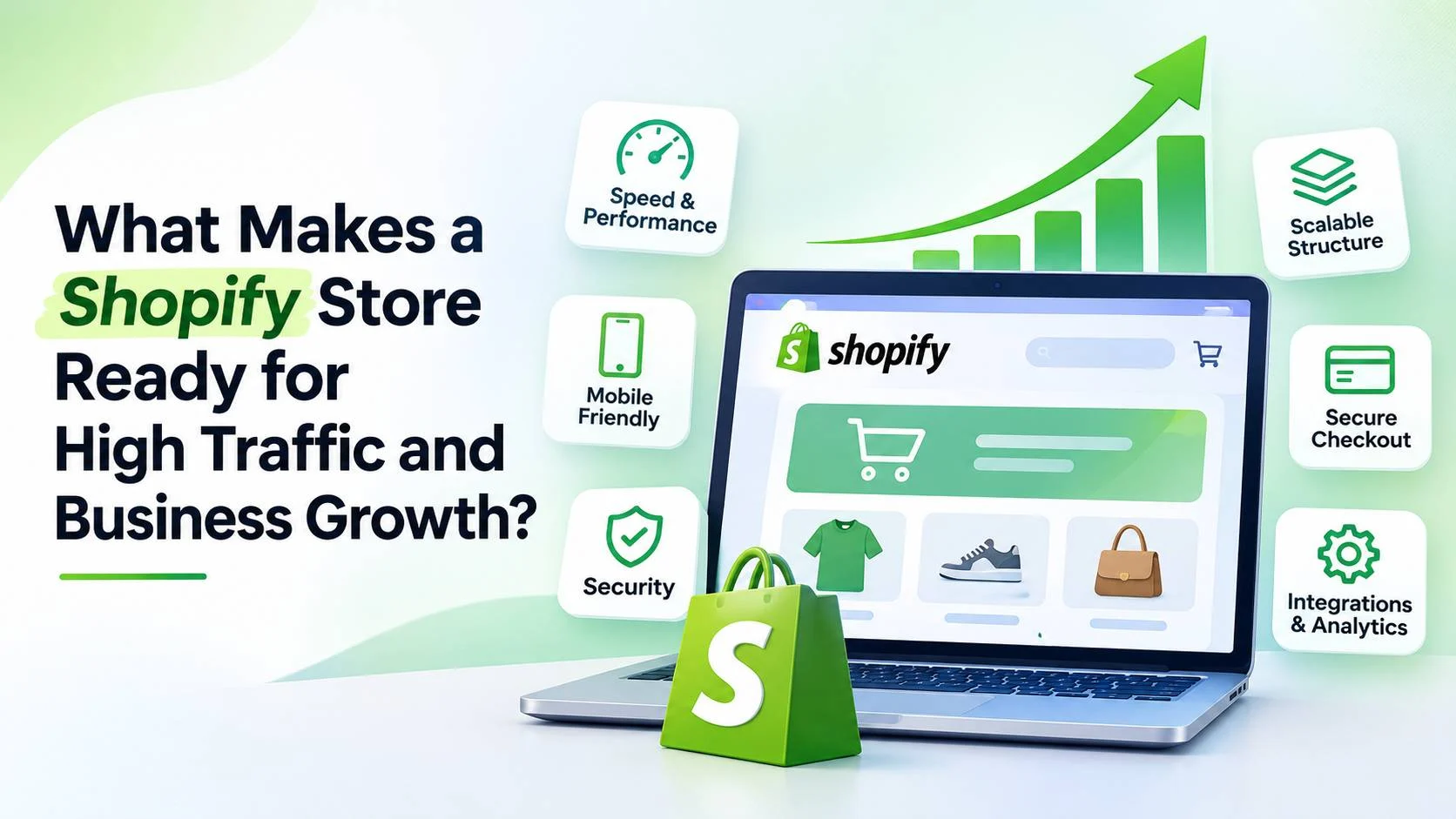
Setting up an online store can be a lot more complex than simply uploading products and waiting for customers to come and purchase. As your e-commerce business grows, your website will need to cope with increased traffic, larger product inventories, and more transactions. If your store is running smoothly with a couple of hundred visitors, the increased traffic during peak periods such as festive sales, promotions and seasonal shopping can cause issues.
Therefore, it is important to get your online store set up to cope with future growth. This can be done by providing a business with a strong tech base, user friendly interface, secure payments and a website structure that can keep up with changing customer expectations.
Shopify provides a range of tools and features to help you create and manage your online store. However, to ensure long term success, there needs to be some planning, optimisation and the correct approach. Investing in professional Shopify development services can help a business create an efficient online shopping platform, which can cope with increasing demands and help them grow their e-commerce business sustainably.
Let’s take a look at what should be considered to ensure your Shopify store can cope with high traffic and help your business grow.
1. Website Speed and Performance Optimisation
The speed of your website will influence how customers interact with your online store. Customers now expect fast loading pages, quick product images and a smooth checkout process. If there are any issues with your website’s speed, customers are likely to leave your site.
To ensure your site can handle more traffic, you should:
- Compress your product images whilst still keeping them high quality.
- Use a lightweight theme with clean code.
- Use minimal applications.
- Minimise any extra JavaScript and CSS.
- Optimise your fonts and other elements.
- Monitor your page speeds.
Although using Shopify means your site is hosted, you will need to optimise your themes, apps, media and integrations to ensure your site runs smoothly. A faster website will improve usability and help with search and conversion rates.
2. Scalable Website Structure
As your e-commerce business grows, you may start off with a small range of products, but your needs may change. You may need to add new product ranges, sell to different countries, new payment options and advanced marketing integrations. Having a scalable website will make it easier to add these new features.
For example, if you start off with a small clothing range, as your business grows you may want to add new product ranges such as shoes, accessories, seasonal ranges and different variations of products. If your initial website structure wasn’t well planned, this can cause complications.
You should:
- Have clear product categories and collections.
- Have consistent navigation throughout.
- Ensure your products have clear categorisation.
- Ensure you have plans to add more features.
- Create sections to reuse.
- Keep your website easy to manage.
Having a well organised website means you can add new products and features without impacting your customers shopping experience.
3. Mobile Friendly
Many of your customers will use their mobile devices to find, compare, read reviews and purchase products. If your Shopify store isn’t mobile friendly, you could lose out on sales. Your website should be optimised for mobile. This means ensuring all key shopping features are easy to use.
Key features to include are:
- Responsive design.
- Easy to read product descriptions.
- Clear navigation.
- Buttons and links that are easy to click.
- Fast product images.
- Easy to manage shopping basket.
- Easy to checkout.
Customers should be able to easily select product sizes, change quantities, view delivery information and complete payments without having to scroll too much. Testing your site on different screen sizes will help you identify any usability issues.
4. Secure Payment and Checkout
The checkout process is one of the most important parts of the customer journey. Customers may have spent a lot of time looking at products and adding to their basket, but if the checkout process is complicated, they may not complete their purchase. As your orders grow, you need to ensure you have a secure payment system in place.
Your checkout should be optimised. It should include:
Multiple payment options. Ensure you have the right payment options such as credit/debit cards, digital wallets and region specific payment options.
- Easy checkout. Don’t include too many fields or complicated instructions.
- Clear pricing. Include clear pricing of your products, shipping, tax and any discounts.
- Guest checkout. Allow customers to checkout without creating an account.
- Clear confirmation. Ensure you have clear confirmation messages and order information.
Shopify provides a simple checkout process, but you can have additional features depending on your plan and the integrations you have. You should regularly test your payment gateways and checkout to ensure there are no issues. A simple checkout will help reduce any unnecessary interruptions to your customers purchase and will help build their confidence.
5. Secure Website
You need to ensure you have customers’ confidence. Customers will provide personal information, contact details, delivery addresses and payment information. As your e-commerce business grows, you should ensure your website is secure. Shopify will handle some of the key security features, however you should ensure you keep your accounts, apps, integrations and customer information secure.
Key security features to include are:
- Two factor authentication on your administrator accounts.
- Strong and unique passwords.
- Only install apps from trusted sources.
- Check staff have the right permissions on their accounts.
- Ensure third party integrations are up to date.
- Monitor for any suspicious activity on accounts.
- Ensure you follow any data protection requirements.
Ensure you have clear policies on your website. This should include privacy policy, returns policy, shipping information and terms and conditions. Having a secure and transparent shopping environment will help customers feel more confident to complete their purchases and come back in the future.
6. Effective Inventory and Order Management
High traffic usually means high order volumes. Nevertheless, having lots of customers will mean nothing without proper inventory and order fulfilment management in place. Consider a store that launches a very efficient marketing campaign. It attracts hundreds of visitors to its site, yet the inventory is outdated. The customers buy out-of-stock products and end up complaining and leaving bad feedback on the website. It goes without saying that it is better for a company to organize its inventory management.
| Inventory management feature | Business benefit |
|---|---|
| Real-time stock updates | Reduces the risk of overselling |
| Product variant tracking | Helps manage different sizes, colours, and styles |
| Low-stock notifications | Supports timely restocking |
| Order management | Makes order processing more organised |
| Inventory reports | Helps identify popular and slow-moving products |
| Multiple location management | Supports businesses operating from different locations |
The Shopify platform provides features related to inventory and order management which can be further expanded by using appropriate applications. Companies that are growing rapidly should continually examine their fulfillment processes to make sure that their growth does not become problematic.
7. Search Engine Optimisation and Website Visibility
An otherwise technologically powerful Shopify website will also need a steady influx of relevant visitors. SEO makes sure that consumers find the items when looking for similar information on the Internet. Lack of SEO means that an otherwise perfectly designed website will not be able to generate traffic for the online store.
Some important SEO practices on Shopify include:
- Having unique product titles and descriptions.
- Optimizing page titles and meta descriptions.
- Use of relevant keywords.
- Using relevant image alt text.
- Using relevant and proper internal linking.
- Using logical website structure.
- Publishing relevant blogs and buying guides.
- Repairing any broken links and duplicate pages.
For instance, a skincare company could write blogs containing relevant and useful information on skin care, ingredient use, and differentiating the products from other brands. It will help attract visitors and direct their interest to the products offered by the website.
8. Integration with Essential Business Tools
As the online shop grows, managing each business function manually starts to become more challenging. Other apps may be required in such areas as marketing, communications with customers, accounting, analysis, inventory, and shipping. Utilizing the correct apps through Shopify may prove useful.
Some useful integration categories include:
| Integration type | Purpose |
|---|---|
| Email marketing | Send promotional emails and customer updates |
| CRM systems | Organise customer information and interactions |
| Analytics tools | Track website traffic and shopping behaviour |
| Shipping applications | Manage delivery and fulfilment activities |
| Accounting software | Organise financial records and transactions |
| Customer support tools | Manage enquiries and customer complaints |
| Marketing automation | Support campaigns and customer follow-ups |
Nevertheless, an excess of programs could have a negative impact on the speed of your website and operating expenses. It is necessary to use those programs that are really needed and not just install all possible programs. Proper integration will help make the work more convenient and keep the store under control.
9. Data Analytics and Continuous Performance Monitoring
To grow your business, you will need to consistently analyse your store. As a store owner, you will want to know where your traffic is coming from, what products are selling, where customers are leaving your site and what is influencing their purchasing decisions. Shopify has some built-in analytical tools that will give you insight into your key business activities. Additional analytics can help you get more insight into your customers and marketing.
Some key things to track are:
- Conversion Rate – The percentage of visitors who complete a desired action such as a purchase.
- Average Order Value (AOV) – The average amount spent by customers.
- Cart Abandonment Rate – The percentage of shopping carts abandoned.
- Customer Acquisition Cost (CAC) – The average cost of gaining a new customer.
- Customer Lifetime Value (CLV) – The estimated value generated by a customer throughout their relationship.
- Revenue Growth – The increase or decrease in your sales revenue over a period of time.
By analysing these, you can identify areas to improve and make informed decisions. If you have an increase in website traffic but low conversion rates, it could be your pricing, layout, checkout process or trust issues. By consistently analysing your store, you can improve it based on real data.
10. Choosing the Right Development Strategy For Long-Term Growth
To have a successful Shopify store you need to ensure your site has good technical infrastructure, integrations, navigation, performance and functionality.
By using professional development you can:
- Ensure you have the right themes
- customisations, fast performance
- third-party integrations and good shopping experience by using experienced developers.
Professional Shopify development can help businesses with more complex customisations, migrations, API integration and redesigns. Before choosing a development partner, ensure they have experience, have done similar projects, have technical knowledge, good communication and can offer support. Ensure your development strategy will help meet your current needs and future growth.
Conclusion
To ensure your Shopify store is set up to handle high traffic and grow your business, it needs good technical performance, customer-focused design, and to be secure and well managed. Your site speed, mobile performance, stock management and SEO will all contribute to an overall great shopping experience. Don’t see website development as a one-off. Customer expectations, trends and requirements will always be changing, so you need to consistently optimise your site. By investing in the right technology, tracking key performance indicators and planning for future requirements, you can create a store that will handle more demand.
Ultimately, a Shopify store that is set up for growth will help convert more visitors into happy customers.
FAQs
1. What makes a Shopify store scalable?
A scalable Shopify store will have a well-structured website, fast performance, secure integrations, mobile-friendly design and efficient stock/order management. This will help your business handle high traffic, products and customer requirements.
2. Can Shopify handle high traffic?
Yes! Shopify has managed hosting to help your e-commerce business grow. However, you should ensure your themes, apps, third-party scripts and integrations are optimised.
3. How can I improve my Shopify store speed?
You can improve your store speed by optimising your images, using lightweight themes, removing any unused apps, reducing third party scripts and optimising your code.
4. Why should I make my Shopify store mobile friendly?
Having a mobile friendly site makes it easier for customers to browse your products, navigate through your categories and complete purchases. Having a responsive design will ensure a consistent experience.
5. How will SEO help my Shopify business grow?
By having good SEO, your store will rank well in search engines. This will help potential customers find your relevant products. This can help to drive organic traffic and create extra opportunities.
6. When should I invest in professional Shopify development?
You should invest in Shopify development agency if you need advanced customisations, fast performance, third party integrations, migrations and features to help with your increasing requirements.
7. How often should I optimise my Shopify store?
You should consistently monitor your store. Ensure you are regularly analysing your performance, security, SEO and usability. You may need to optimise further after major product launches, marketing and changes to your business.