 Vipin PG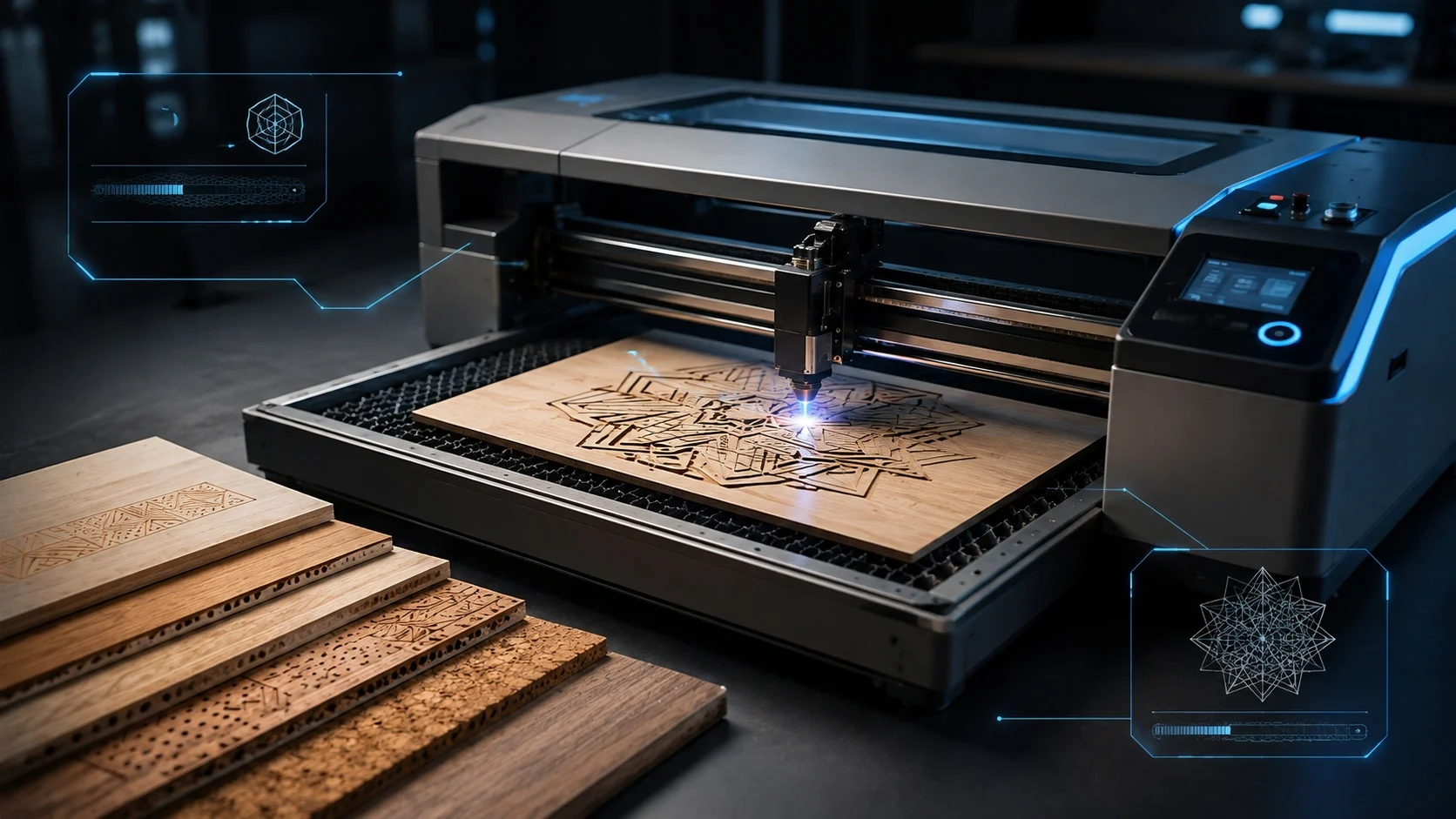
Laser cutting wood looks straightforward: load a sheet, upload a design, set the machine, and start cutting. In practice, getting clean and repeatable results requires a better understanding of how wood reacts to heat.
Different woods have different densities, moisture levels, resin contents, and internal structures. Even two sheets with the same thickness can require different laser settings.
For anyone using laser technology for woodworking, crafts, prototyping, or small-scale production, understanding these differences can make the process faster, cleaner, and more predictable.
How Does Laser Cutting Wood Work?
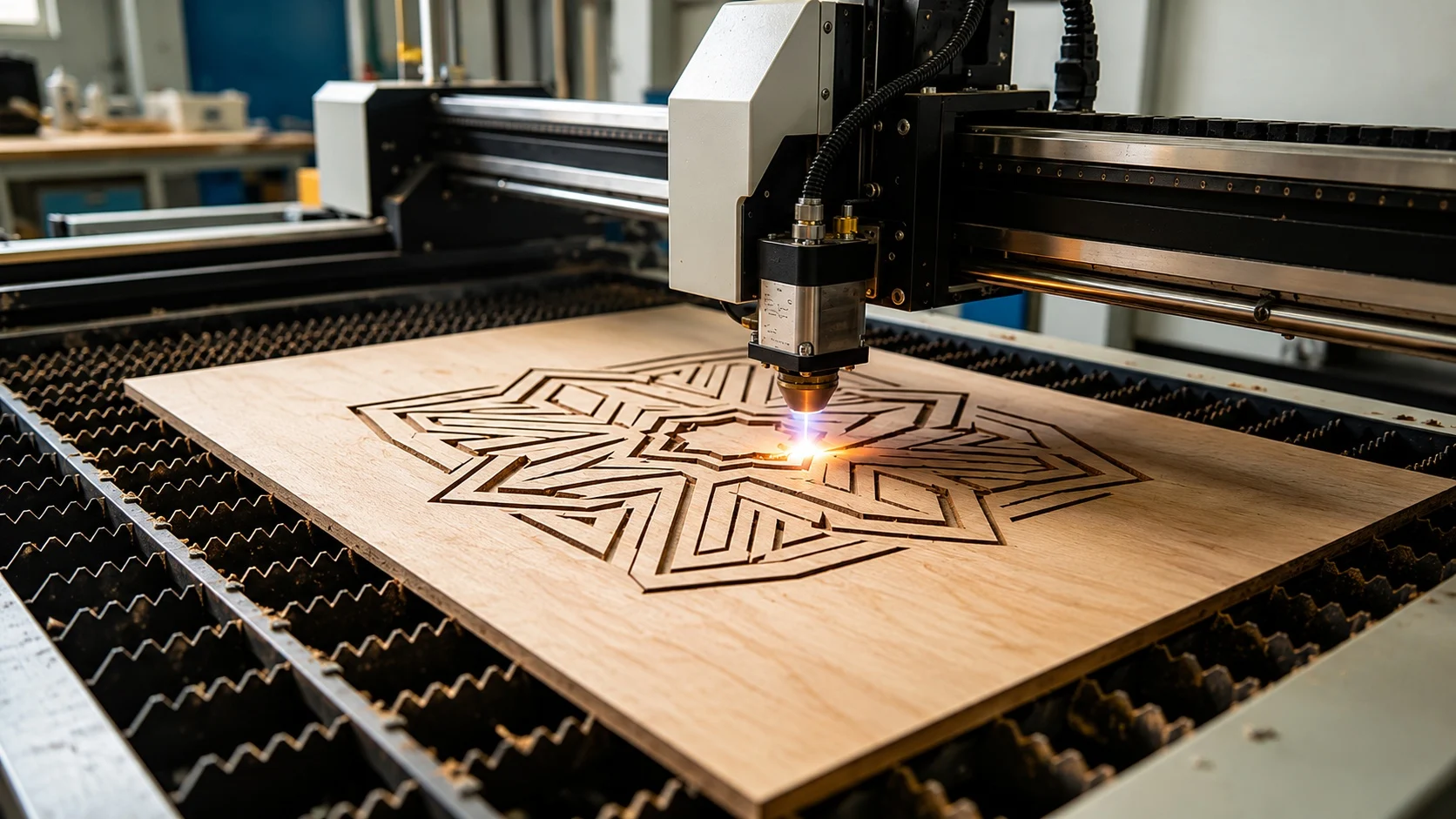
Laser cutting uses a concentrated beam of light to heat and remove material along a programmed path.
Unlike a saw or router, the laser does not physically contact the wood. Instead, the focused beam creates enough heat to vaporize or burn through the material. The cutting head follows a digital design, allowing complex shapes, narrow slots, small holes, and detailed outlines to be produced without changing physical cutting tools.
Laser engraving uses the same basic principle but applies less energy. Instead of cutting through the material, the laser removes or darkens a controlled area of the surface.
This makes it possible to combine cutting and engraving in a single workflow. A wooden product, for example, can be cut to shape and then engraved with text, graphics, or decorative details without moving it to another machine.
Which Wood Works Best for Laser Cutting?
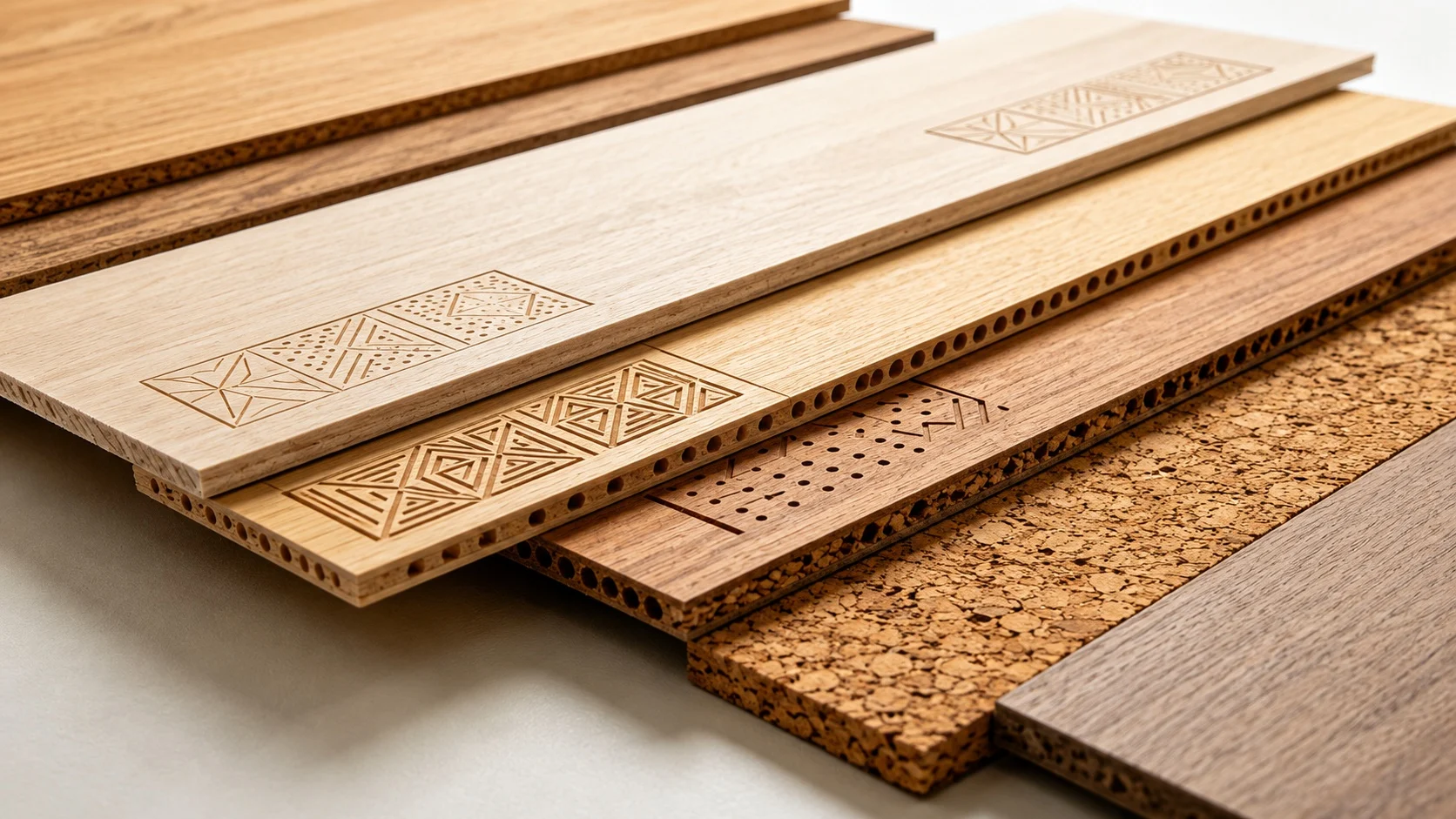
Not all wood behaves the same way under a laser.
Plywood is one of the most commonly processed materials because it is available in many thicknesses and is suitable for signs, models, boxes, furniture components, and decorative products. However, the adhesive used between its layers can affect cutting performance.
Basswood and balsa are relatively light materials and are often easier to cut because of their low density. They are popular for models, ornaments, puzzles, and detailed craft projects.
MDF has a relatively consistent structure, which can make cutting predictable. However, its composition and adhesives mean that effective ventilation is particularly important.
Hardwoods such as oak, maple, walnut, cherry, and beech can also be laser processed, although their higher density may require different power and speed settings.
Softwoods such as pine and cedar can produce more resin and smoke during processing. This can make air assist and exhaust management especially important.
Before processing an unfamiliar wood, testing a small section is a better approach than assuming that settings used for another material will work equally well.
Why Do Laser-Cut Wood Edges Turn Dark?
Dark or charred edges are one of the most common issues when laser cutting wood.
The basic cause is excessive heat. If too much energy remains in the material, the area surrounding the cutting path can become overheated.
Several factors can contribute to this problem.
Cutting Speed
If the laser moves too slowly, it spends more time heating the same area. This can increase charring even when the cut itself is complete.
Increasing speed while maintaining enough power to penetrate the material can sometimes produce a cleaner edge.
Laser Power
Too little power may leave sections of the wood uncut, forcing the operator to use multiple passes. Too much power can create excessive burning.
The goal is to find a practical balance between power and speed rather than simply using the highest available power.
Focus
A properly focused beam produces a smaller and more concentrated spot. If the focal position is incorrect, the energy distribution becomes less efficient and the resulting cut may become wider or less consistent.
For thicker materials, correct focus becomes increasingly important because the cutting path extends deeper into the material.
Air Assist
Air assist directs airflow toward the cutting point. It can help remove smoke and combustible gases while reducing heat accumulation around the cut.
For wood applications, consistent airflow can make a noticeable difference in edge quality and help reduce the chance of unwanted flare-ups.
Exhaust and Ventilation
Laser cutting wood produces smoke and fine particles. Without effective extraction, smoke can accumulate around the workpiece and contribute to residue or inconsistent visibility during cutting.
A properly designed exhaust system is therefore part of the processing setup, not simply an optional accessory.
How Thick Can a Laser Cut Wood?
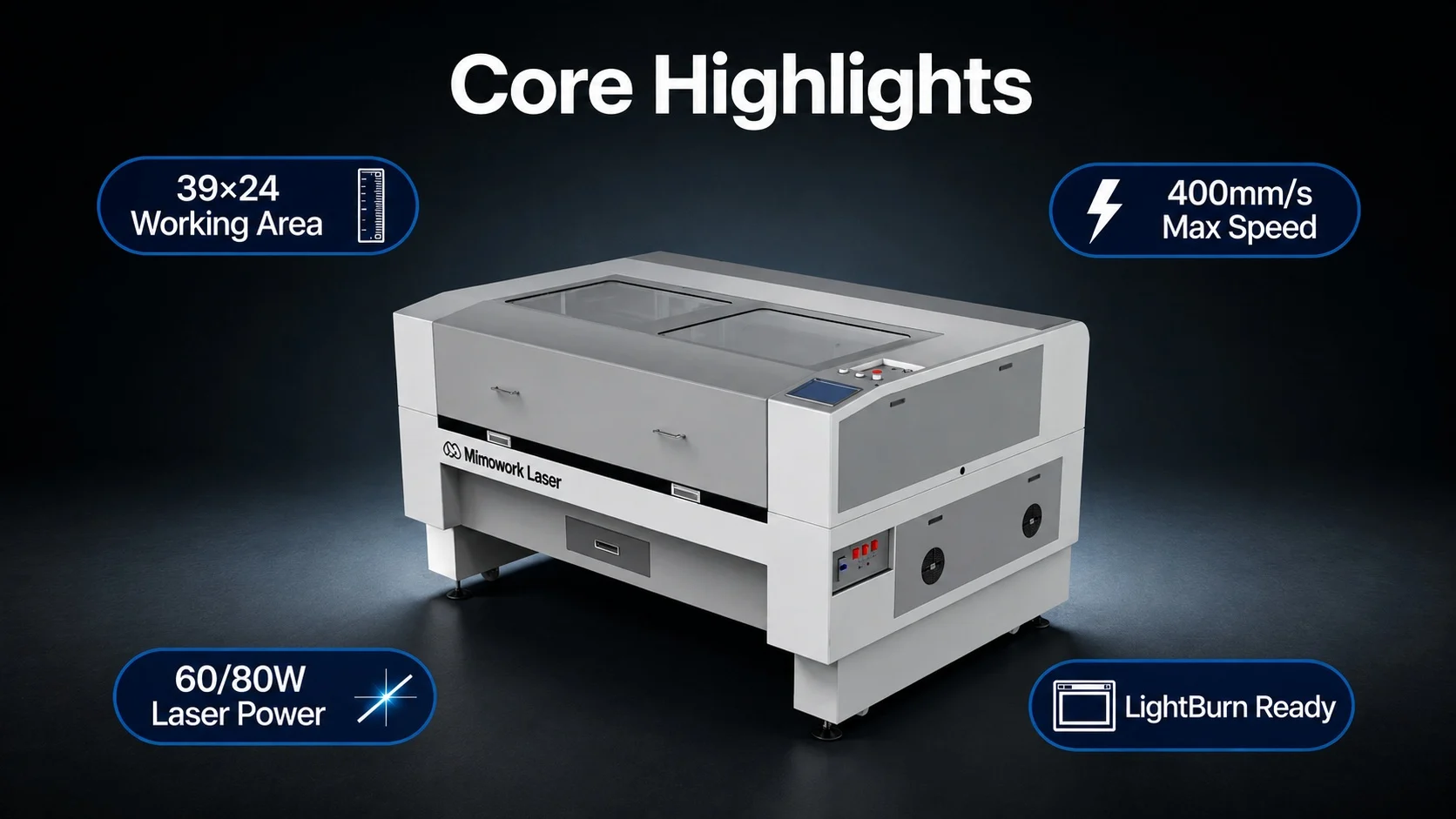
There is no single thickness limit that applies to every laser cutter.
The practical cutting depth depends on laser power, wood density, moisture content, material construction, focal conditions, cutting speed, and the required edge quality.
Thin plywood and softwood can often be processed efficiently with relatively modest power. As thickness increases, more energy is required to maintain complete penetration.
At a certain point, increasing power alone may no longer provide the desired result. Cutting speed may need to decrease, and the resulting kerf and edge appearance may change.
This is why machine specifications should be considered together with the materials and thicknesses that will actually be processed.
For a more detailed explanation of machine selection, wood types, laser power, working area, and practical cutting considerations, this complete guide to laser wood cutters and engravers provides a useful reference.
Laser Cutting vs. CNC Routing for Wood
Laser cutters and CNC routers can both process wood, but they solve different problems.
A CNC router uses a rotating cutting tool that physically removes material. This makes it well suited to heavy material removal, deep grooves, three-dimensional carving, and thicker stock.
Laser cutting is a non-contact process. It is particularly useful for detailed two-dimensional profiles, intricate patterns, small internal features, engraving, and repeatable digital designs.
The choice therefore depends more on the type of work than on which technology is universally better.
A workshop producing complex flat components may benefit greatly from laser processing, while a manufacturer creating deep three-dimensional furniture components may prefer a CNC router.
Some businesses use both technologies because their strengths complement each other.
How to Get Cleaner Results When Laser Cutting Wood
Good results usually come from a controlled process rather than a single machine setting.
Start by testing a small sample of the actual material. Record the power, speed, number of passes, and other relevant settings. Once a combination produces an acceptable result, it can become a baseline for future jobs using the same material.
Keep the material flat and properly positioned. Warped wood can change the focal distance and cause variations across the cutting area.
Clean optics are also important because contamination can reduce the amount of laser energy reaching the material.
Air assist should remain consistent, and the exhaust system should be capable of removing smoke effectively.
For projects where surface appearance matters, masking the wood before cutting can help reduce smoke residue on the visible surface. The masking material can then be removed after processing.
Most importantly, avoid assuming that a setting that works for one type of plywood will automatically work for another. Differences in glue, density, thickness, and surface treatment can significantly change the result.
What Can You Make with Laser-Cut Wood?
The flexibility of digital laser processing makes it useful for both creative and commercial applications.
Common examples include:
- Wooden signs and lettering
- Decorative wall pieces
- Puzzles and educational models
- Custom boxes and packaging
- Architectural models
- Personalized gifts
- Furniture components
- Wooden ornaments
- Jewelry and small accessories
- Prototypes and product components
- Inlays and decorative patterns
Laser engraving can further expand these applications by adding names, logos, illustrations, photographs, or other graphics to the surface of the finished piece.
This combination of cutting and engraving is particularly useful for customized products because the design can be changed digitally without creating new physical tooling.
Is Laser Cutting Wood Suitable for Small Businesses?
Laser processing can be useful for small businesses because digital designs can be changed quickly and repeated without producing a new cutting template.
A business making personalized signs, gifts, models, or decorative products may process a different design for every order. Instead of changing mechanical tooling, the operator can modify the digital file and send a new job to the machine.
However, the machine should still be selected according to the actual workload.
A small workshop producing thin materials and personalized products may have different requirements from a manufacturer processing large plywood sheets every day. Working area, laser power, extraction, automation, cooling, and expected production volume should all be considered before choosing equipment.
Common Mistakes When Laser Cutting Wood
Beginners often focus on laser power while overlooking other variables.
One common mistake is assuming that more power always means better cutting. Excessive power can increase burning and reduce edge quality.
Another is using the same settings for different materials. Wood varies considerably, and even materials sold under the same general category can behave differently.
Ignoring ventilation is another problem. Smoke extraction affects both the working environment and the quality of the finished piece.
Finally, skipping test cuts can lead to unnecessary material waste. A small test sample usually costs far less than discovering after a full production run that the selected settings were unsuitable.
Common Questions About Laser Cutting Wood
Can you laser cut all types of wood?
Most common woods can be laser processed, but their density, resin content, moisture, and adhesives can affect cutting performance. Plywood, MDF, basswood, and many hardwoods can be processed, but each material may require different settings.
Why does laser-cut wood turn black?
Blackened edges are usually caused by excessive heat. Using an appropriate combination of laser power and cutting speed, together with effective air assist and ventilation, can help reduce charring.
How thick can a laser cutter cut wood?
The practical thickness depends on laser power, wood density, material construction, focus, and cutting speed. There is no universal maximum thickness for every type of wood or laser system.
Is laser cutting better than CNC routing for wood?
Neither technology is universally better. Laser cutting is particularly useful for detailed two-dimensional shapes, engraving, and repeatable designs, while CNC routing is often better suited to deep cuts, heavy material removal, and three-dimensional woodworking.
Final Thoughts
Laser cutting wood is a versatile process, but consistent results depend on more than machine power.
Material characteristics, focus, cutting speed, laser power, air assist, ventilation, and material thickness all influence the final result. The best approach is to treat each material as its own processing challenge and establish reliable settings through controlled testing.
Once those variables are understood, laser technology can provide a highly repeatable way to produce detailed wooden components, personalized products, prototypes, and commercial parts.
The technology is particularly valuable when digital design flexibility and precise two-dimensional processing are more important than heavy material removal or three-dimensional carving.