 Vipin PG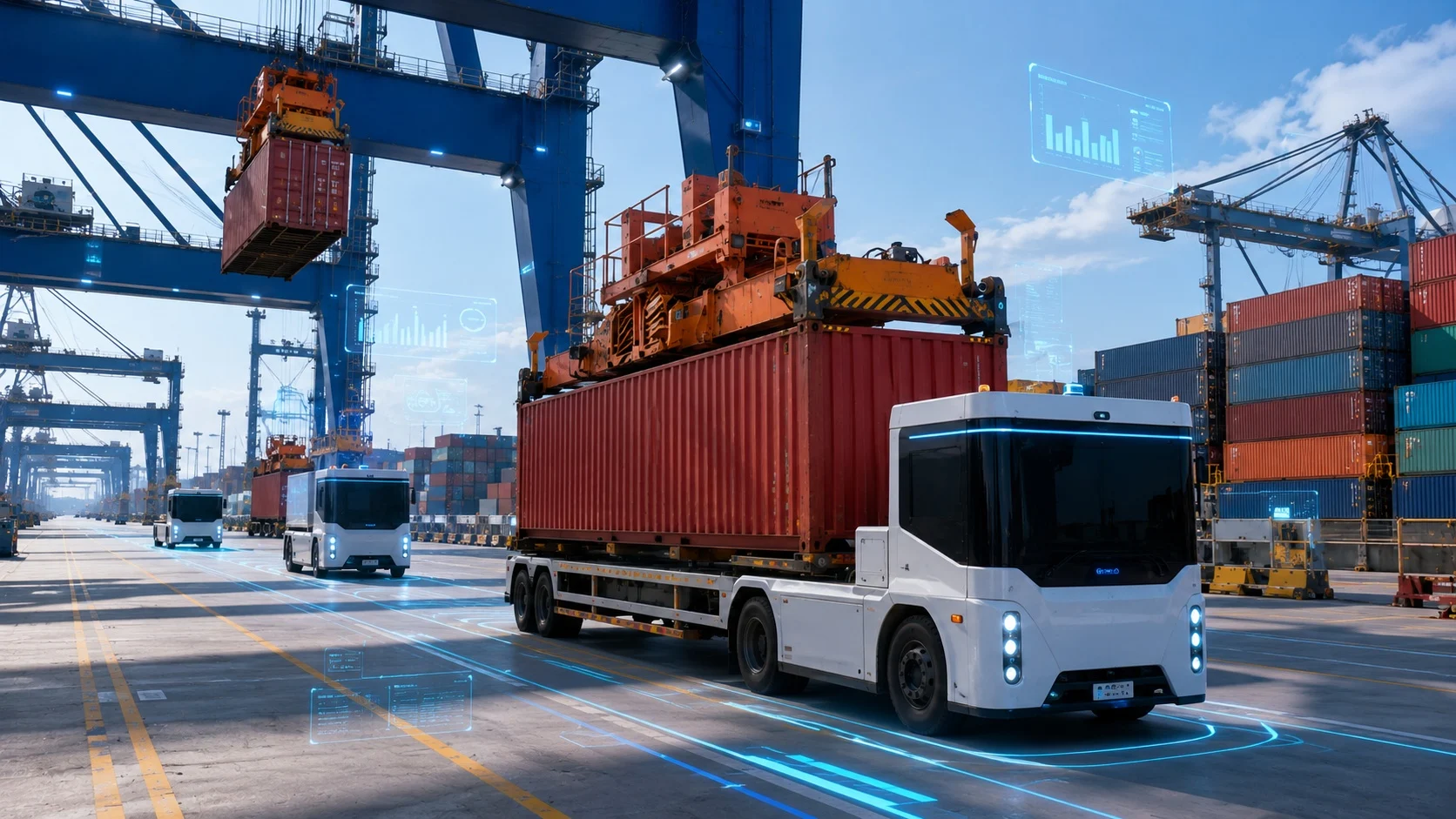
Industrial logistics is entering a new stage of automation.
For years, logistics automation focused primarily on fixed routes, automated equipment, and software designed to handle repetitive tasks. These technologies improved efficiency, but many operations still depended on human drivers and manual decisions when conditions changed.
The emergence of autonomous trucks and AI-powered fleet management is changing that model.
Instead of automating a single transportation task, modern logistics systems can connect vehicles, fleet operations, production schedules, energy consumption, and real-time operational data. The result is a more flexible approach to industrial logistics automation that can respond to changing conditions while keeping material flows moving.
What Is an Autonomous Truck?
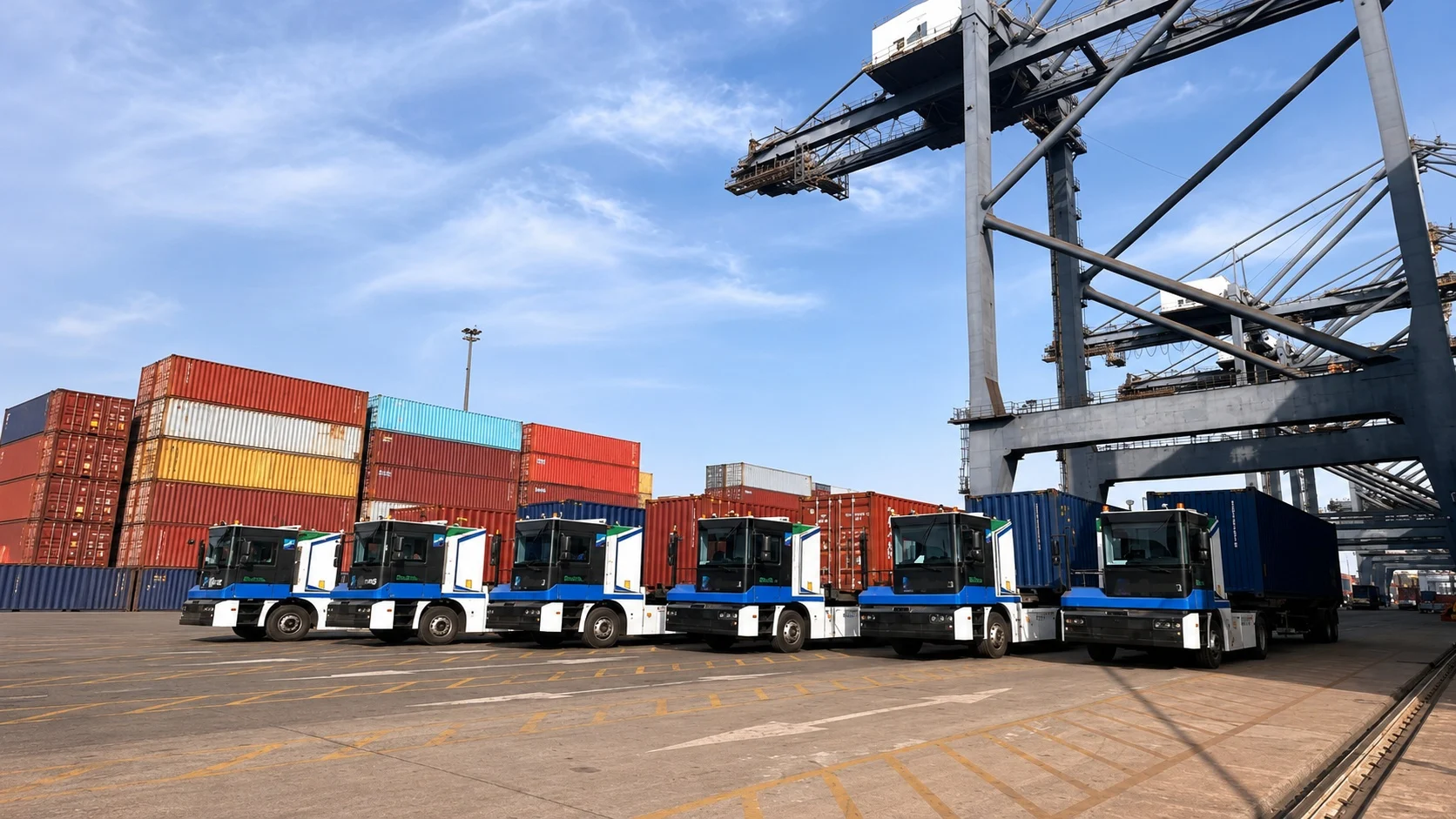
An autonomous truck is a heavy-duty vehicle capable of performing some or all driving tasks with limited or no direct human control, depending on its automation level and operating environment.
In industrial logistics, autonomous trucks are particularly suitable for controlled or semi-controlled environments such as ports, terminals, logistics parks, factories, and other areas where routes and operational rules can be clearly defined.
These environments provide an important advantage. Unlike public-road driving, industrial transportation often involves repeatable routes, designated loading areas, known operational zones, and structured traffic patterns.
This makes autonomous technology practical for applications where trucks repeatedly move containers, raw materials, components, or other cargo between predefined locations.
Modern autonomous trucks typically combine cameras, LiDAR, positioning technologies, onboard computing, and AI-based perception systems. These technologies allow the vehicle to understand its surroundings, determine its position, identify obstacles, and make driving decisions within its defined operating environment.
The technology is also evolving beyond a simple driverless vehicle. An autonomous truck can become part of a larger logistics system in which vehicle-level intelligence works together with fleet-level scheduling and operational software.
Why Autonomous Trucks Matter for Industrial Logistics
Transportation is often one of the most repetitive activities inside large industrial facilities.
A truck may repeatedly travel between a warehouse and production line, move containers between a yard and terminal area, or transport materials between different production zones. These routes may appear simple, but the operation still requires continuous coordination.
Human drivers must manage schedules, traffic, loading delays, route changes, shift changes, and unexpected obstacles.
Autonomous trucks can reduce the amount of manual intervention required for these repetitive transportation tasks. More importantly, when connected to a centralized fleet management system, individual vehicles can become part of a coordinated transportation network.
This creates a shift from vehicle automation to system-level automation.
Instead of asking only whether a truck can drive itself, operators can ask a broader question: can the entire material transportation process become more predictable, measurable, and responsive?
The Role of AI Fleet Management
An autonomous truck can drive independently, but that does not mean it knows which task should be performed next.
This is where AI fleet management becomes important.
Fleet management systems coordinate vehicles according to operational requirements. They can assign transportation tasks, monitor vehicle status, manage routes, and adjust schedules when conditions change.
In a traditional operation, dispatchers may need to manually determine which vehicle should handle a particular job. In an AI-enabled environment, software can evaluate information from multiple sources and make scheduling decisions based on current operational conditions.
A fleet management platform can connect vehicles with tasks, production requirements, charging or energy resources, and other operational systems.
For example, if one vehicle becomes unavailable, the system can potentially reassign the task to another available vehicle. If traffic conditions change within a terminal, routes can be adjusted. If production priorities change, transportation tasks can be reordered.
This creates a continuous feedback loop between transportation activity and operational decision-making.
For companies exploring intelligent vehicle operations, the AI fleet management platform approach illustrates how fleet dispatch, monitoring, scheduling, and resource coordination can be brought together within a unified system.
From Automated Vehicles to Intelligent Fleets
The difference between an automated vehicle and an intelligent fleet is significant.
A single autonomous truck can perform transportation without a driver. An intelligent fleet can coordinate multiple vehicles and tasks according to the broader requirements of the operation.
This distinction becomes particularly important as fleet size increases.
With only a few vehicles, manual coordination may still be manageable. As the number of vehicles, transportation tasks, and operational zones increases, manual dispatch becomes more difficult.
AI-based fleet management can help operators gain a real-time view of the fleet and use operational data to make better decisions.
Instead of treating each truck as an independent asset, the fleet becomes a connected system.
This can help organizations improve vehicle utilization, reduce unnecessary idle time, identify operational bottlenecks, and respond more quickly to disruptions.
How Industrial Logistics Automation Is Evolving
Industrial logistics automation is no longer limited to conveyors, automated storage systems, or fixed-route vehicles.
Modern facilities increasingly combine physical equipment with software intelligence.
An autonomous truck can transport material. A fleet management system can coordinate the truck. A scheduling platform can determine which task should be prioritized. Sensors can provide real-time information about the environment. Production systems can communicate changing material requirements.
When these systems are connected, automation becomes more dynamic.
This is particularly valuable in factories and logistics facilities where production schedules can change throughout the day. A rigid automation system may struggle when the expected workflow changes. A connected AI-based system can potentially adjust transportation plans as new information becomes available.
The goal is not simply to remove people from individual transportation tasks. It is to create a logistics environment in which machines, software, and human operators can work together more effectively.
Autonomous Trucks in Ports and Industrial Facilities
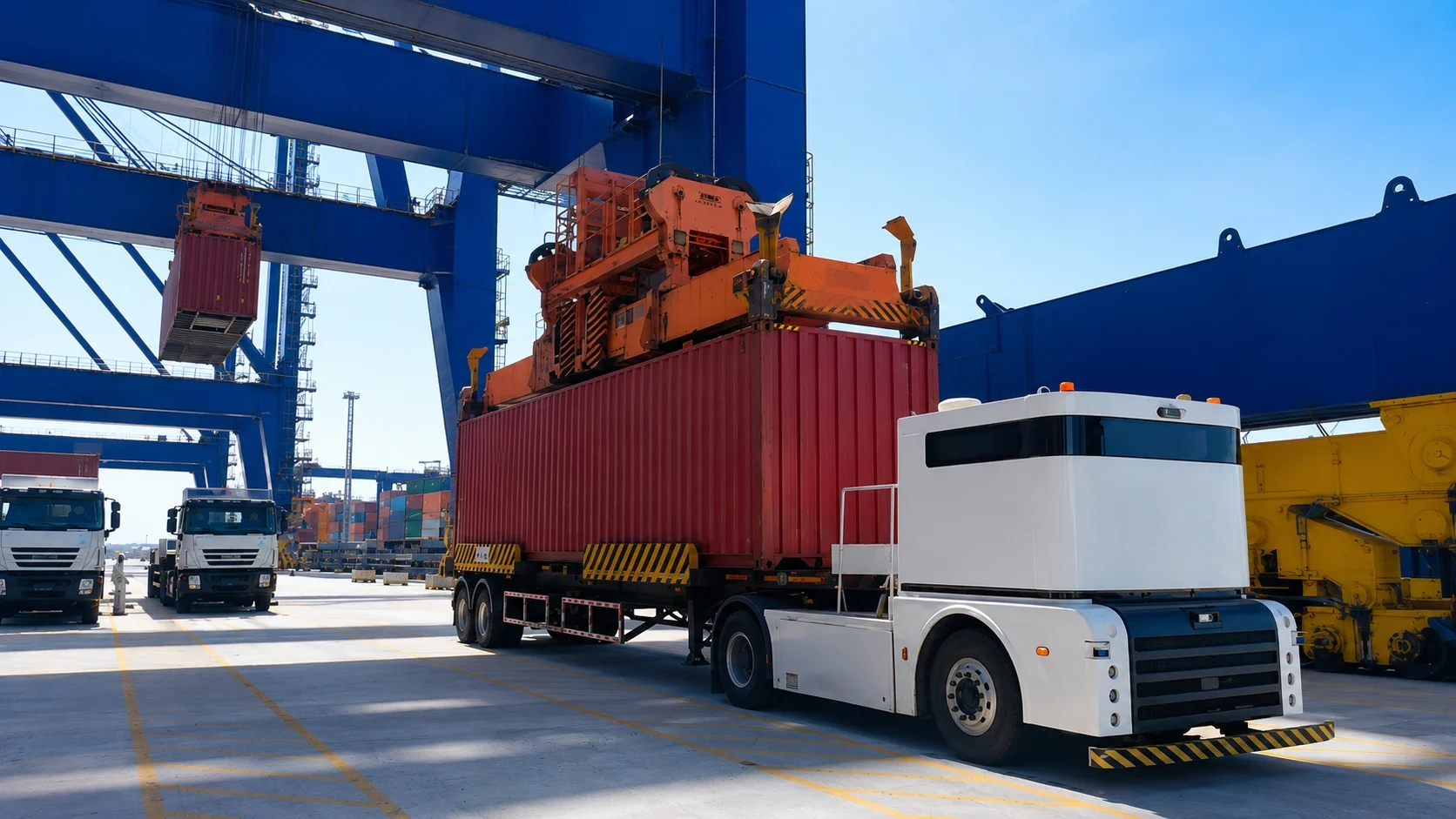
Ports are among the most promising environments for autonomous truck deployment.
Container transportation involves repetitive movement between defined operational zones, making it suitable for autonomous driving technologies. At the same time, modern ports are highly complex environments where autonomous vehicles must interact with other trucks, terminal equipment, pedestrians, containers, and changing traffic conditions.
This means successful automation requires more than autonomous driving technology.
Vehicles need accurate positioning and perception, while fleet-level software needs to coordinate tasks and routes.
Real-world deployments demonstrate why this system-level approach matters. At the Port of Felixstowe, autonomous trucks operate in mixed traffic alongside conventional vehicles, while fleet coordination helps integrate autonomous transportation into existing terminal workflows.
Similar principles can be applied to industrial logistics parks and factories, where vehicles repeatedly transport materials between production and storage areas.
The Importance of Mixed Human-Autonomous Operations
Industrial automation does not always mean replacing every manually operated vehicle.
In many real environments, autonomous and human-driven vehicles need to work together.
This creates a more practical transition path for companies that cannot completely redesign their infrastructure.
Mixed operations allow businesses to introduce autonomous transportation into selected workflows while continuing to use conventional vehicles for tasks that require greater flexibility.
The fleet management layer becomes especially important in this situation because it can provide visibility across different types of vehicles and help coordinate transportation tasks.
This approach can also reduce the disruption associated with large-scale automation projects.
Rather than replacing an entire logistics system at once, organizations can gradually automate suitable transportation routes and expand the autonomous fleet as operational experience increases.
Energy Management and Autonomous Logistics
Another important part of industrial logistics automation is energy management.
Electric autonomous trucks can reduce dependence on conventional fuel, but fleet operators still need to manage charging, battery availability, operating schedules, and vehicle utilization.
Energy therefore becomes part of the transportation planning process.
If a vehicle needs to recharge during a busy production period, the resulting downtime can affect the entire fleet. Intelligent scheduling can help coordinate vehicle availability and energy replenishment so that transportation capacity remains stable.
This is one reason modern autonomous logistics platforms increasingly connect vehicle operations with energy data rather than treating energy management as a separate process.
What Does the Future of Industrial Logistics Automation Look Like?
The next stage of industrial logistics automation is likely to focus less on isolated machines and more on connected operational systems.
Autonomous trucks will continue to become more capable, but their value will increasingly depend on how effectively they communicate with fleet management platforms, scheduling systems, production software, and other infrastructure.
This creates a model in which data flows continuously between the physical and digital sides of logistics.
A vehicle generates operational data.
The fleet management system analyzes vehicle availability and transportation requirements.
Scheduling software determines how resources should be allocated.
The resulting decisions are then delivered back to the vehicles and operational teams.
This closed-loop approach can make logistics operations more responsive and easier to optimize over time.
Conclusion
Autonomous trucks are becoming an important component of industrial logistics automation, particularly in environments where transportation routes are repetitive, operational rules are structured, and vehicles can be connected to centralized management systems.
However, autonomous driving alone is not enough to transform industrial logistics.
The larger opportunity comes from combining autonomous vehicles with AI fleet management, intelligent scheduling, real-time operational data, and energy management.
As these technologies become increasingly connected, industrial logistics can move from isolated automation toward coordinated, adaptive transportation systems.
The future of logistics automation is therefore not simply about building trucks that can drive themselves. It is about creating intelligent transportation networks in which vehicles, software, infrastructure, and operational decisions work together.