 Vipin PG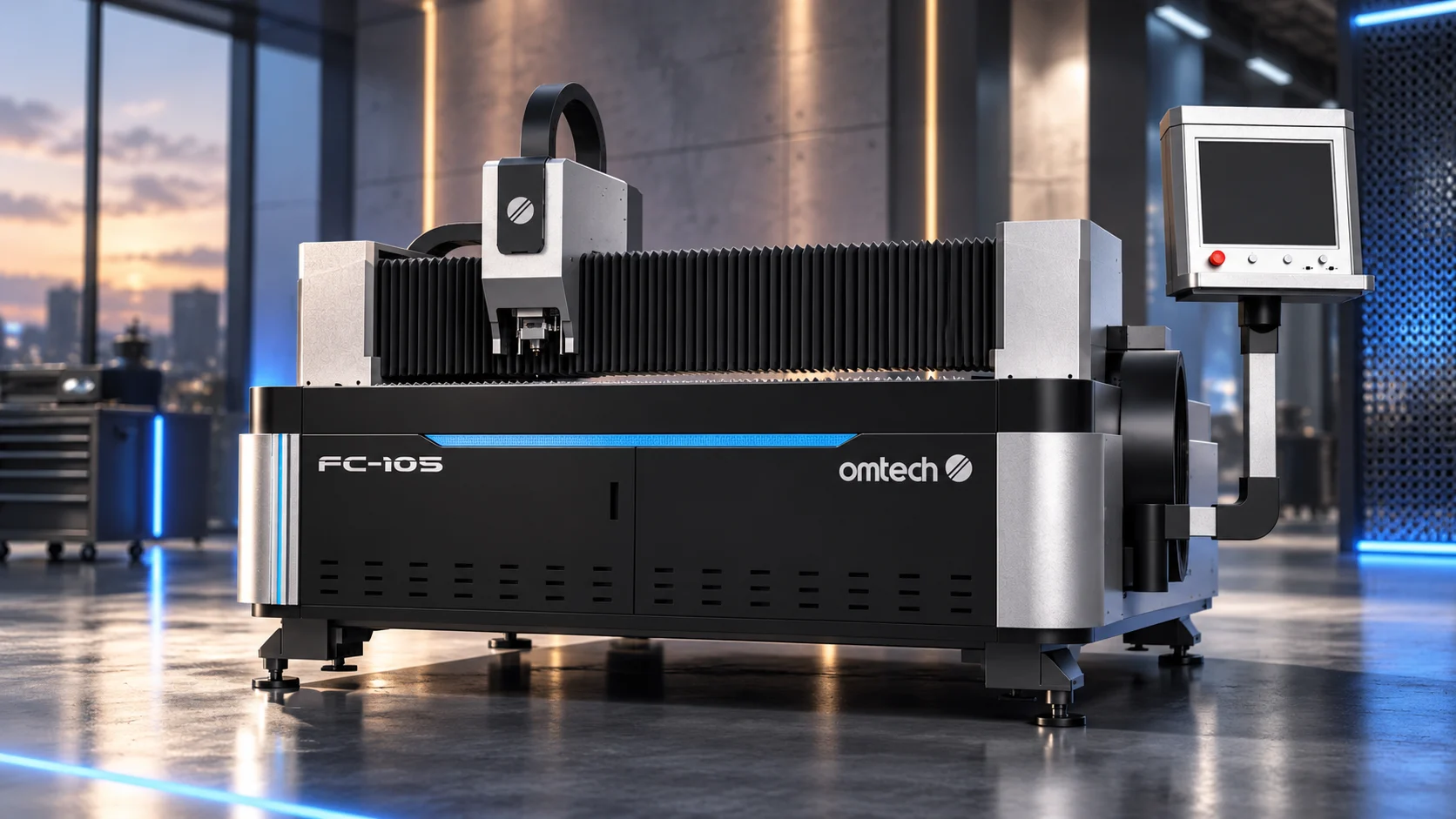
Ten years ago, permanently marking a steel part with a fiber laser engraver usually meant buying a six-figure industrial machine, dedicating space to it, and training an operator to run it. In 2026, capable fiber laser engravers for metal marking start at around $3,500 to $5,000 and can fit on a standard workbench.
That price shift has moved fiber laser marking well beyond large manufacturing plants. The technology is now used in garage workshops, jewelry studios, makerspaces, and small contract shops as well as automotive, aerospace, and medical manufacturing.
Understanding how fiber lasers reached this point helps explain what buyers are getting in 2026 and where the technology may go next. OMTech has been part of this expansion as fiber laser systems have moved into smaller businesses and workshops.
Where Fiber Laser Technology Started
Fiber laser technology developed through industrial research in the 1990s and entered commercial manufacturing in the early 2000s, particularly in the automotive and aerospace sectors. Early applications focused on permanent traceability marking for metal components moving through production lines.
Fiber lasers offered several practical advantages. They could create permanent marks on metal without consumables or physical contact while operating at production-line speeds. Dot peen marking, electrochemical etching, and ink-based methods each had limitations in demanding environments. Fiber laser marking gave manufacturers another way to produce durable identification marks for serial numbers, traceability, and compliance.
For roughly the first decade of commercial use, however, fiber laser engravers remained industrial equipment. Machines were large and expensive, trained operators were usually required, and technical knowledge stayed largely within manufacturing companies and industrial equipment dealers.
The Democratization Phase
Fiber laser systems became much more accessible between roughly 2015 and 2022. Several changes happened at the same time.
Chinese Manufacturing Scale
Chinese laser equipment manufacturers entered the market with systems priced well below many established Western industrial machines. Ytterbium-doped fiber laser sources became widely manufactured components, followed by lower-cost galvo scanning heads, control electronics, lenses, and machine structures.
Quality varied considerably in the early years. Competition and accumulated manufacturing experience gradually improved the mid-market, making lower-cost fiber laser engravers practical for many small-business production jobs.
Software Accessibility
Earlier industrial fiber laser systems often depended on proprietary software designed for trained production operators. As lower-cost machines reached smaller users, easier software options became available.
EzCad2 became widely used with mid-market fiber laser systems. LightBurn later added support for fiber lasers, giving users familiar with CO2 laser workflows another way to design and manage marking jobs.
This made the machines easier to adopt outside traditional industrial environments. Jewelers, makers, and small parts suppliers no longer needed the same level of industrial software training to begin working with a fiber laser.
Makerspace Diffusion
Makerspaces, fab labs, and shared workshops also helped spread fiber laser skills.
A single machine installed in a shared workspace can expose many users to metal marking. Members can experiment with different materials, learn setup procedures, and discover applications relevant to their own work before deciding whether they need a machine of their own.
This gave people outside industrial manufacturing a practical way to learn fiber laser technology through hands-on use.
Where the Technology Stands in 2026
Power and Performance
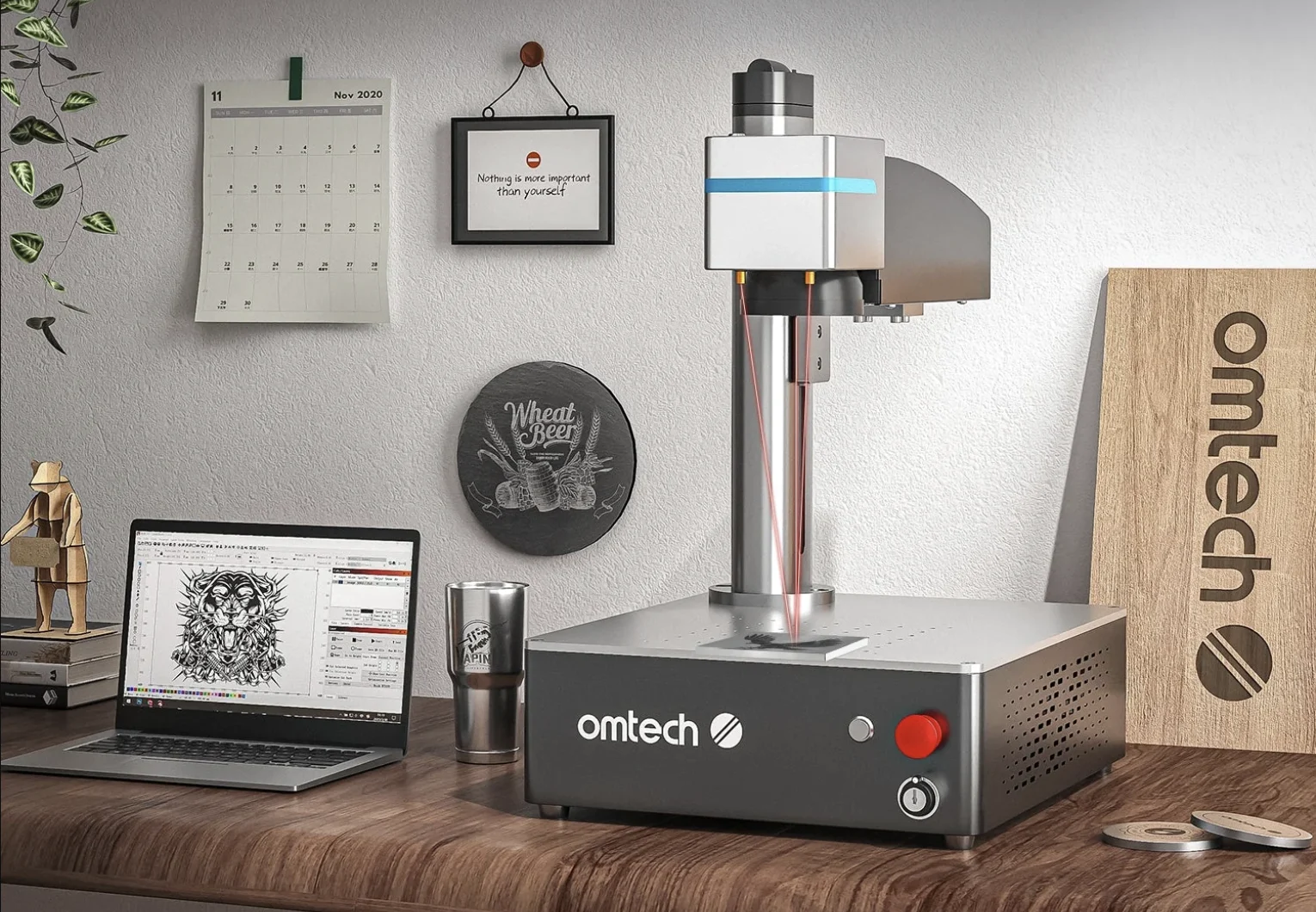
Entry-level fiber laser engravers in the 20W to 30W range now offer capabilities that would once have been associated with more expensive industrial systems. Typical specifications can include galvo scanning speeds of up to 10,000 millimeters per second, positioning accuracy around plus or minus 0.01 millimeters, and marking fields ranging from about 110 by 110 millimeters to 300 by 300 millimeters depending on the lens.
For many small-batch jobs, the difference between lower-power and higher-power systems is increasingly about throughput rather than whether a usable mark can be produced. A 20W desktop system can mark materials such as steel, aluminum, and brass, but higher-power systems can complete demanding or repetitive production jobs faster.
That difference matters on a production line. It may matter much less to a jewelry studio or small shop processing short batches.
MOPA Technology Accessibility
MOPA, or Master Oscillator Power Amplifier, fiber lasers add independent control over pulse duration. That additional control supports applications such as color marking on stainless steel and titanium.
MOPA systems that were once aimed mainly at industrial buyers are now available to smaller businesses and individual craftspeople.
By carefully controlling the laser's interaction with the metal surface, operators can produce colors such as gold, blue, red, and purple through surface oxidation rather than pigments or coatings. This has opened additional options for jewelry, customized products, and decorative metal work.
Integration With Broader Digital Workflows
Modern fiber laser engravers also fit more easily into digital design and manufacturing workflows.
Systems can support variable data for serial-number sequences, barcode and 2D-code generation, and imports from CAD or vector design files. A small manufacturer can move from a digital design or production record to a marked part without building a separate industrial integration system.
Who Is Using Fiber Laser Engravers in 2026
Jewelry and Precious Metal Work
Jewelry businesses are an important market for smaller fiber laser systems. Common applications include hallmarking, personalization, decorative engraving, and MOPA color marking on titanium and stainless steel.
Fiber lasers are also useful for detailed work in confined areas, including the inside of ring bands, where achieving comparable precision with mechanical engraving can be difficult.
Contract Marking Services
Contract metal marking has become another practical use for small fiber laser systems. A shop may initially purchase a machine for its own production and later use the same equipment to handle marking work for nearby manufacturers and suppliers.
- Serial number and lot code marking for local machine shops
- Compliance and regulatory marking for parts suppliers
- Tool and equipment identification for trades and industrial businesses
- Custom branded hardware and accessory marking for consumer product companies
Because the design is digital, these businesses can handle short runs and changing identification data without creating new physical tooling for every job.
Electronics and Technical Manufacturing
PCB identification, chassis marking, and component serialization are also useful applications in electronics manufacturing and repair.
Direct marking from a digital file works well for short production runs because there is no need to create screens or other job-specific tooling before each batch.
Industrial Supply Chain
Smaller suppliers working in automotive, aerospace, and medical-device supply chains are also bringing traceability marking in-house with fiber laser engraving machines.
These businesses may need permanent, machine-readable part identification for customer or regulatory requirements. When marking volumes are high enough, owning the equipment can provide more control over turnaround times and production scheduling than sending every batch to an outside marking service.
What Is Coming Next
AI-Assisted Parameter Optimization
Machine-learning systems are beginning to appear in tools that analyze marking results and help operators adjust laser parameters.
This could be particularly useful when working with unfamiliar materials. Finding the right combination of power, speed, frequency, and pulse settings usually requires testing. Software that can suggest starting points or respond to mark-quality feedback could reduce some of that trial and error.
Integrated Vision Systems
Camera-based alignment is also becoming more common.
Vision systems can help position artwork or identification marks on pre-machined components and irregular parts without relying entirely on manual alignment. For shops processing many different parts, reducing setup work can be as valuable as increasing laser power.
Expanded MOPA Availability
MOPA systems continue to move into lower price ranges while operators share more material-specific parameter information.
That combination gives smaller shops access to marking techniques that previously required more expensive equipment and more experimentation.
Conclusion
For a small business evaluating a fiber laser engraver in 2026, the main questions are increasingly practical: how much power the work requires, how quickly parts need to be processed, what marking area is needed, which materials will be used, and whether features such as MOPA control or camera alignment justify the added cost.
Those choices now apply to a much wider range of buyers than they did a decade ago, from jewelry studios and makerspaces to contract shops and industrial suppliers.
About OMTech
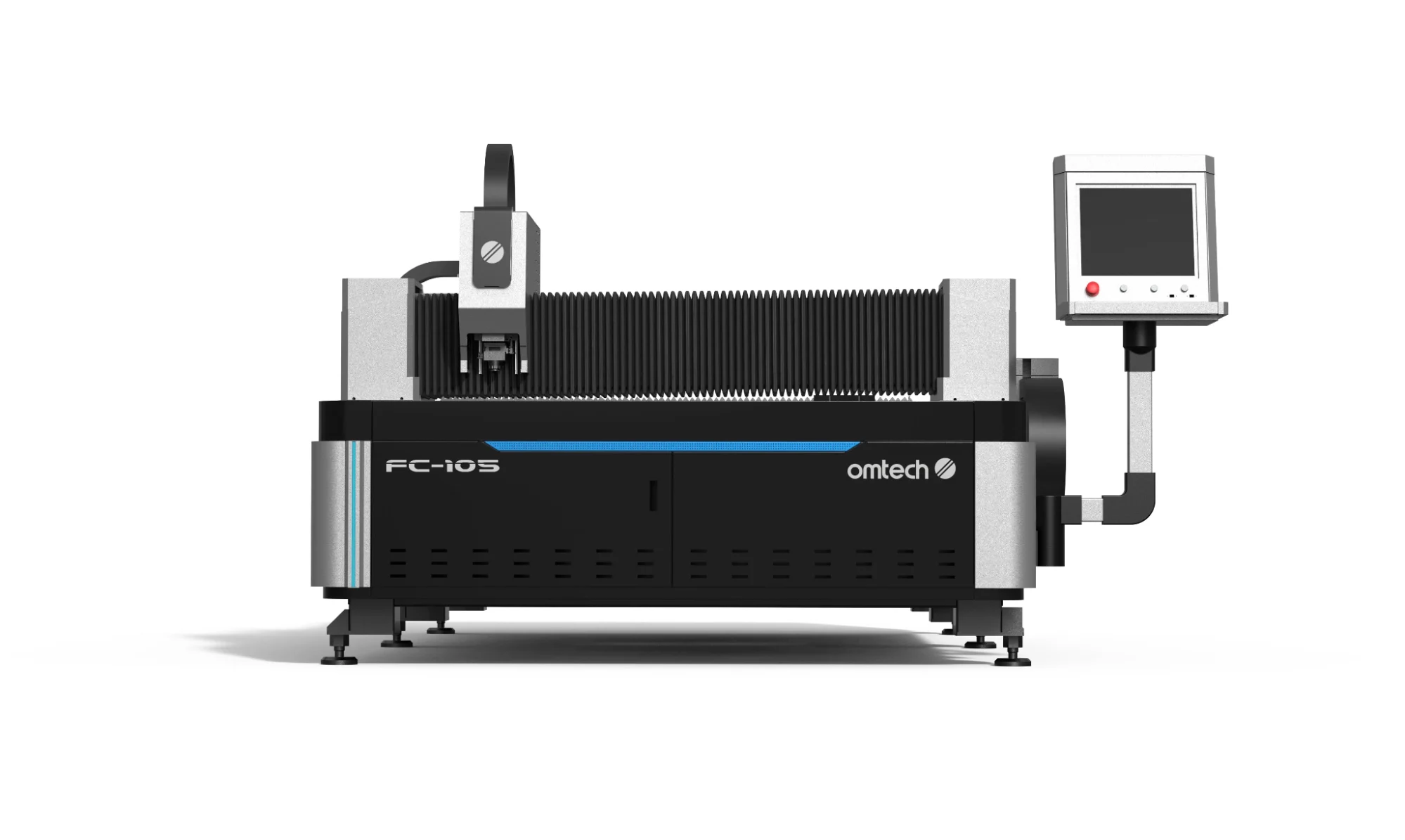
OMTech is a laser equipment manufacturer based in Anaheim, California. The company offers fiber laser engravers, MOPA fiber laser systems, and CO2 laser machines for small businesses, makers, and production environments across the United States. Its fiber laser product range is available at OMTech.
OMTech fiber laser engravers are used for applications including jewelry engraving, contract marking, electronics manufacturing, and industrial part identification. The product line includes 20W desktop systems as well as higher-output machines for production environments, with US-based support and a user community.