
 Vipin PG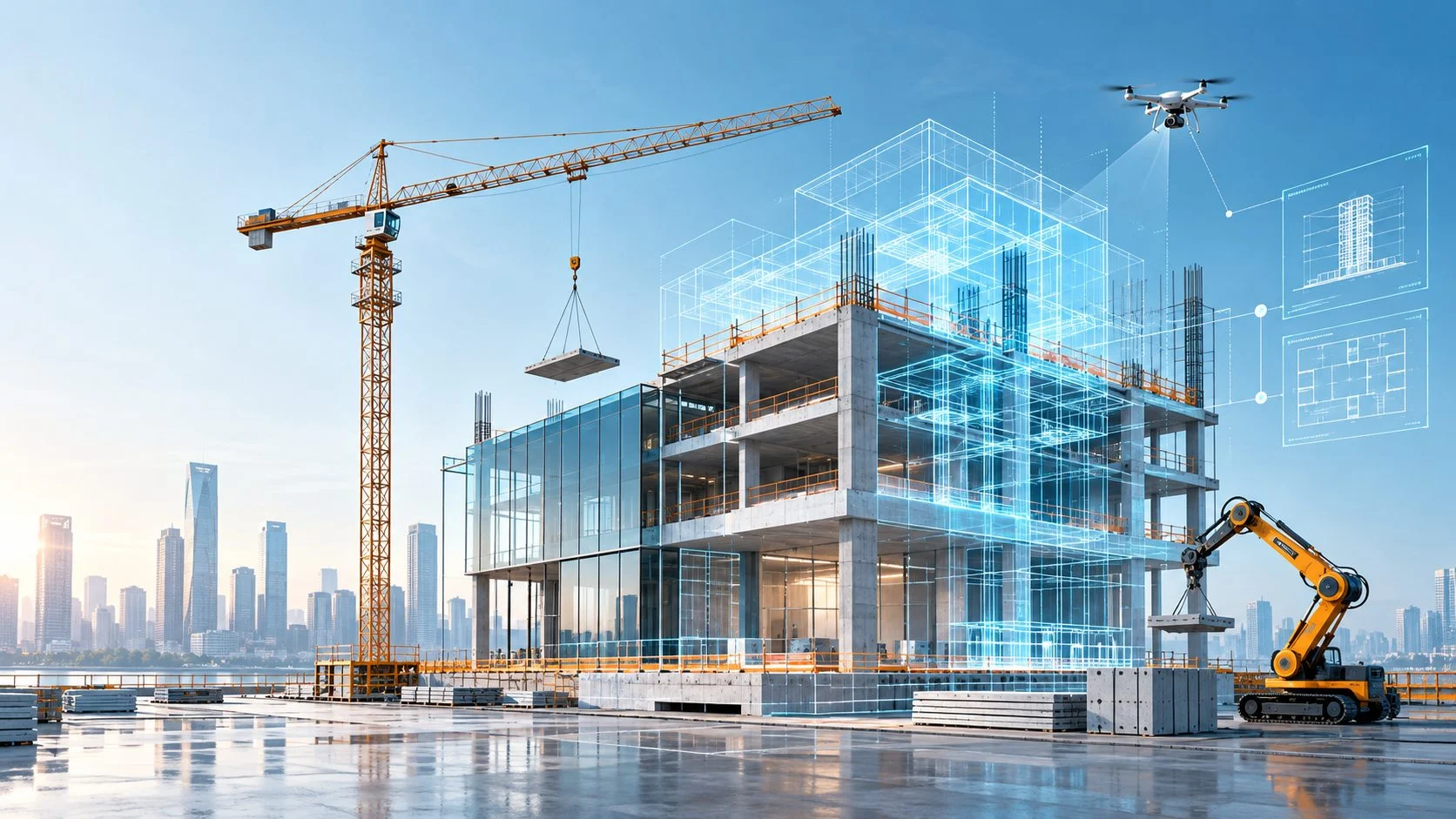
Construction has always relied on skilled people, reliable materials, and careful planning, but technology is changing how these elements come together. Digital tools can make designs easier to understand, machinery can improve precision, and connected systems can provide useful information throughout a project’s lifespan. At the same time, advances in materials and manufacturing are creating new possibilities for how buildings and infrastructure are designed and constructed.
These developments are not simply about replacing traditional methods. Many are helping construction teams work more efficiently while improving safety, accuracy, and quality. Read on to discover some of the technologies helping shape the industry’s future.
Improve Structural Strength with Advanced Materials
Materials technology continues to have a major influence on construction, particularly when it comes to creating structures that can withstand significant loads and stresses. Modern reinforcement products can be manufactured to precise specifications, helping construction teams create consistent structural support across foundations, walls, slabs, and other elements. Reinforcing mesh is one example of a material providing a practical way to add tensile strength to concrete structures while helping control cracking caused by shrinkage and temperature changes. Its consistent grid pattern also makes installation more predictable than individually placing large quantities of reinforcement.
Advances in material production are making reinforcement easier to specify and incorporate into increasingly complex projects. Different sizes, configurations, and grades can be selected according to the requirements of a particular structure, while prefabricated reinforcement can reduce some of the work required on site. This can contribute to more efficient construction and better use of materials. As projects become more demanding, developments in structural materials will continue to play an important role in balancing strength, durability, cost, and practical installation.
Bring Designs to Life With 3D Modelling
Digital modelling has transformed the way construction professionals visualise projects before physical work begins. Building Information Modelling (BIM) allows detailed digital representations of buildings and infrastructure to contain information about structural components, services, materials, and other features. Instead of relying solely on separate two-dimensional drawings, different members of a project team can work from a shared model. This makes it easier to identify potential clashes and understand how different elements will fit together before construction reaches the site.
The benefits extend beyond visualisation. Changes made during the design process can be reviewed digitally, helping teams assess their potential impact before committing to physical work. Models can also contain information that supports scheduling, quantities, maintenance, and future alterations. This creates a useful link between the design and the completed building. As digital modelling becomes more sophisticated, it is increasingly capable of supporting decisions throughout a project’s lifecycle rather than being used simply as a way of producing attractive three-dimensional images.
Use Drones to Survey and Monitor Sites
Drones have introduced a faster way to collect information from construction sites, particularly across large or difficult-to-access areas. Drone surveying can capture aerial images and measurements that would otherwise require people to spend considerable time moving around the site. This can be useful for monitoring progress, inspecting difficult areas, recording site conditions, and comparing the physical development of a project with its original plans. Frequent surveys can create a detailed record of how the site changes over time.
The technology can also improve visibility for people managing projects remotely. Updated aerial information can help teams understand the current state of a development without relying entirely on photographs taken from ground level. When combined with mapping and modelling software, drone data can provide useful measurements and visual references. Safety is another consideration, as collecting information remotely can reduce the need for workers to enter certain hard-to-reach areas for routine observations. Drones therefore offer both practical and informational benefits when they are used appropriately.
Make Construction More Efficient with Robotics
Automation is becoming increasingly relevant in areas where repetitive, physically demanding, or highly precise tasks are involved. Construction robotics can assist with activities such as bricklaying, drilling, demolition, surveying, and material handling. Rather than replacing skilled workers entirely, many automated systems are designed to support them by taking on repetitive processes. This can free people to focus on tasks requiring judgement, adaptability, and specialist expertise while improving consistency in certain areas of construction.
Robotics can also be useful where working conditions are challenging. Automated equipment can potentially operate in environments that are hazardous, uncomfortable, or physically demanding, reducing the amount of time workers need to spend performing particular tasks. As the technology develops, systems are becoming more adaptable and capable of working alongside people. Wider adoption will depend on factors such as cost, site conditions, training, and the type of project involved, but automation is likely to become an increasingly familiar part of construction sites.
Connect Sites with Smart Technology
Connected technology is giving construction teams access to more information about what is happening on a site. Internet of Things (IoT) technology can link sensors and equipment to digital systems, allowing information such as temperature, equipment usage, environmental conditions, and location to be monitored. This can help project teams make decisions based on current information rather than relying solely on occasional inspections or manual records. Connected equipment can also provide data that highlights changing conditions or unusual patterns.
The technology has applications beyond individual pieces of machinery. Sensors can help monitor completed buildings, while connected systems can contribute to energy management, security, and maintenance once a project is occupied. The growing use of data throughout construction means that technology is becoming part of the entire building lifecycle. When digital systems, advanced materials, automation, and skilled workers are brought together effectively, they can create a more informed approach to construction that improves efficiency without losing sight of quality and safety.