 Vipin PG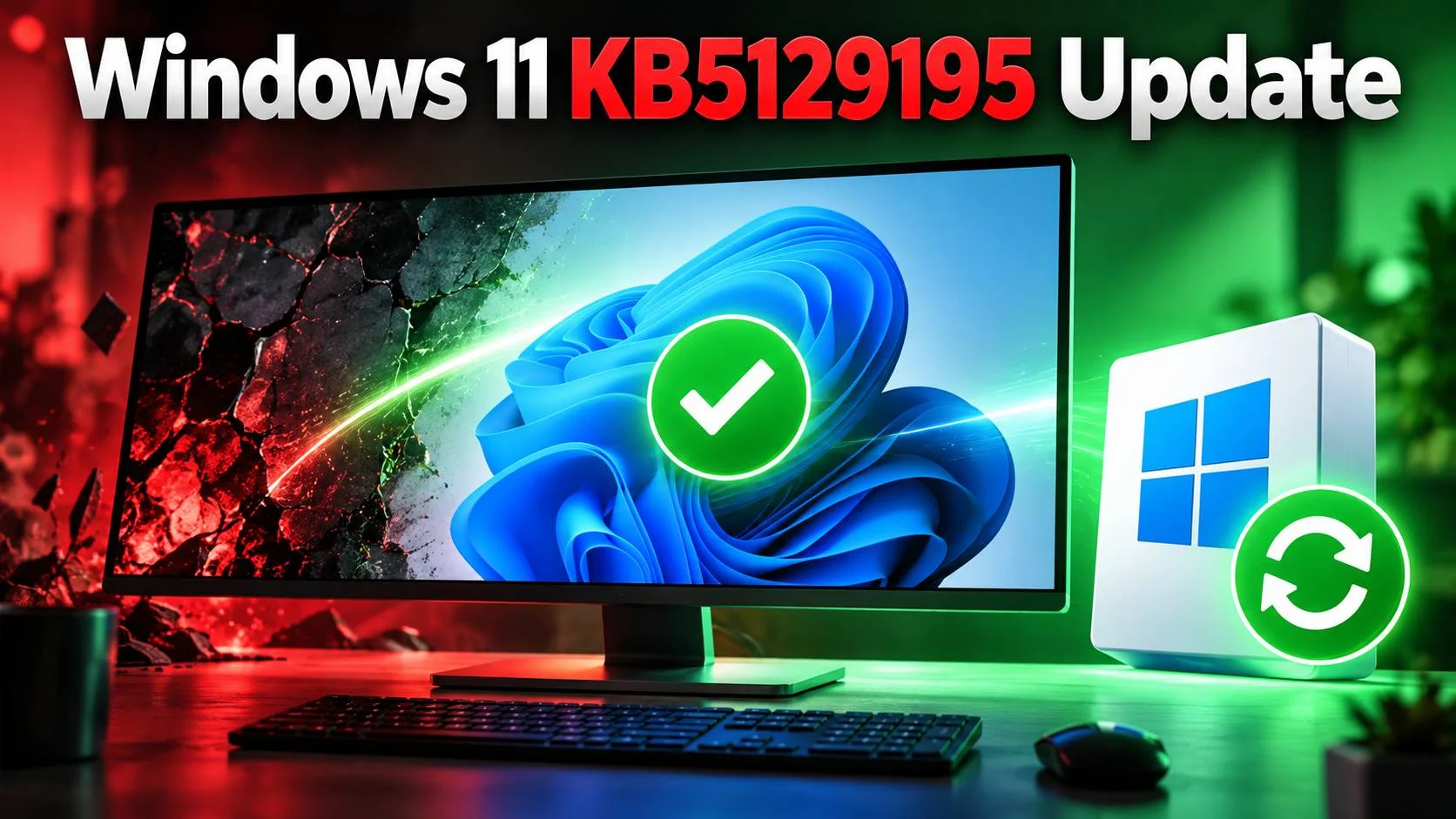
Microsoft released KB5129195 on September 14 as an emergency cumulative update for Windows 11 versions 24H2 and 25H2. It addresses failures introduced by the September 8 security update, including Remote Desktop problems, Plan 9 folder sharing with HCS-managed Linux virtual machines, and multichannel audio failures on some USB Audio Class 1.0 devices. The update also includes protection against the CVE-2026-62721 elevation-of-privilege vulnerability.
The update moves Windows 11 25H2 to build 26200.9457 and version 24H2 to build 26100.9457. Microsoft says it is delivered automatically through Windows Update and Windows Update for Business. Administrators can also download it from the Microsoft Update Catalog for manual deployment.
Remote Desktop and related failures
After the September 8 update, Remote Desktop Services could become unstable in some environments. RDP connections and sign-ins could fail, or a system could become unresponsive while showing the Remote Desktop Configuration message. Microsoft also listed related failures in Microsoft Management Console, the RDS Licensing Diagnoser, File Explorer, and the Windows Update page. KB5129195 addresses these problems.
Linux VM folder sharing also gets a fix
KB5129195 fixes a Hyper-V issue involving HCS-managed virtual machines. Linux guests using Plan 9 folder sharing could start normally but fail to show or access folders shared from the Windows host. Windows Latest reported that the problem affected apps such as Claude Cowork, which rely on a managed Linux environment to work with local files.
Multichannel USB audio is only partly fixed
Some USB Audio Class 1.0 devices continued to work in standard stereo mode but failed when users selected 8-channel or 3D audio. Microsoft says KB5129195 fixes that specific failure.
Microsoft still lists a separate known issue affecting some USB Audio Class 1.0 devices. Affected PCs may show “This device cannot start (Code 10)” in Device Manager, produce no sound, leave the volume controls at zero, or make sound settings unavailable. Those symptoms can remain after KB5129195 because the current fix covers the multichannel failure rather than the wider audio problem.
AMD, Explorer, and File History problems remain
KB5129195 does not resolve every problem reported after the September update. Windows Latest and PCWorld say AMD Radeon issues, File Explorer failures, and File History problems remain unresolved. Microsoft’s support note does not list those issues as fixed. Because KB5129195 is cumulative and includes security protections, uninstalling it would also remove those protections.
How to install KB5129195
On a Windows 11 24H2 or 25H2 PC, open Settings, select Windows Update, and choose Check for updates. Look for “2026-09 Security Update (KB5129195)”. Install it and restart when Windows asks. Windows Latest estimates that the download and installation can take about 10 minutes, although the time depends on the PC. A pending Secure Boot certificate or firmware update may require additional restarts.
Administrators deploying the update across a business fleet should test it on a small group of machines first, especially systems using AMD graphics, USB audio hardware, Citrix, FSLogix, Horizon, ProfileUnity ProfileDisks, or remote administration tools. Check the installed build after restarting and watch Microsoft’s Windows release health dashboard for updates on the remaining issues.
Microsoft has also issued companion out-of-band updates for other Windows branches, including KB5129194 for Windows 11 26H1 and KB5129242 for version 23H2. The correct package depends on the Windows version installed on the PC.