
 Vipin PG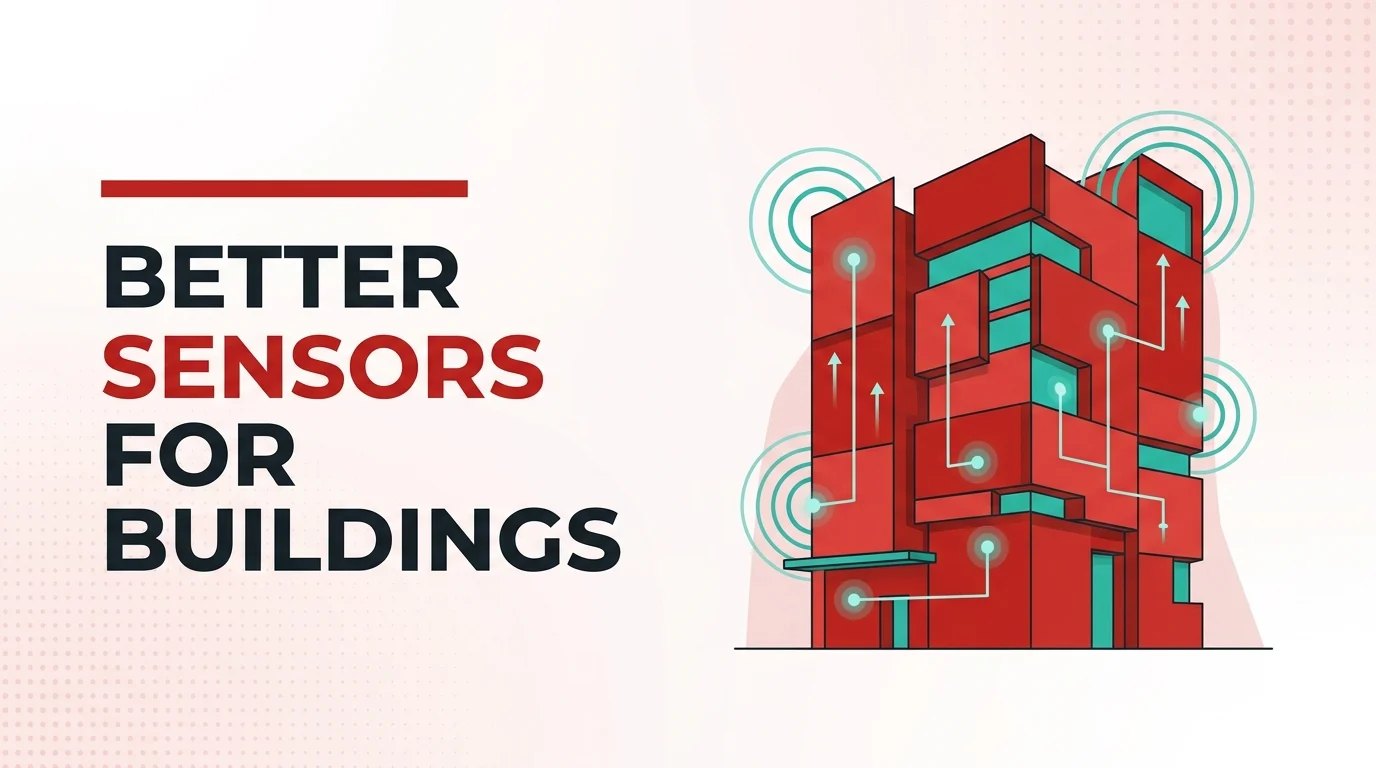
A newly completed building is expected to perform exactly as designed. In reality, that rarely happens. Mechanical systems drift. Control sequences contain errors. Occupancy patterns change immediately after handover.
The result is a building that may meet construction specifications but fails to operate efficiently.
Modern sensors solve this problem. They provide accurate data that building automation systems use to make decisions. Without reliable sensing, even the most advanced control platform cannot deliver stable performance.
Sensors Define Building Performance
Every automated building depends on measurements.
Temperature, humidity, pressure, airflow, occupancy, vibration, water flow, and power consumption all influence control logic. If these values are inaccurate, every downstream decision becomes inaccurate as well.
A newly completed building is especially vulnerable because equipment has not yet accumulated operational history. There is little baseline data for maintenance teams to compare against.
This is where high quality sensing becomes essential.
Organizations implementing advanced building monitoring often integrate solutions such as Triton Sensors to capture reliable operational data from the first day of occupancy. Accurate measurements reduce commissioning issues and improve long term asset visibility.
Commissioning Does Not End at Occupancy
Traditional commissioning verifies that equipment functions according to design intent.
It does not guarantee that systems will continue operating efficiently once occupants move in.
Building usage changes quickly.
Meeting rooms become fully booked. HVAC schedules change. Server rooms generate additional heat. Retail layouts evolve. Office occupancy fluctuates throughout the week.
Continuous sensing allows facility managers to validate that the building adapts to these changes instead of operating with fixed assumptions.
According to the U.S. Department of Energy, commissioning new commercial buildings remains one of the most cost effective ways to improve system performance while reducing operating costs and energy consumption. The largest commissioning study analyzed nearly 1,500 commercial buildings across North America.
Better Sensors Improve Fault Detection
Most equipment failures begin as small deviations.
A valve opens slower than expected.
A supply air sensor drifts by one degree.
A pressure transmitter begins producing unstable readings.
None of these immediately trigger alarms.
Over time, however, they increase energy consumption and reduce occupant comfort.
Modern fault detection platforms compare sensor values across multiple systems instead of relying on simple threshold alarms.
For example:
- Airflow can be compared with fan speed.
- Water temperature can be compared with valve position.
- Occupancy can be correlated with HVAC demand.
- Energy use can be validated against weather conditions.
These relationships only work when sensor data is accurate.
Research from Lawrence Berkeley National Laboratory found that operational HVAC faults are widespread across commercial buildings, reinforcing the importance of continuous sensing and automated diagnostics.
Indoor Air Quality Requires More Data
Indoor environmental quality has become a primary design objective.
Temperature alone is no longer enough.
Facilities increasingly monitor:
- Carbon dioxide
- Relative humidity
- Particulate matter
- Volatile organic compounds
- Differential pressure
These measurements help ventilation systems respond to actual occupancy rather than fixed schedules.
Demand controlled ventilation lowers energy use while maintaining healthy indoor conditions.
Without dependable sensors, ventilation systems either over ventilate, wasting energy, or under ventilate, reducing occupant comfort.
Predictive Maintenance Starts with Reliable Inputs
Predictive maintenance depends on historical trends.
Algorithms identify gradual performance changes before equipment fails.
Examples include:
- Bearing vibration increasing over several weeks.
- Pump efficiency steadily declining.
- Chiller performance falling under similar operating conditions.
- Air filters creating higher pressure drops.
Poor quality sensor data creates false maintenance alerts.
Reliable sensors reduce unnecessary service calls while identifying genuine equipment degradation earlier.
This allows maintenance teams to schedule repairs before failures interrupt building operations.
Smart Buildings Need Better Data
Building automation systems continue to become more sophisticated.
Artificial intelligence, digital twins, and energy optimization platforms all rely on sensor inputs.
If the underlying measurements are inaccurate, advanced analytics produce unreliable recommendations.
High resolution sensing improves:
- Energy optimization
- Occupancy analytics
- Equipment diagnostics
- Space utilization
- Asset lifecycle planning
The quality of building intelligence is determined by the quality of its data.
Looking Beyond Construction
Construction completion should be viewed as the beginning of building optimization rather than the end of a project.
Buildings operate for decades.
Sensor infrastructure installed during construction influences operational efficiency throughout that lifecycle.
Investing in accurate sensing reduces commissioning issues, improves equipment reliability, strengthens predictive maintenance, and supports better decision making for facility managers.
As buildings become increasingly connected, sensors are no longer simple measurement devices. They form the operational foundation of every modern smart building.