




Remember the days when a startup had to beg the phone company to pull copper wires, buy a clunky PBX box, and still miss calls because the lone receptionist stepped out for coffee? Those days are gone. Cloud telephony has turned the whole game on its head—no hardware, no wires, just download an app, plug in your headphones, and you’re in business.
I’ve been tracking this space since the early VoIP days, and the speed at which features are dropping is mind-boggling. From my experience, the startups that switch to cloud telephony in week-one scale faster, sound bigger, and spend a lot less. In this piece I’ll break down what cloud telephony really is, how it works under the hood, the features that matter, and the traps nobody warns you about.
What exactly is cloud telephony?
Think of it as your phone system living on someone else’s computer. Instead of a box in your pantry, the dial-tone arrives over the internet. You get a business number (or 50), greet callers with a professional menu, route them to the right founder, record the call, drop the recording into your CRM, and pay only for the minutes you use.
Technically it’s UCaaS—Unified Communication as a Service—which is a fancy way of saying calls, texts, WhatsApp, video, file-sharing and even AI chatbots sit inside one dashboard. The provider handles upgrades, security patches, and uptime SLAs while you focus on product-market fit.
How does the magic happen?
Your voice is compressed into tiny data packets and shot across the internet, the same way Netflix sends you a movie. When someone dials your cloud number, a server in (say) Mumbai decides—within 100 ms—where to send it: to your mobile app, laptop soft-phone, or the sales guy in Berlin. All encrypted, all logged, all searchable.
Because everything is software, you can snap your team’s communication into Slack, Zoho, HubSpot, Trello, or whatever stack you fancy. No extra wiring, no “PBX guy” on retainer.
Feature buffet—what you actually get
Every provider shouts about “100+ features.” Here are the six that move the needle for Indian startups:
1. Smart call forwarding
Incoming call rings every co-founder’s phone at once, or cascades from you to your co-founder to your intern. You can set time-based rules—skip the intern after 7 pm, send weekend calls straight to voicemail with a custom greeting. Call forwarding isn’t new; cloud just makes it instant and free.
2. Skill-based routing
Instead of “Press 1 for Sales, 2 for Support,” the system peeks at the caller’s history, language preference, and CLID, then hunts for an agent who closed a similar ticket in the last 30 days. Result: first-call resolution jumps and your average handle time drops.
3. CRM plug-ins
The moment a call ends, the recording, transcript and sentiment score land inside your CRM. No copy-paste, no “I’ll update the deal tomorrow.” CRM integration turns your phone into a data-capture machine.
4. Auto-attendant (aka digital receptionist)
A startup with three people can sound like Google. Record a quick greeting, drag-and-drop a menu tree, and you’re done. Bonus: upload festive versions during Diwali without touching a single wire.
5. IVR that doesn’t suck
Modern IVRs accept voice replies (“Speak your 12-digit order ID”) and can authenticate via OTP before an agent even says hello. 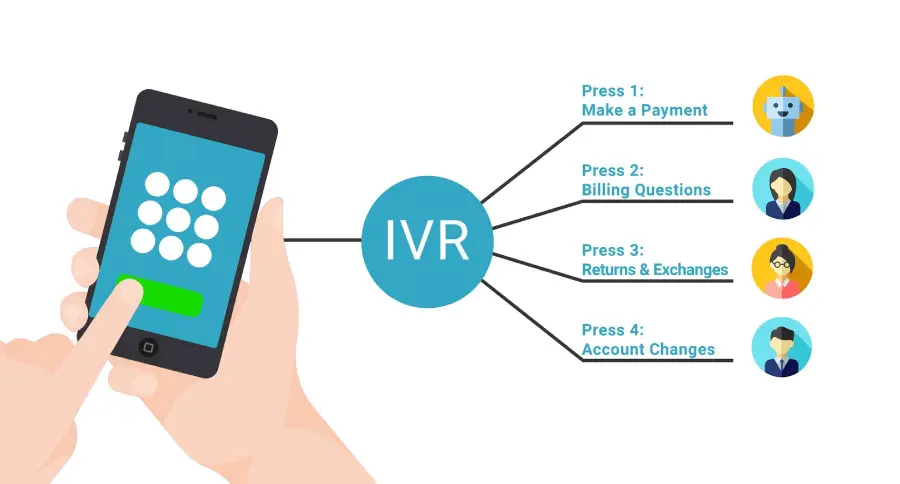 Pro tip: keep menu options under three and always offer a “zero-out” to a human.
6. Autodialer for outbound sales
Upload a CSV, hit start, and the system dials 3–4 numbers in parallel, dropping answered calls onto your reps. Autodialers multiply talk time; just ensure you’re TRAI-compliant and scrub DND numbers first.
Why startups are dumping landlines
1. Zero cap-ex, pay-as-you-grow
No ₹2 lakh PBX, no PRI lines, no AMC contracts. You pay per user per month—sometimes as low as ₹500—and scale from two founders to 200 reps without buying a single new box.
2. Work from Goa, or Goa-USA
Cloud telephony was tailor-made for post-COVID remote culture. Your lead designer can take support calls while surfing in Morjim, and no customer will know.
3. Built-in disaster recovery
Power cut in your co-working space? Calls automatically reroute to mobiles. Server farm in Chennai floods? Your provider fails you over to Mumbai. Try getting that resilience with a box in your pantry.
4. Analytics that VCs love
Real-time dashboards show call volume, missed-call rate, average answer speed, and revenue-per-call. Export it to your pitch deck and watch the eyebrows go up.
5. Security that doesn’t break the bank
End-to-end encryption, multi-factor admin logins, and ISO-27001 certs come standard. Building equivalent security on-prem would cost more than your seed round.
Picking the right provider—my cheat sheet
Every cloud telephony company promises the moon. Cut through the noise by scoring contenders on these five points:
- Hyper-local presence: Do they offer Indian mobile numbers, toll-free 1800, and regional STD codes? Customers still trust a local number.
- Uptime SLA with teeth: Look for 99.95 % uptime backed by financial penalties; anything less is fluff.
- TRAI & DoT compliance: KYC, DLT template registration, and spam-call filtering are non-negotiable in India right now.
- API depth: Can you trigger calls from your app, fetch live call logs, or build a WhatsApp hand-off? The deeper the API, the more automation you can weave.
- Pricing transparency: Per-second billing, no hidden “pulse” charges, and the ability to downgrade users mid-month keeps cash-flow sane.
Take the free trial, but don’t just test echo calls—simulate load. Have 10 friends ring simultaneously, pull the internet cable on one agent, and watch how the platform reacts. Only then swipe the card.
Common rookie mistakes
I’ve seen founders trip over the same stones:
1. Ignoring network quality. A 100 Mbps line shared with 20 interns bingeing YouTube will murder call quality. Run a separate leased line or at least QoS rules.
2. Buying every feature. Start with voice, IVR and call recording. Add AI bots and speech analytics after you hit 50 agents—else you’re burning runway on toys.
3. Skipping compliance paperwork. If you blast promotional SMS or calls without DLT registration, TRAI will slap you with a ₹50 k fine faster than you can say “but we’re a startup.”
4. Treating it as set-and-forget. Review your call logs weekly. Are 30 % of calls dropping at the 10-second mark? Your IVR is probably too chatty.
The bottom line
Cloud telephony isn’t a nice-to-have; it’s the fastest way to make a three-person startup sound like a billion-dollar enterprise. Choose a provider that scores high on local numbers, bullet-proof uptime, and honest pricing, and you’ll never miss a customer call again—or worse, miss a funding opportunity because your phone line was busy.
Still using personal mobile numbers for business? Do your future self a favour: port that number to the cloud this weekend, set up a peppy IVR, and watch how instantly prospects take you seriously. After all, in the startup world, the fastest way to look big is to sound big.


