
 Vipin PG
For most of robotics’ history, the story was simple: a robot arm bolted to a factory floor, doing the same weld or the same pick-and-place motion thousands of times a day. That version of robotics still exists, and it’s bigger than ever. But 2026 is the year a second, different story caught up to it , robots that walk, climb stairs, pick a ripe strawberry without bruising it, or fly a repair mission 22,000 miles above Earth. What changed isn’t just the hardware. It’s that robots can now perceive their surroundings and make judgment calls in environments nobody designed for them, thanks to advances in AI vision and decision-making. That shift has a name in the industry , Physical AI , and it’s the reason a warehouse robot and a surgical robot and a Mars rover arm are all part of the same conversation this year. Here are 10 real-world applications of robotics that show exactly how far that shift has gone.
1. Warehouses and Logistics: Humanoid Robots Go to Work
If there’s one place humanoid robots have moved from demo reel to daily shift, it’s the warehouse floor. Agility Robotics’ Digit , a two-legged robot with bird-like legs and gripper hands rather than a human-shaped face , has logged more than 65,000 operating hours across nine customer facilities, including sites run by Amazon, GXO Logistics, and the Latin American e-commerce giant Mercado Libre. At a GXO facility in Flowery Branch, Georgia that handles logistics for the clothing brand Spanx, Digit has moved over 100,000 totes. The scale of investor confidence behind this is notable: Agility announced in June 2026 that it’s going public through a SPAC merger valuing the company at $2.5 billion, backed by Amazon, Nvidia, SoftBank, and Foxconn. Its newest model, Digit v5, is built to lift roughly 50 pounds and work safely alongside human employees without safety fencing. Agility isn’t alone. Figure AI’s robots spent eleven months on BMW’s Spartanburg, South Carolina production line, contributing to the build of more than 30,000 vehicles. Apptronik, an Austin-based company that raised $935 million at a $5 billion valuation, is testing its Apollo robot with both Mercedes-Benz and GXO. The pattern across all of them is the same: humanoids are landing first in the tasks that are repetitive but too physically awkward for wheeled robots , carrying totes between shelving, climbing stairs, or working equipment built for human hands. 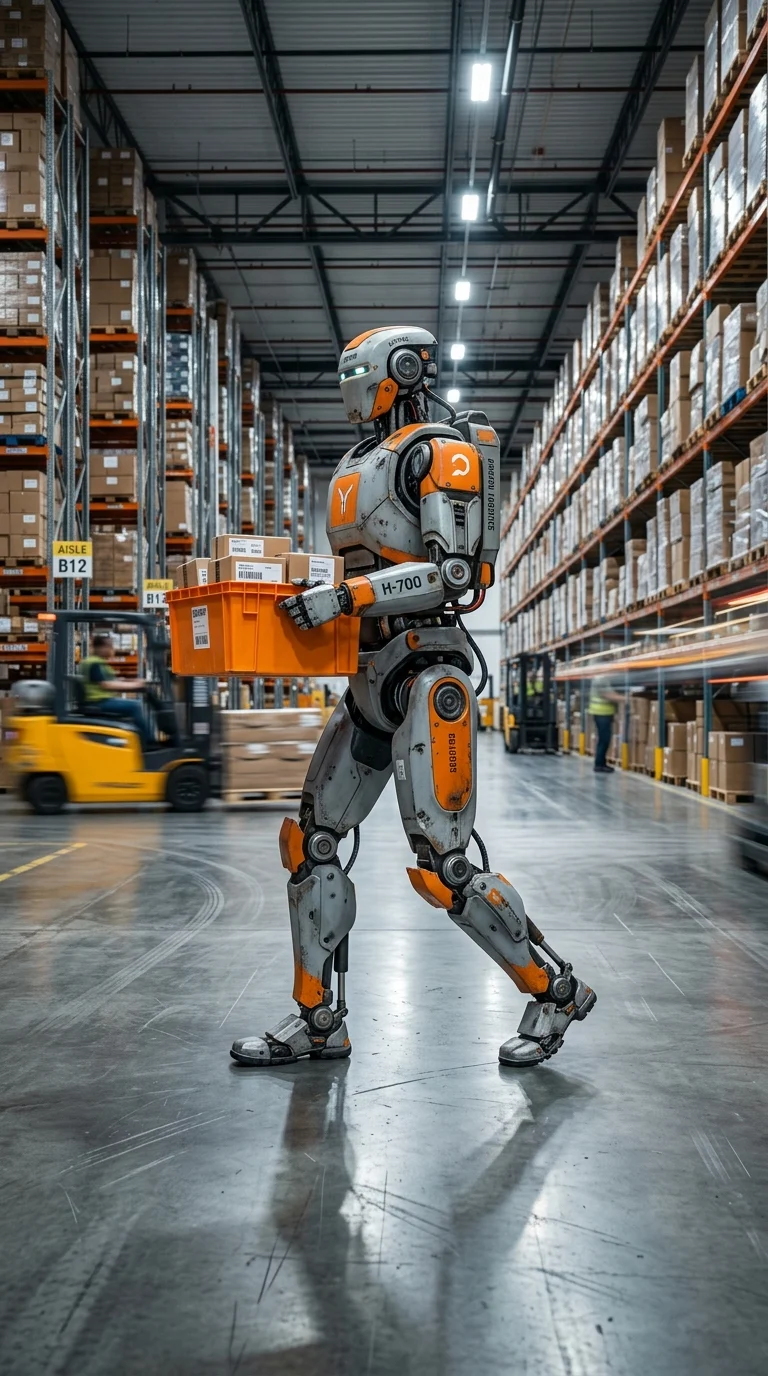
2. Factories: The Robots Are Getting Smarter, Not Just Faster
Separate from the humanoids walking warehouse aisles, traditional industrial robot arms are having their own quiet transformation. According to the International Federation of Robotics, the global market for industrial robot installations hit an all-time high of $16.7 billion in 2026. What’s changed isn’t the arms themselves , it’s what’s directing them. The industry is calling this shift “agentic AI”: robots that combine data-driven analytical AI (which spots patterns and predicts equipment failures before they happen) with generative AI (which lets a robot adapt to a new part or a new task without being reprogrammed line by line). It’s also showing up in how safety rules are written , updated international standards have moved away from the old idea of a single “collaborative robot” and now define safety at the level of the entire task, since robots and humans increasingly share the same workspace. The practical effect for a factory manager is fewer unplanned stoppages and less time spent manually reprogramming a robot every time a product line changes , something that used to take days and now increasingly takes hours.
3. Hospitals and Surgery: Precision, Not Autonomy
Surgical robotics is one of the oldest and most misunderstood entries on this list. Intuitive Surgical’s da Vinci system has been in operating rooms for over two decades, with more than 8,000 units installed worldwide and over 12 million procedures performed. In January 2026, the newest da Vinci 5 platform received FDA clearance for cardiac surgery, including mitral valve repair and coronary bypass grafting , procedures that were considered too high-stakes for robotic assistance not long ago. It’s worth being clear about what these robots actually do, because the word “robot” creates the wrong picture. A da Vinci system doesn’t operate on its own , a surgeon sits at a console and controls every movement, with the robot translating hand motions into smaller, steadier movements inside the patient. The benefit is precision: tremor reduction, 10x magnification, and instruments that can rotate in ways a human wrist can’t. For years, da Vinci had the field mostly to itself. That’s changing fast. Medtronic’s Hugo system received FDA clearance for urologic procedures in December 2025 and performed its first US commercial cases in early 2026. Stryker’s Mako, built specifically for orthopedic surgery, now has a handheld version for knee procedures. The global surgical robotics market is now valued at roughly $8.4 billion, and for the first time in twenty years, hospitals are genuinely comparing vendors instead of defaulting to one. 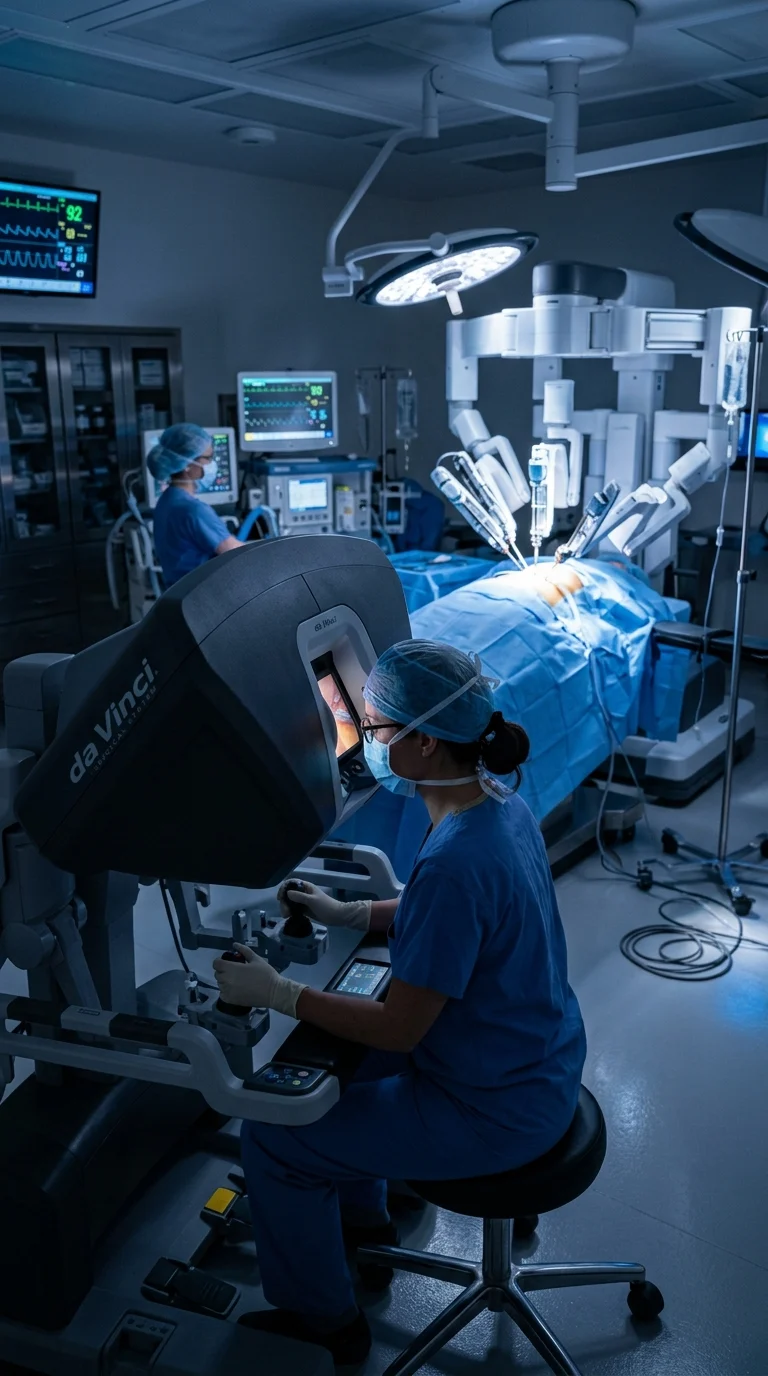
4. Farms: Robots That Can Tell a Ripe Strawberry From an Unripe One
Agriculture has quietly become one of the most demanding proving grounds for robotics, because farm work needs something factories never required: judgment. A robotic arm on an assembly line does the same motion every time. A robot picking strawberries has to look at each individual berry, decide if it’s ready, and handle it gently enough not to bruise it , all while moving through uneven, muddy, unpredictable terrain. Companies like Harvest CROO have built berry-harvesting robots that pick roughly eight berries per second per robotic arm, offered to farms as a per-acre service rather than an upfront purchase. On the weeding side, Carbon Robotics’ laser-based weeders can cut herbicide use by up to 90% by identifying and eliminating individual weeds instead of spraying entire fields, while precision sprayers like John Deere’s See & Spray system reduce chemical waste by 60 to 80% using the same targeting logic. Autonomous tractors have also crossed into everyday use rather than pilot programs , the Monarch MK-V, a fully electric, driver-optional tractor priced around $78,000, is now a realistic purchase for vineyards and specialty crop farms, not just a research prototype. And in Southeast Asia, an agri-tech company called Agroz has deployed humanoid robots inside multi-story vertical farms to handle planting, monitoring, and harvesting in growing environments that were originally designed for human workers.
5. Your Street: Delivery Robots and Driverless Trucks
The most visible application of robotics for most people isn’t in a warehouse or an operating room , it’s the small, cooler-sized box rolling down the sidewalk. Starship Technologies, founded by Skype’s co-founders, has now completed more than 10 million deliveries across eight countries, with its robots making around 125,000 street crossings a day. Serve Robotics, backed by Nvidia and spun out of Uber, has scaled its sidewalk fleet to over 2,000 robots operating in Los Angeles, Atlanta, Dallas-Fort Worth, Miami, and Chicago. Behind the scenes, the bigger shift is happening on roads, not sidewalks. Walmart and Loblaw are now running fully driverless middle-mile box trucks , no safety driver on board , between distribution hubs and stores in more than ten markets. The economics are a big part of why this is scaling so fast: industry estimates put the cost of a human courier delivery at $5 to $8, compared to a small fraction of that for a robot operating at scale, which is why the delivery robot market is projected to grow from roughly $1.33 billion in 2026 toward $8.57 billion by 2029. 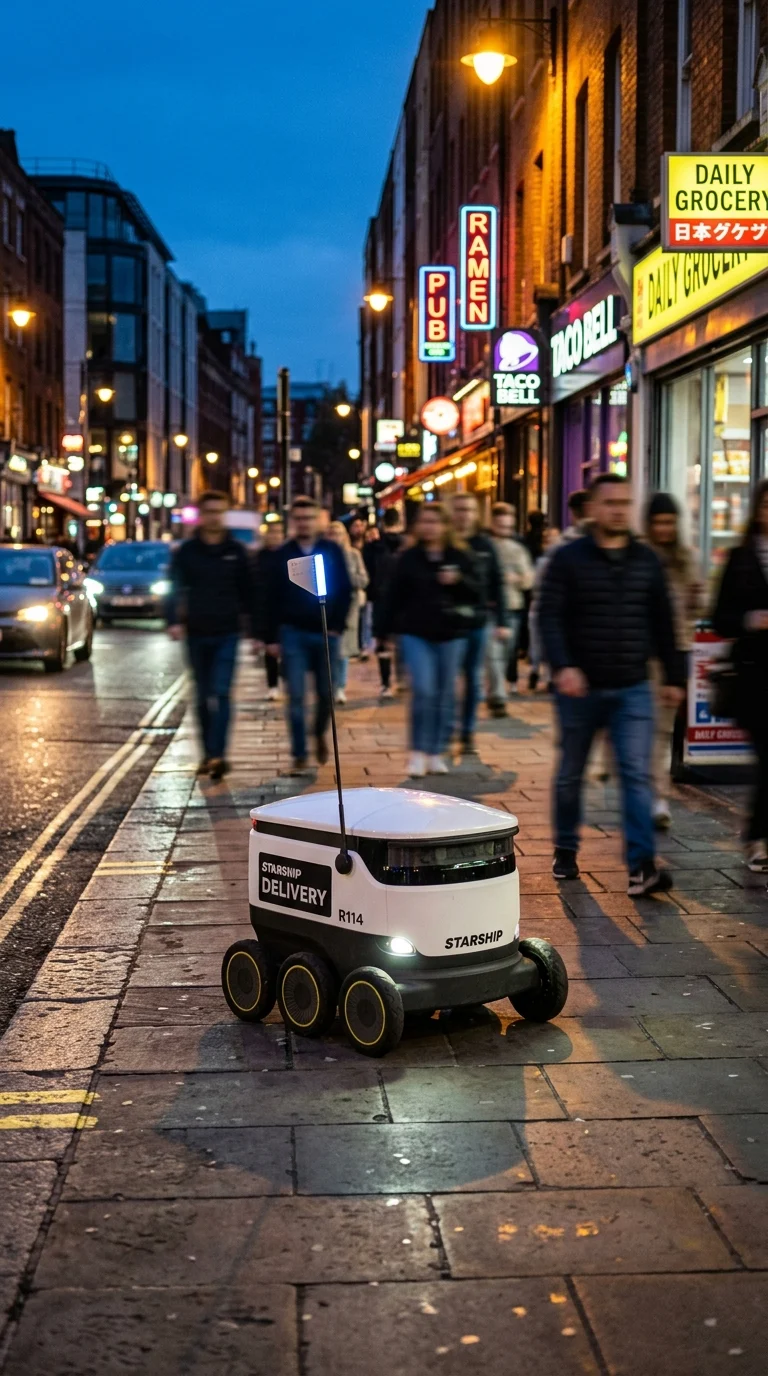
6. Hotels and Restaurants: Robots on the Front Line of Service
Hospitality has one of the clearest business cases for robotics of any industry on this list, mostly because of a staffing crisis that’s been building for years. In 2025, 87% of hotels reported staffing shortages, and labor now eats up roughly a third of total hotel revenue. That’s driving fast adoption of delivery and cleaning robots , Keenon Robotics alone has deployed its robots across more than 10,000 hotels and 25,000 restaurants worldwide. Bear Robotics’ Servi line has become a familiar sight in restaurants, hospitals, and senior living facilities, handling food running and table bussing so staff can focus on the parts of the job that actually need a human touch , reading a table’s mood, upselling a dish, calming down a frustrated guest. In China, Pudu Robotics is working toward what’s being billed as the world’s first hotel fully staffed by robots, with a trial rollout planned for late 2026 covering everything from check-in to in-room delivery. The global hospitality robotics market, valued at $0.76 billion in 2026, is expected to more than triple by the early 2030s.
7. Disaster Zones: Going Where It’s Too Dangerous to Send People
This is the application of robotics that’s easiest to overlook, because it doesn’t show up in a product review , it shows up in emergency response reports. During the 2019 Notre-Dame Cathedral fire, a French-built tracked robot called Colossus directed powerful water streams into areas that had become too structurally unstable for firefighters to enter. That moment is now widely credited with changing how fire departments think about robotics. Today, the Los Angeles Fire Department has used its Thermite RS3 robotic firefighting vehicle since 2020, responding to at least 39 commercial structure fires. FDNY has deployed Boston Dynamics’ four-legged Spot robot for hazardous search-and-rescue work, sending it into spaces too unstable or toxic for a human to enter first. Hyundai is developing a robot specifically for electric vehicle fires in underground parking garages, working with South Korea’s National Fire Agency, with deployment targeted for later in 2026. Quadruped robots from DEEP Robotics can be fitted with gas detectors and thermal cameras to scout collapsed buildings and relay real-time data before any person steps inside.
8. Space: Repairing Satellites Without Sending a Human
Few applications of robotics are as literally out of this world as what launched on July 21, 2026. A SpaceX Falcon 9 carried Northrop Grumman’s Mission Robotic Vehicle into orbit , a spacecraft with a pair of robotic arms designed to inspect, relocate, repair, and refuel satellites 22,000 miles above Earth. The mission carries three Mission Extension Pods, essentially propulsion jetpacks that can be attached to aging satellites to extend their working life by up to eight more years, rather than having operators replace an entire spacecraft. The point is the product of research going back more than two decades, involving NASA, DARPA, and the Naval Research Laboratory. The same lineage of engineering runs through NASA’s Perseverance rover, whose seven-foot robotic arm carries the instruments used to search for signs of ancient life on Mars. Looking further ahead, a company called GITAI is planning a 2026 demonstration on the lunar surface, where its rover will attempt to assemble a communication antenna and solar panels , a small but real step toward robots building infrastructure on the Moon before humans arrive. 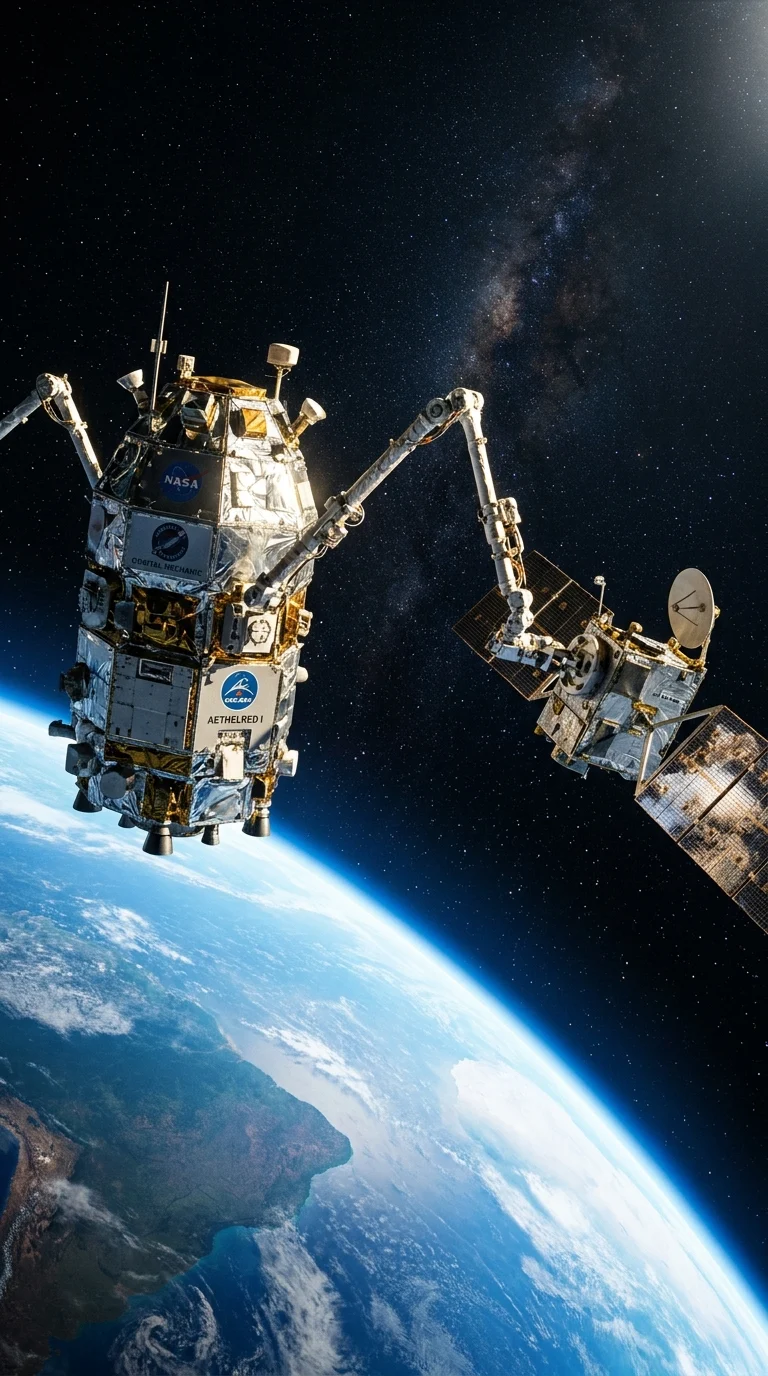
9. Inside Your Home: Where Robotics Is Still Mostly About Chores
It’s worth being honest about this category, because it’s the one most readers will actually shop for. Robot vacuums are genuinely mature technology at this point , models in the $150 to $1,500 range now navigate around furniture, empty their own bins, and avoid pet accidents with reasonable reliability. Robot lawn mowers have reached a similar “set it and forget it” stage for most yard sizes, and pool-cleaning robots are common enough to barely register as robotics anymore. Beyond chores, things get more experimental. Amazon’s Astro functions as a mobile home security robot, patrolling and alerting owners to anything unusual. Samsung’s Ballie, powered by Gemini AI, positions itself as a rolling home companion that can also project video and control smart home devices. But full household humanoid robots , the kind that could fold your laundry or unload your dishwasher , are still priced at $20,000 or more, or around $499 a month to lease, and remain unreliable outside of controlled demos. If you’re shopping for a home robot in 2026, the honest advice is to buy for one specific chore rather than expecting a general-purpose helper.
10. Physical AI: The Technology Connecting Everything Above
Every application on this list , the warehouse humanoid, the surgical arm, the satellite repair spacecraft, the strawberry-picking robot , is being pushed forward by the same underlying shift, which the robotics industry has started calling Physical AI. The idea is simple to explain even though the engineering behind it isn’t: instead of programming a robot with a fixed set of movements for a fixed task, engineers now train robots using AI models that let them perceive their surroundings and make decisions on the fly, the way a person would when handed an unfamiliar job. This is why a robot originally built to move warehouse totes can also be tested in a car factory, and why the same class of AI models showing up in surgical robots is also showing up in space robotics research. Perception is the foundation of all of it , depth sensing, camera vision, and real-time awareness are what let a robot avoid a person walking through a warehouse aisle or judge how much force to apply while gripping a ripe piece of fruit. As that perception technology keeps improving and gets cheaper to build into hardware, it’s the biggest reason 2026 has become the year robotics applications multiplied across so many industries at once, instead of staying confined to the factory floor where the technology started.
The Bottom Line
What connects a robot moving totes in a Georgia warehouse to one repairing a satellite in geosynchronous orbit isn’t the shape of the machine , it’s the same generation of AI that lets both of them handle a world that wasn’t built for robots. That’s the real story behind the applications of robotics in 2026: not robots replacing people wholesale, but robots finally becoming reliable enough to take on the parts of a job that are dangerous, repetitive, or physically demanding, while leaving the judgment calls to the humans working alongside them.
Frequently Asked Questions
What are the most common real-world applications of robotics in 2026?
The most established applications are in warehousing and logistics, industrial manufacturing, and surgical robotics, since these industries have used robots for years and have the infrastructure to scale them. The fastest-growing new applications are humanoid robots in warehouses and factories, autonomous delivery robots, and agricultural robots for harvesting and weeding.
Are humanoid robots actually working today, or is it still mostly demos?
Both are true, depending on the company. Agility Robotics’ Digit and Figure AI’s robots have documented, paid deployments at real facilities with companies like Amazon, GXO, BMW, and Mercado Libre. Many other humanoid robot companies are still in pilot or demo stages, so it’s worth checking whether a specific robot has verified commercial deployments before assuming it’s ready for widespread use.
Is robotic surgery fully automated?
No. Current surgical robots, including da Vinci, Hugo, and Mako, are entirely surgeon-controlled. The surgeon operates every movement from a console, and the robot’s role is to improve precision through tremor reduction, magnification, and a wider range of instrument motion , not to make independent decisions.
What is Physical AI?
Physical AI refers to AI systems that let robots perceive their environment and make real-time decisions, rather than simply following a pre-programmed sequence of movements. It’s the technology that allows the same class of robot to adapt across different environments, from a warehouse aisle to a farm field. Note: Images are for representational purposes only and are not actual representations.