 Vipin PG
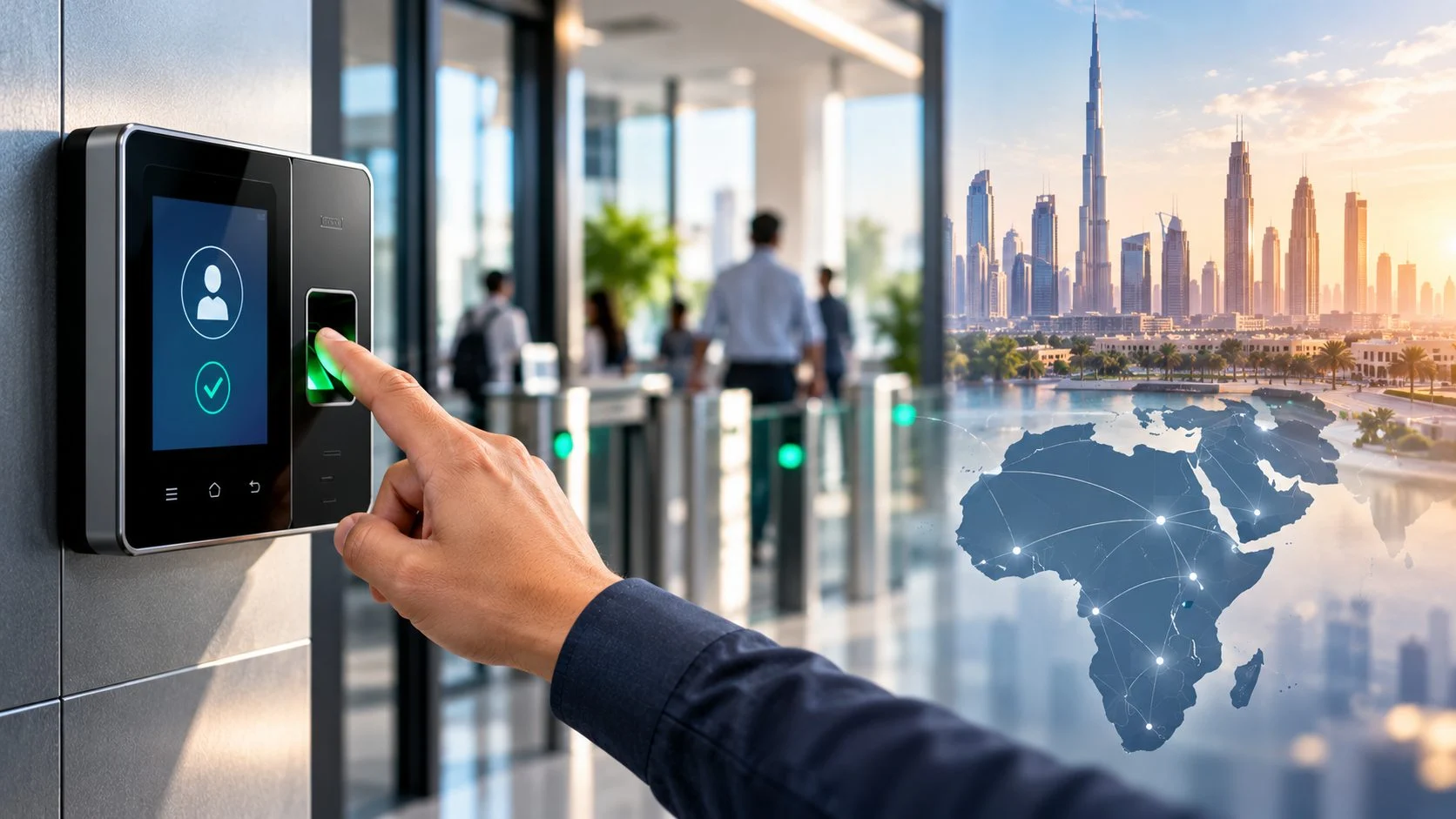
Managing employee attendance accurately has become an important operational requirement for businesses across the Middle East and Africa. From corporate offices and retail outlets to manufacturing facilities, hospitals, schools and construction sites, organisations need dependable methods to record working hours, manage shifts and maintain secure access to their premises.
Traditional attendance registers and manual timekeeping processes can create administrative challenges, particularly when businesses employ hundreds of workers across several locations. Biometric attendance systems offer an alternative by using technologies such as fingerprint recognition and facial recognition to verify employee identity and record attendance electronically.
Among the manufacturers operating in this sector, ZKTeco has established a recognisable presence in biometric identification, time attendance and access control technology. Its product portfolio includes fingerprint terminals, facial recognition devices, multi-biometric systems and associated software.
At the implementation level, companies also need suppliers capable of matching the right hardware to their requirements, configuring the equipment and supporting deployment. This is where regional providers such as TACS Contracting LLC, based in Dubai, UAE, play a role in connecting biometric technology with practical business applications.
Understanding both the technology manufacturer’s capabilities and the supplier’s implementation role helps organisations make better purchasing decisions.
Why ZKTeco Has Become a Recognised Brand in Biometric Attendance
ZKTeco focuses on biometric identification and security technologies, including fingerprint recognition, facial recognition, access control and time attendance solutions.
One reason for its recognition in the attendance market is its broad range of devices designed for different workplace requirements. Rather than offering only one type of fingerprint machine, its portfolio includes products with different authentication methods, capacities, connectivity options and management features.
Businesses can explore the manufacturer’s official time attendance product range to understand the available categories.
Several factors help explain the brand’s position in this industry.
A broad selection of biometric devices
Different workplaces require different attendance technologies. A small office may need a straightforward fingerprint terminal, while a large organisation may prefer facial recognition or a device that combines fingerprint, face and RFID card authentication.
ZKTeco’s product portfolio covers several of these requirements. This variety allows businesses and system integrators to compare devices according to their operational needs instead of selecting a single technology for every installation.
Integration of attendance and access control
Employee attendance and building security often overlap. A business may want to record an employee’s arrival while also controlling entry through a designated door.
Depending on the model, ZKTeco terminals can support attendance functions, access control features or both. Some devices offer interfaces for electric locks, door sensors and exit buttons, while others are designed primarily for attendance recording.
Selecting the correct model is essential because the presence of biometric recognition does not automatically mean that every device supports the same access control functions.
Software and connectivity options
Modern attendance systems need to transfer transactions into a management platform where administrators can review records and generate reports.
Depending on the model and software configuration, ZKTeco solutions may support network connectivity, USB transfer, desktop attendance software or cloud-based management options.
These capabilities can help organisations manage attendance across multiple departments or locations, provided the selected hardware and software are compatible.
Fingerprint and Facial Recognition: Technology for Different Workplaces
One of the important developments in biometric attendance is the availability of different methods for verifying employee identity.
Fingerprint attendance machines
Fingerprint terminals identify users by comparing a scanned fingerprint with a previously registered biometric template. They are commonly used for employee attendance and, in supported models, door access control.
They can be appropriate for offices, shops, warehouses and other workplaces where fingerprint recognition suits the working environment.
However, performance can be affected by worn fingerprints, dirty sensors, moisture or other conditions. Organisations should evaluate the quality of the workforce’s fingerprints and consider alternative authentication methods when necessary.
Facial recognition attendance systems
Facial recognition terminals use facial characteristics to verify a registered user. Depending on the model, they may support touchless authentication, reducing the need for employees to touch a shared sensor.
These systems can be useful at office entrances, reception areas and other locations where multiple employees need to register their attendance.
Actual performance depends on the terminal, installation position, lighting, environmental conditions and configuration. Buyers should also check the manufacturer’s supported recognition methods and any available anti-spoofing features.
Multi-biometric attendance terminals
Some terminals combine facial recognition, fingerprint verification and RFID card support. This can provide organisations with more than one authentication method.
For example, an organisation may use fingerprint verification for most employees while providing an alternative supported method for staff who have difficulty registering a readable fingerprint.
The best choice depends on workforce conditions, security requirements, budget and software compatibility.
How Biometric Attendance Systems Improve Workforce Management
Biometric attendance equipment can provide more than a digital replacement for a paper register. When combined with suitable attendance software, it can help businesses organise workforce records more efficiently.
More structured attendance records
Electronic transactions reduce the need for manually entering every check-in and check-out time. Administrators can review attendance records and identify missing punches or unusual entries for verification.
Biometric verification can also reduce certain forms of proxy attendance, although the level of protection depends on the technology, configuration and applicable controls.
Shift and overtime management
Businesses operating multiple shifts need more than a simple list of arrival times. Attendance software may be required to calculate working hours, late arrivals, early departures, overtime and absences according to company policies.
These functions are generally handled by the management software rather than by the biometric terminal alone.
Before purchasing a ZKTeco attendance system, organisations should confirm that the selected device works with software that supports their actual shift patterns and reporting requirements.
Multi-location attendance management
Companies operating branches, warehouses or project sites may need to collect attendance records from several terminals.
Network-connected devices and compatible management platforms can help centralise these records, subject to the supported connectivity and deployment architecture.
For construction, manufacturing and logistics businesses, this can be particularly useful when workers report to different locations or follow changing work schedules.
Why Choosing the Right Supplier Matters as Much as Choosing the Brand
Even a capable biometric terminal may fail to meet business expectations if the wrong model is selected or the installation is poorly planned.
For example, a fingerprint attendance machine with sufficient user capacity may still be unsuitable if its transaction storage is too limited for the organisation’s recording requirements. Similarly, a terminal that records attendance may not support the electric lock integration needed for a secure entrance.
Businesses should therefore evaluate the supplier’s ability to understand the application, recommend suitable equipment and assist with implementation.
Important considerations include:
- Verification of the exact device model and its specifications.
- Assessment of employee capacity and transaction storage.
- Compatibility with attendance and payroll software.
- Network configuration and data synchronisation.
- Integration requirements for doors and access controllers.
- Installation, administrator training and after-sales support.
This is particularly relevant when equipment is being deployed across multiple buildings or countries. Standardising devices and software can simplify management, but only when the chosen products support the required functions.
TACS Contracting LLC: Connecting Biometric Technology with Business Requirements
Based in Dubai, TACS Contracting LLC provides biometric attendance, access control and related security solutions for businesses in the UAE. Its published portfolio includes ZKTeco equipment alongside other security and identification technologies.
The company also presents its services to customers across the GCC, the wider Middle East and African markets through its business operations and product platforms.
You can explore its biometric attendance and access control solutions to review its product categories and service offering.
The importance of a regional supplier is not simply the availability of a particular machine. Businesses often need assistance determining which device fits their workforce, premises, existing infrastructure and reporting requirements.
TACS Contracting LLC’s product portfolio covers several areas relevant to these projects, including:
- ZKTeco fingerprint attendance terminals.
- Biometric facial recognition devices.
- RFID card-based identification and access control.
- Attendance management and related software solutions.
- Door access control equipment.
- System configuration and installation services, according to project requirements.
For an organisation evaluating biometric technology, the practical next step is to provide the supplier with its employee count, attendance rules, installation locations and integration requirements. These details help determine whether a standalone terminal or a more comprehensive attendance and access control solution is appropriate.
Supporting Businesses Across the Middle East and Africa
The Middle East and Africa contain a wide range of business environments, from modern commercial offices to factories, distribution centres, educational institutions and large construction projects.
Attendance requirements can differ significantly between these organisations.
United Arab Emirates
Businesses in Dubai, Abu Dhabi, Sharjah and other emirates may need systems that support office attendance, shift management, controlled entry and integration with existing HR processes.
For these customers, a supplier should clarify whether the project requires equipment only, installation, software configuration or a complete integrated solution.
Saudi Arabia and the wider GCC
Organisations operating across several sites may need consistent attendance reporting, standardised employee enrolment procedures and centralised administration.
A suitable solution should be assessed against local site conditions, network infrastructure, software requirements and the company’s operational policies.
African markets
Businesses in African markets may have different procurement, logistics, connectivity and support requirements depending on the country and installation location.
For multi-site projects, buyers should confirm equipment availability, delivery arrangements, local installation responsibilities, software compatibility and the process for obtaining technical assistance after deployment.
Through its Dubai-based operations and TACS Africa platform, TACS Contracting LLC presents biometric attendance and access control products to customers across the Middle East and Africa. Its TACS Africa platform provides additional information about the company’s identification and security product offering.
The ability to supply equipment is one part of a successful project. Clear specifications, dependable logistics and appropriate technical support are also important to customers working across regional markets.
What Businesses Should Consider Before Buying a ZKTeco Attendance System
Before choosing a biometric attendance terminal, procurement teams should look beyond the brand name and compare the actual requirements of the installation.
Employee capacity
Check the number of fingerprint templates, facial templates or cards supported by the specific model. Also verify transaction storage and expected attendance volume.
Software requirements
Confirm whether the device is compatible with the intended attendance management software and whether that software supports the organisation’s shifts, overtime rules and reports.
Connectivity
Check whether the terminal supports Ethernet, Wi-Fi, USB or another required communication method. For multiple sites, establish how attendance transactions will be collected and synchronised.
Workplace conditions
Consider dust, moisture, temperature, lighting and the location of the terminal. Choose a device designed for the intended installation environment.
Security and privacy
Review administrator access, biometric data handling, system permissions and relevant data protection obligations. Biometric systems should be configured and operated responsibly.
Installation and maintenance
Clarify whether installation, software setup, training and maintenance are included in the quotation. Confirm warranty terms and the process for resolving faults.
These checks help ensure that the chosen system supports the organisation’s actual requirements rather than simply meeting a list of headline specifications.
The Future of Biometric Attendance: Beyond Fingerprint Scanning
Biometric attendance technology continues to develop as organisations seek more flexible identification and workforce management solutions.
Facial recognition, multi-biometric authentication, mobile-connected platforms and centralised management tools are expanding the options available to businesses.
However, newer technology is not automatically the right choice for every organisation. A basic fingerprint terminal may remain suitable for a small office, while a large enterprise may benefit from a multi-biometric system integrated with attendance software and door access controls.
The important consideration is how well the technology solves the operational problem.
Manufacturers such as ZKTeco provide a range of devices and software options, while regional suppliers such as TACS Contracting LLC can help businesses assess product suitability and implementation requirements.
As organisations expand across different locations, demand for compatible hardware, consistent configuration and effective support is likely to remain an important consideration in biometric attendance projects.
Conclusion: Combining Established Technology with Regional Solutions
ZKTeco has developed a recognisable position in biometric attendance and access control through a product portfolio that includes fingerprint terminals, facial recognition devices, multi-biometric systems and attendance management options.
These technologies can help organisations improve attendance recordkeeping, support workforce reporting and manage employee access when the equipment is correctly selected and configured.
At the same time, successful implementation requires more than choosing a recognised manufacturer. Businesses must assess user capacity, software compatibility, connectivity, security, installation conditions and long-term support.
TACS Contracting LLC operates in this space by offering biometric attendance and access control products and related services from Dubai, with its business platforms serving customers across the UAE, the wider Middle East and Africa.
For organisations considering a new attendance system, the most effective starting point is to define the operational requirements, verify the specifications of the proposed equipment and obtain a solution that fits the actual working environment.
The combination of suitable biometric technology, careful system planning and reliable implementation can provide a practical foundation for more organised workforce management across offices, industrial facilities and multi-location businesses.