

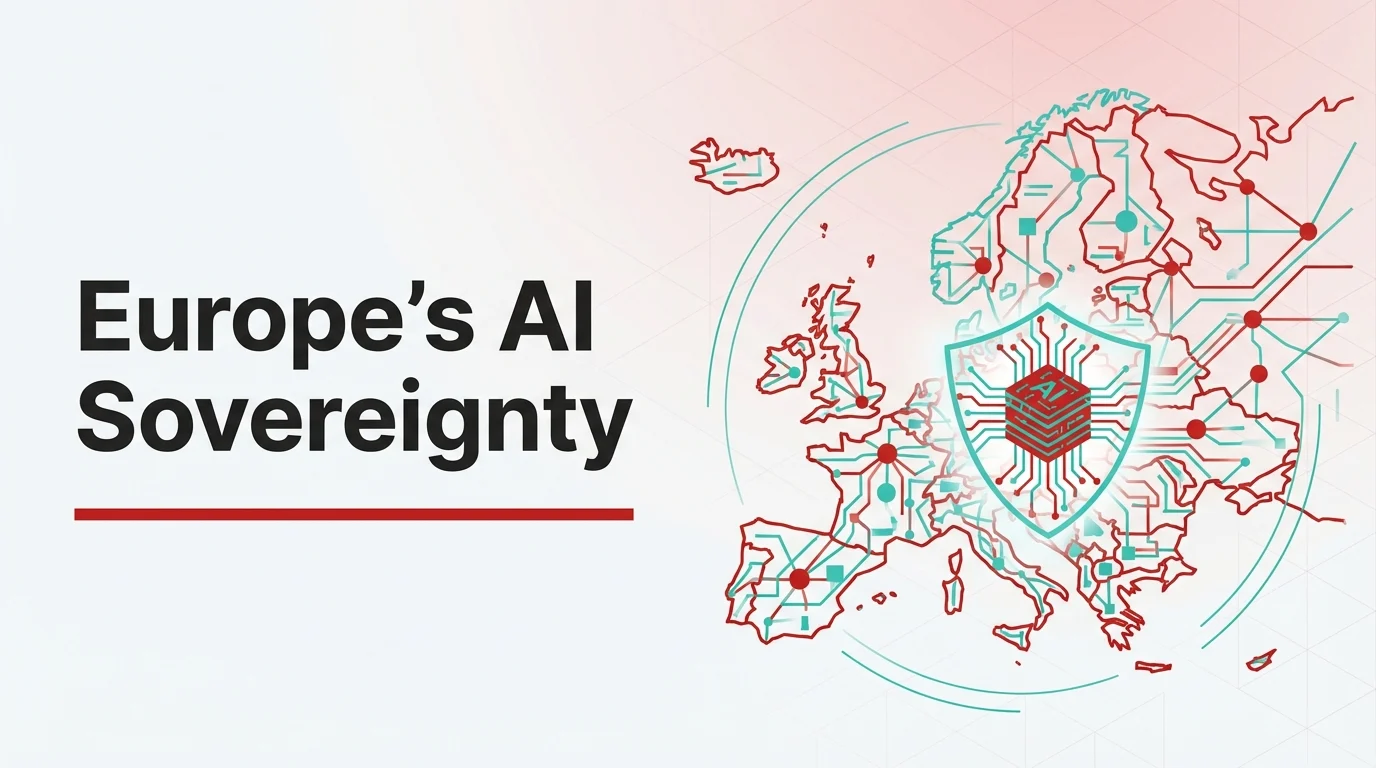
Europe has long watched the artificial intelligence race from the sidelines — trailing behind American hyperscalers flush with billions and Chinese labs backed by state ambition. But that narrative is shifting. On March 30, 2026, French AI startup Mistral made its boldest move yet: a landmark $830 million debt raise to fund a cutting-edge data center just south of Paris. It is not just a funding headline. It is a statement of intent — that Europe is ready to build its own AI stack, on its own terms, in its own backyard.
The Deal: What Mistral Just Did and Why It Matters
According to TechCrunch, Mistral AI secured $830 million in debt financing to build a new data center in Bruyères-le-Châtel, a municipality located in the Essonne region south of Paris. The facility will be powered by 13,800 Nvidia GB300 GPUs — part of Nvidia’s Grace Blackwell infrastructure — delivering a total compute capacity of 44 megawatts. The data center is expected to come online in the second quarter of 2026.
What makes this raise particularly significant is the structure of the deal. This is Mistral’s first-ever debt financing — a departure from traditional equity rounds — and it signals something that the broader financial world has been waiting to see: lenders are now willing to treat AI infrastructure as a bankable, creditworthy asset class.
The transaction was backed by a consortium of seven global banks: Bpifrance, BNP Paribas, Crédit Agricole CIB, HSBC, La Banque Postale, MUFG, and Natixis Corporate & Investment Banking. That is not a list of speculative venture backers — it is a serious institutional lineup that speaks to how far AI infrastructure credibility has come in the eyes of traditional finance.
“Scaling our infrastructure in Europe is critical to empower our customers and to ensure AI innovation and autonomy remain at the heart of Europe.”
— Arthur Mensch, CEO of Mistral AI
The Bigger Plan: 200 Megawatts Across Europe by 2027
The Paris-area data center is only one piece of a much larger infrastructure puzzle. Just a month before this announcement, Mistral revealed a separate 1.2-billion-euro investment plan to build data centers and compute capacity in Sweden. Together, these projects are part of an ambitious target: 200 megawatts of compute capacity distributed across Europe by the end of 2027.
Mistral is also involved in a larger joint venture with Bpifrance, UAE fund MGX, and Nvidia to develop a 1.4-gigawatt AI campus in the Paris region. That campus, set to break ground in the second half of 2026 and become operational by 2028, will support the full AI lifecycle — from exascale model training to low-carbon inference. Nvidia CEO Jensen Huang has publicly described the partnership as transformational for France, while French President Emmanuel Macron called it historic at VivaTech.
Taken together, Mistral is no longer just an AI model company. It is building the plumbing — the compute layer, the infrastructure fabric — that European AI will run on.
Mistral’s War Chest vs. the Americans: The Funding Reality
Let’s be clear about the numbers. Mistral has now raised a total of approximately $2.9 billion, making it the most well-funded large language model (LLM) builder in Europe, according to deal-tracking platform Dealroom. For context, that figure includes a September 2025 Series C led by Dutch semiconductor giant ASML, with backing from Andreessen Horowitz, DST Global, General Catalyst, Index Ventures, Lightspeed, and Nvidia.
But the gap with American players is still enormous. OpenAI has raised around $180 billion in total, and Anthropic sits at roughly $59 billion. Mistral’s $2.9 billion is not in the same league by raw capital metrics. As CNBC noted, the scale differential between European and US AI labs remains significant — but the trend lines in European fundraising are clearly moving in the right direction.
In 2026 alone, UK-based Nscale raised $2 billion, Wayve secured $1.2 billion, and France’s AMI Labs pulled in $1 billion. European AI is no longer just an academic story. Capital is flowing in, and it is flowing fast.
Mistral’s CEO Arthur Mensch has also signaled strong commercial momentum, stating at the 2026 World Economic Forum in Davos that the company is on track to exceed $1 billion in revenue by year-end, driven by enterprise licensing and its Le Chat professional tiers.
What Is AI Sovereignty and Why Does Europe Care So Much?
The concept of AI sovereignty — building and running AI systems within a jurisdiction’s own borders, under its own legal and regulatory framework — might sound abstract. But for European governments and regulated industries, it is deeply practical.
Europe’s GDPR and the EU AI Act impose strict requirements on how data is stored, processed, and protected. Regulated sectors — banking, healthcare, defense, public administration — cannot afford to depend on cloud providers based in foreign jurisdictions that may change access rules, expose data to foreign legal requests, or simply pull the plug on a service. Mistral’s approach directly addresses this vulnerability.
Unlike OpenAI’s predominantly closed, API-driven model, Mistral releases its models under permissive Apache 2.0 open-weight licenses. That means organizations can download, self-host, and run Mistral’s models on their own servers — with no data ever leaving their own infrastructure. For a French military client or a German public health authority, this is not a luxury feature. It is a requirement.
Mistral has already signed framework agreements with France’s military and, in 2026, inked a deal with France and Germany to deploy AI solutions for public administration through 2030. These are not proof-of-concept pilots. They are multiyear procurement commitments — the kind that signal real institutional trust.
Mistral’s Model Stack: What They’re Actually Building
Beyond infrastructure, Mistral has been busy on the model side. Its current portfolio includes a complete family of open-weight models under the Mistral 3 series — from compact Ministral 3B and 8B models to Mistral Large 3, a sparse mixture-of-experts flagship with 675 billion total parameters and 41 billion active. All models support multimodal inputs and a 256,000-token context window, meaning they can process entire policy documents, contracts, or system logs in a single pass.
Magistral, its reasoning model launched in June 2025, brings chain-of-thought reasoning across global languages and alphabets — with traceable logic steps that allow enterprise users to audit exactly how the model reached a decision. This auditability is critical for regulated industries and one area where Mistral’s architecture genuinely diverges from the American frontier labs.
At Nvidia GTC in March 2026, Mistral launched Mistral Forge — a platform that lets enterprises build custom AI models trained on their own proprietary data. This positions Mistral not just as a model vendor but as the backbone of a “build your own AI” ecosystem for European businesses.
Mistral also joined the Nvidia Nemotron Coalition, an international collaboration dedicated to advancing open frontier-level AI systems. Through this membership, Mistral’s model architecture integrates more closely with Nvidia’s hardware optimization pipeline — a strategic alignment that matters a great deal when you’re buying 13,800 GB300 chips.
Europe vs. US AI: Two Very Different Philosophies
The divergence between European and American AI is no longer just about funding gaps or benchmark scores. It is a philosophical split — and increasingly a geopolitical one.
The US model, led by OpenAI, Anthropic, and Google DeepMind, is capital-intensive, largely closed, and deeply tied to a small cluster of Silicon Valley investors and hyperscaler partnerships. It optimizes for performance at scale and consumer adoption, with proprietary APIs as the primary delivery mechanism.
Mistral’s approach, and Europe’s broader AI strategy, looks fundamentally different. It is coalition-driven, open-weight by default, rooted in regulatory compliance, and backed by both private capital and deliberate industrial policy. The French government’s involvement — through Bpifrance, direct political endorsement, and military procurement — is more akin to strategic infrastructure investment than venture speculation.
As Gartner analyst Arun Chandrasekaran has noted, Mistral’s combination of cost-efficient models, multilingual support, open weights, and Apache 2.0 licensing makes it particularly attractive for heavily regulated industries. When you factor in the EU’s CLOUD Act concerns about US providers — and the geopolitical anxieties around data exposure to foreign jurisdictions — European enterprises face a genuine structural reason to consider local alternatives.
This is not about matching OpenAI’s English benchmark scores. It is about building systems that European institutions can actually trust, audit, customize, and legally defend in court.
Why Debt Financing Is a Signal in Itself
The structure of Mistral’s latest raise deserves more attention than it has received. Debt financing for AI infrastructure — as opposed to equity — requires lenders to have confidence not just in a company’s vision but in its ability to generate stable, predictable cash flows to service that debt.
The fact that seven major international banks, including HSBC and BNP Paribas, were willing to co-finance $830 million in this structure tells you something concrete: they believe Mistral’s enterprise contracts, government agreements, and growing commercial pipeline are real and durable. Dataconomy reported that this marks a turning point in how traditional finance views the AI infrastructure sector — not as speculative tech bets, but as legitimate long-cycle infrastructure investments, comparable to energy or telecom buildouts.
It is also a template. If Mistral can raise $830 million in structured debt for GPU-powered compute, other European AI players will study that playbook closely. The question of whether AI infrastructure is “bankable” now has a clear answer in Europe: yes, it is.
The Road Ahead: What to Watch
Mistral’s ambitions are clear. But the questions ahead are equally important to track:
- Will enterprise and government clients pay a sovereignty premium? The real test of Europe’s AI infrastructure buildout is whether regulated buyers actually choose local solutions over cheaper, more feature-rich American alternatives. Early signals from Mistral’s military and government contracts suggest they will — but scale matters.
- Can Mistral close the model performance gap? Benchmark data suggests that leading AI models from OpenAI, Google, Anthropic, and Mistral now perform within a few percentage points of each other on reasoning and language tasks. If that convergence continues, performance stops being a differentiator — and sovereignty, compliance, and cost become the decisive factors.
- Will the Paris data center deliver on schedule? The Q2 2026 operational target is imminent. Execution on that timeline will be a credibility milestone for Mistral and for the broader European AI infrastructure story.
- What does the 2028 AI campus mean for Europe? The joint venture with Bpifrance, MGX, and Nvidia targeting 1.4 gigawatts of capacity is an entirely different scale of ambition. If that comes together as planned, Europe would have genuinely world-class AI compute infrastructure for the first time.
Final Thoughts
Mistral’s $830 million debt raise is more than a corporate funding event. It is a proof point that European AI sovereignty is moving from policy aspiration to physical infrastructure. The chips are being ordered. The banks have signed off. The data center will go live in a matter of weeks.
Europe is not trying to out-compute Silicon Valley. It is building a different kind of AI ecosystem — one anchored in openness, regulatory trust, and the conviction that the continent’s governments, enterprises, and citizens deserve AI that genuinely answers to them. Whether that bet pays off at global scale is still an open question. But for the first time, Europe has the infrastructure to find out.