 Vipin PG
Previously, developing AI applications required developers to master numerous skills and navigate complex processes. The main problems with traditional AI API integration stemmed from different AI service providers, necessitating learning their APIs, adapting to different SDKs, and investing significant time in maintaining model connections. Sometimes, changing models required extensive code modifications. Now, OpenAI-compatible APIs offer a similar interface structure, allowing developers to use familiar API formats, quickly switch AI models, reduce development costs, and accelerate AI product launches. However, developing AI functionalities still presents challenges: different platforms use different API formats; model management is complex; and development teams need to invest significant learning resources. More and more applications are incorporating features such as AI assistants, chatbots, content generation, data analysis, and process automation.
Section 1: What Are OpenAI-Compatible APIs
OpenAI-compatible API services refer to APIs that use interface specifications similar to the OpenAI API, allowing developers to use familiar methods to call different AI models. 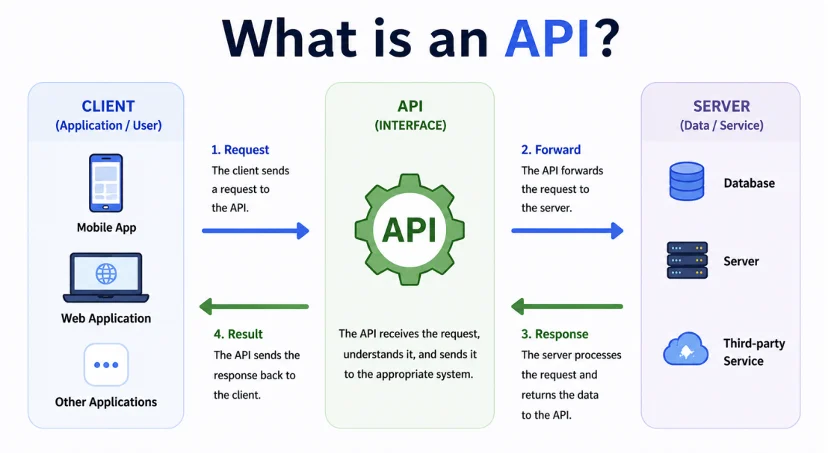 In the past, the traditional model involved different vendors using different endpoints, authentication methods, and SDKs. The similar API structure, familiar request format, and easier migration are key advantages. It’s not OpenAI itself, nor is it the official OpenAI API; it’s a compatible interface standard. This compatibility allows developers to focus more on building applications without the hassle of managing complex integration processes. Its primary functions are prototyping, testing ideas, and releasing products.
Section 2: Why Developers Are Adopting OpenAI-Compatible APIs
Previously, developing AI features required extensive preparation. Now, developers don’t need to relearn a new API structure, allowing for faster prototyping, idea testing, and shorter product release cycles. Furthermore, model selection is important in AI application development. Models are differentiated based on features, price, and response speed. The OpenAI compatible API provider makes model switching easier and more convenient. Developers can switch models based on price and performance to optimize application performance. This significantly reduces complexity, greatly reduces API learning costs and maintenance, lowers development difficulty, and reduces technical overhead. Development teams can focus more on product experience, user needs, and business logic. This allows for a clearer understanding of user requirements and more targeted solutions from the initial product launch phase. For enterprises, the benefits include greater scalability. As user numbers grow, AI functionality can be expanded more flexibly. Noted: An OpenAI-compatible API platform allows developers to access AI capabilities through familiar workflows, reducing the complexity of managing multiple model integrations. 
Section 3: Building Different Types of AI Applications with Compatible APIs
Currently, the most common are large language models, AI image generation models, AI video generation models, and AI chat models. AI chat primarily is a an AI chat application, customer service robot, and personal assistant. This reduces human workload and improves response efficiency. Large language models can primarily be used as writing tools, marketing platforms, and social media assistants. They can help users generate drafts and summarize information quickly, improving efficiency. There are also creative AI applications, such as image tools, video applications, and multimedia platforms, which require different dedicated AI models. For creative applications, specialized AI models can help developers build more advanced content generation experiences.
Section 4: Choosing the Right AI Models for Application Development

What should you consider when choosing an OpenAI-Compatible API?
1. Select the appropriate model based on the specific application scenario
First, it’s necessary to select the most suitable model type based on actual business needs. Different models vary in accuracy, generation quality, inference ability, and task adaptability. For example, for tasks requiring high-precision analysis and complex logical reasoning, large models with strong inference capabilities should be prioritized; while for simple information extraction, classification, or basic text processing tasks, models with smaller parameter sizes and higher operating efficiency can be chosen to reduce costs and improve processing speed.
2. Consider model speed and response latency
The inference speed and response time of a model are also important factors when choosing a model. For real-time interactive scenarios, such as voice assistants, models with low latency and high response speed should be prioritized to ensure a good user experience. For tasks that do not require immediate response, such as batch data analysis, models with higher computational demands but better performance can be selected to obtain higher quality output. Beyond model performance, usability and long-term performance are also important. For example, does the model provide a stable API interface? Does it support multiple model options? Does it have continuous update capabilities? Can it meet the needs of users of different sizes and complexities? Furthermore, the reliability, scalability, security, and deployment methods of the model service will also influence the final selection. Focus on response speed, stability, uptime, documentation, and developer experience. Including: Clear guidance. For example, ease of integration and flexible pricing.Focus on response speed, stability, uptime, documentation, and developer experience, clear guidelines. For example, ease of integration and flexible pricing.
Section 5: Best Practices for Developing AI Applications with Compatible APIs
Continuously Monitor Model Performance, Focusing on Response Quality and User Feedback
During model deployment and practical use, a continuous performance monitoring mechanism needs to be established to evaluate the model’s performance. Beyond monitoring model response speed, observing the accuracy and stability of output results is also important. By collecting user feedback, analyzing usage data, and evaluating model output quality, it’s possible to promptly identify models experiencing performance degradation, answer bias, or insufficient scenario adaptability. This allows for timely model optimization, parameter adjustments, or model replacement based on actual conditions.
Avoid over-reliance on a single model; build a flexible and scalable system architecture
When building AI applications, systems should not rely entirely on a single model, as this can lead to risks such as service interruptions, cost fluctuations, or insufficient functionality. Therefore, a flexible architecture that supports switching between multiple models and alternatives is necessary. For example, different types of models can be invoked based on different task requirements.
Prioritize data privacy, API security, and access control
When using AI models and API services, prioritizing user data security and privacy is paramount. User input may contain sensitive information, therefore measures such as data encryption, access control, authentication, and secure transmission must be implemented to prevent data leakage or unauthorized access. Simultaneously, API keys and access permissions should be properly managed, such as restricting access scope, monitoring abnormal requests, and setting call limits to prevent API abuse.
Conclusion: OpenAI-Compatible APIs Make AI Development Easier To Learn
Effectively simplify integration, greatly lower the development threshold, and improve flexibility. In the future, as more AI models emerge, developers will need both powerful models and simpler and more flexible ways to connect to them.