 Vipin PG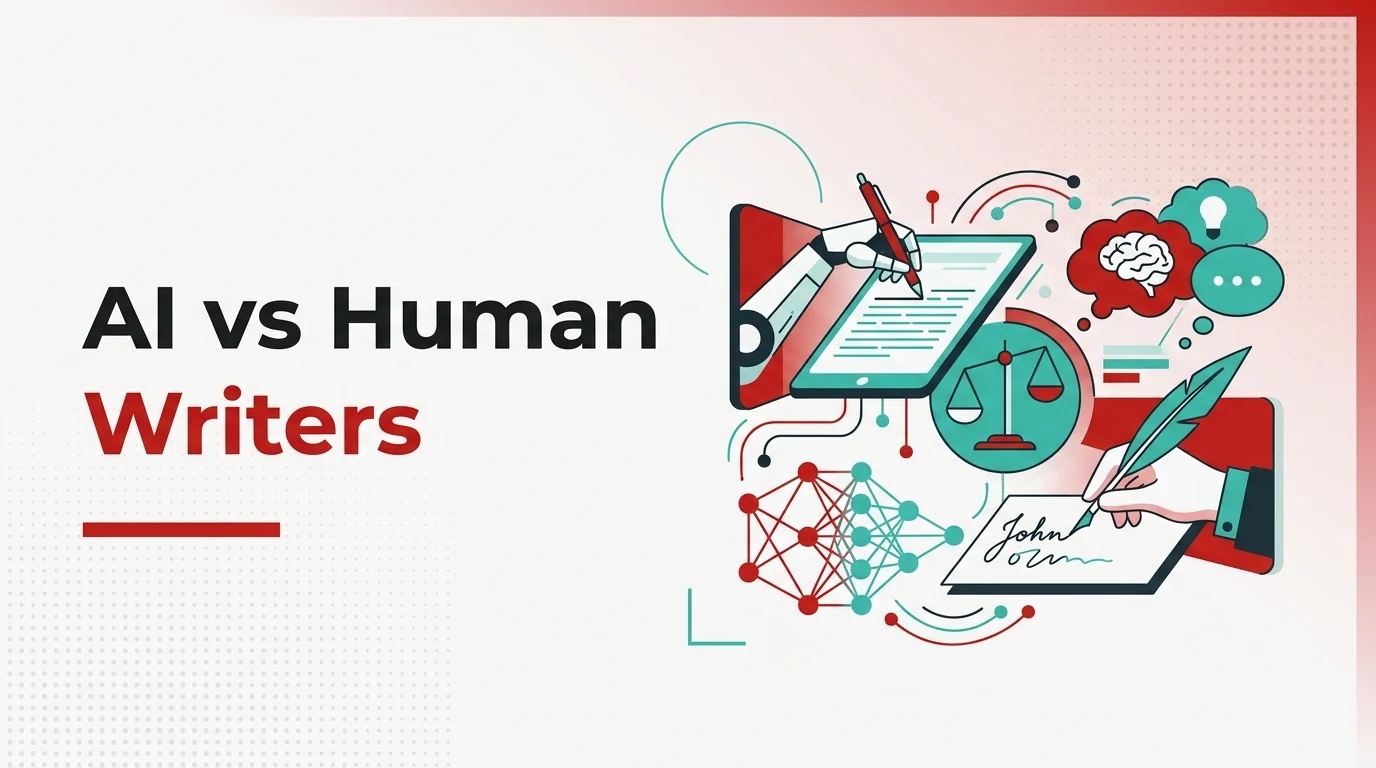
AI has revolutionised the student’s academic experience. Exhaustive research, outlining, and drafting that took hours are now possible with a single prompt to an AI assignment writer. The tedious, time-consuming process of research, outlining, and drafting can now start with a single prompt to an AI assignment writing tool. They can generate ideas, clarify hard-to-understand concepts, summarise research papers, and even create entire documents in minutes. This shift is obvious as the Higher Education Policy Institute’s Student Generative AI survey found that 88% of UK students used AI powered assignment writing tools for assessment, up from 53% the year before (HEPI,2025).
The market forAI assignment writers has emerged rapidly, providing greater access to academic support, yet it also raises critical questions. Is there a possibility of having work created by AI that is suitable for the University? Is it better than a human writer? What are the ethical concerns with A.I. when it comes to homework assignments? Most importantly, what is the balance between technology and the student’s learning?
This guide compares AI assignment writers with human writers across various academic aspects, discusses their advantages and disadvantages, and offers insights on using AI ethically while ensuring academic integrity and also explores the best assignment writing services for UK students and research enthusiasts.
What Is an AI Assignment Writer?
An AI assignment writer or an AI assignment writing software is an application that utilises artificial intelligence to help students with academic writing assignments. These tools leverage natural language processing (NLP) and machine learning to analyse prompts, generate text, explain concepts, organise ideas and offer suggestions for improvement.
Not only are AI writing tools capable of generating paragraphs, but they can help students with the writing process as a whole. They are like virtual academic assistants that can assist with:
- Brainstorming research topics
- Creating essay and assignment outlines
- Explaining complex theories
- Summarising journal articles
- Improving grammar and clarity
- Suggesting citations
- Assisting with editing and proofreading
These tools are gaining popularity among university students navigating the heavy academic workload as AI writing technology advances in education.
How Do AI Assignment Writers Work?
The majority of AI assignment-writing software is based on large language models trained on vast libraries of books, academic papers, websites, and open records. The system makes predictions and generates text that corresponds to the patterns learned during training from a student’s input. The process basically involves four phases:
- Prompt Analysis: The AI will analyse the user’s instructions to determine the assignment’s topic and objectives.
- Information Generation: The AI generates relevant explanations, examples and structured content based on its training.
- Language Optimisation: The generated response is refined into a coherent and readable text in terms of grammar and flow.
- Revision Support: AI homework helpers can often revise and edit, rewrite awkward sentences, and enhance text readability.
These tools can provide impressive results, but the user’s prompts must be specific and provide direction to the AI.
AI Assignment Writer vs Human Writer
The following comparison highlights the major differences between AI-powered tools and human academic writers.
| Feature | AI Assignment Writer | Human Writer |
|---|---|---|
| Writing Speed | Excellent | Moderate |
| Critical Thinking | Limited | Excellent |
| Creativity | Moderate | High |
| Contextual Understanding | Limited | Excellent |
| Original Analysis | Limited | Strong |
| Subject Expertise | Depends on prompts | Based on education and experience |
| Research Interpretation | Moderate | Excellent |
| Grammar & Language | Very Good | Excellent |
| Referencing Accuracy | Requires verification | Generally more reliable |
| Adaptability | Prompt-dependent | Highly adaptable |
The comparison reveals that, although AI writers are faster and more productive, human writers still outperform AI in analytical thinking, critical evaluation, creativity, and nuanced academic writing.
Benefits of AI Assignment Writers
Unsurprisingly, AI assignment helpers have become a hit these days. When used properly, these tools offer several benefits that can enhance student productivity.
Faster Draft Creation
One of the most significant advantages of an AI writing assistant for assignments is its efficiency. Students can create a structured starting point in minutes rather than hours when creating a first draft. This gives sufficient time for research, editing and critical analysis.
Students frequently have difficulty getting assignments started. AI can produce:
- research questions
- essay titles
- thesis statements
- outlines
- discussion points
This makes overcoming writer’s block much easier.
Simplifying Complex Topics
Many AI academic writers can explain complex ideas more simply. In finance, law, medicine, engineering, and economics, students may leverage AI to understand concepts before writing their own work.
Grammar and Style Improvements
Many AI tools can edit and proofread assignments that find:
- grammatical mistakes
- awkward phrasing
- punctuation errors
- repetitive wording
- readability issues
Fixing these issues can make a big difference in the final quality of a student’s paper.
Research Assistance
Modern AI research and assignment tools can suggest keywords, summarise lengthy articles, organise information and suggest relevant themes for literature reviews. However, students are always encouraged to check any references or facts provided by AI.
Limitations of AI Assignment Tools
Although they have the potential, AI writing systems do have several drawbacks that students should be aware of before using them.
Limited Critical Analysis
In university assignments, critical thinking is rewarded, and information retrieval is not. AI can summarise existing knowledge, but it can also have difficulties with:
- evaluate competing arguments
- critique research methods
- identify theoretical gaps
- construct sophisticated academic arguments
These are still areas where human writers excel.
Inaccurate References
One of the most common problems that plagiarism detectors can encounter with AI academic writing programmess is that they often provide incorrect or fabricated citations. Students should always verify any references created by AI against the original source.
Generic Writing Style
Sometimes AI-generated content is not original and can offer very general explanations. Human writers can easily and naturally include:
- personal interpretation
- critical reflection
- discipline-specific insights
- unique perspectives
Difficulty Understanding Assignment Requirements
University assignments often come with a detailed marking scheme. While AI can help in many, it is crucial to remember that it can miss key assessment criteria, including:
- required theoretical frameworks
- module-specific terminology
- lecturer expectations
- institutional formatting guidelines
Academic Integrity Risks
AI-generated content should not be submitted as assignments or projects without changes, as it may violate academic integrity policies. Students should be aware of their institution’s guidelines on the ethical application of AI in assignments at all times.
When Should Students Use AI and When Is Human Support Better?
Different academic tasks benefit from different forms of assistance.
| Academic Task | AI Tools | Human Writer |
|---|---|---|
| Brainstorming ideas | Excellent | Excellent |
| Topic selection | Helpful | Helpful |
| Assignment outlines | Excellent | Excellent |
| Grammar checking | Excellent | Excellent |
| Literature summaries | Helpful | Better interpretation |
| Critical analysis | Limited | Excellent |
| Statistical interpretation | Limited | Excellent |
| Research methodology | Moderate | Excellent |
| Referencing verification | Verify manually | More reliable |
| Final proofreading | Helpful | Highly recommended |
Using AI for planning and editing while relying on independent thinking for analysis and argument development is common. However, AI is not intended to replace human knowledge or skills, but rather to complement and enhance it, and to be used as a productivity tool to aid, not supplant, independent academic research.
Ethical Use of AI in Assignments
Ethics in AI use in assignments has been a hot topic in higher education. AI has become a growing area of interest for universities, as they realise that it can be a valuable educational tool when used responsibly. Issues arise when students submit AI-generated content as their own. Students can leverage AI ethically by:
- generating ideas rather than finished assignments
- improving grammar and readability
- organising research notes
- creating study summaries
- checking writing clarity
- brainstorming research questions
Students should avoid:
- submitting AI-generated assignments unchanged
- fabricating references
- using AI to bypass learning outcomes
- violating university disclosure policies
Ultimately, AI should enhance learning rather than replace genuine academic effort.
Best Practices for Using AI Assignment Writers
Here are some tips for using AI to the best of your ability and maintaining academic integrity:
| Recommended Practice | Why It Matters |
|---|---|
| Use AI for brainstorming | Encourages idea generation without replacing learning |
| Verify every citation | Prevents referencing errors |
| Rewrite AI-generated text | Improves originality and understanding |
| Cross-check facts | AI can occasionally generate inaccurate information |
| Follow university policies | Protects academic integrity |
| Add your own analysis | Demonstrates critical thinking and independent learning |
These practices can help students maximise the effectiveness of AI-driven assignment-writing software without compromising originality.
Final Verdict
It is not a matter of choosing a clear winner in the AI assignment writer vs human writer debate. Rather, the idea is to note the strengths of each method.
AI is great at brainstorming, structuring content, enhancing grammar and speeding up the writing process. When used wisely, it will be a valuable academic aid, saving students a great deal of time.
But human writers still excel at critical thinking, analysis, creativity, subject-matter knowledge, and the ability to interpret subtleties, which are most prized at universities. They grasp the demands of the assignment, assess evidence and develop convincing academic arguments, something which AI cannot yet emulate.
The best approach for most students is to follow a balanced strategy. Brainstorm ideas, create outlines, clarify complex ideas and improve writing using Artificial Intelligence or otherwise, search for the best assignment help provider who can assist and guide them in the whole process. Finally, use personal research, analysis and critical thinking to create original work that demonstrates understanding of the topic.
As technology advances, students who master its use to be efficient and effective in their learning will be most likely to succeed in the long term.
Frequently Asked Questions
How do AI assignment writers work?
With the help of natural language processing and machine learning, AI writers for assignments can study the prompt and forecast which language patterns will be relevant to the assignment, after which they can compose a structured response. They help the user develop, revise, brainstorm, and clarify academic ideas and/or information.
What are the limitations of AI assignment tools?
The main drawbacks are that these tools have limited critical thinking capabilities, they may get facts wrong, their writing is often rather general, their references are not always reliable, and they find it difficult to interpret the university’s detailed marking criteria. Even with AI assistance, human verification must be performed before submitting any work.
Can AI help with research and referencing?
Yes. AI can suggest research topics, summarise articles, offer keyword suggestions, and organise information. Students should always check their sources or citations individually, though, as AI can sometimes provide inaccurate or fabricated sources.
How can students use AI ethically in assignments?
The use of AI models should be seen not as a substitute for students’ independent work, but as a tool to support their learning. Ethical use of AI involves brainstorming, outlining, proofreading, and conceptualisation, but the final product should be the student’s own research, analysis, and writing, and should also meet the institution’s academic integrity guidelines.