

Let's get real for a moment. When operating a field service company, things don't always go according to plan.
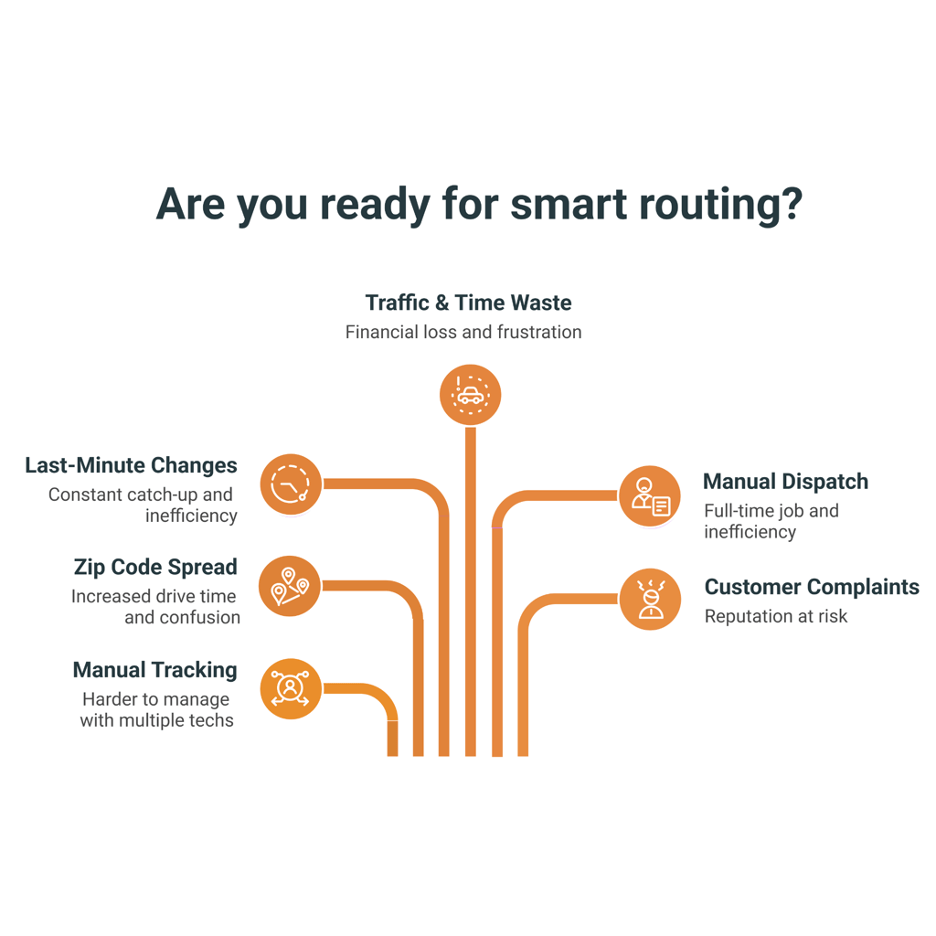
The traffic jams, the sick techs, a client who calls at the end of the night with a "quick" solution that transforms into a lengthy task... it's a scenario that happens all too often. Trying to write down addresses on receipts or handling multiple calls in a row just to transfer a task—these are challenges that show dispatching is only half the battle. The key to success is intelligent routing.
What Smart Routing Actually Means
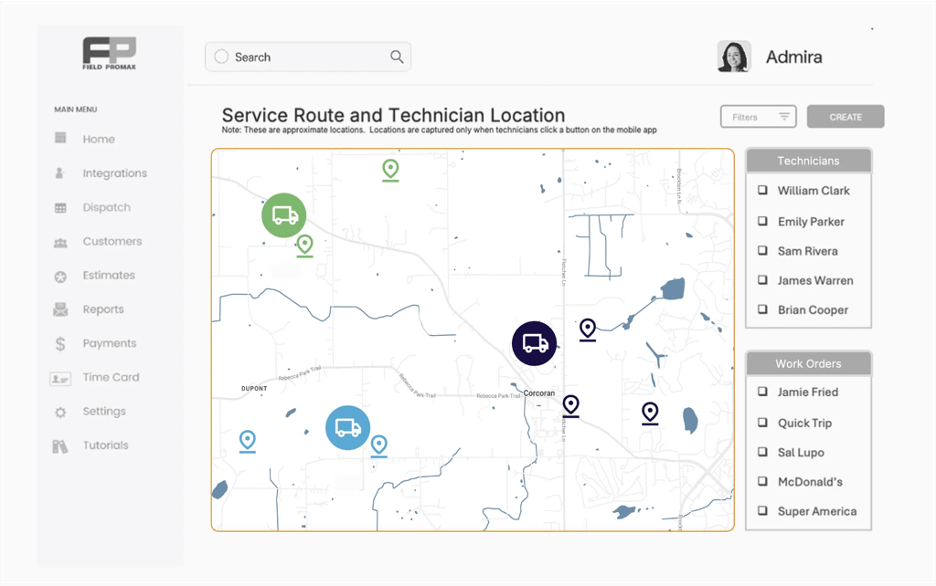
In the event that "smart routing" seems like a futuristic buzzword, don't fret. It's much simpler than it sounds. Smart routing involves using real-time data such as technician locations, traffic conditions, job details, urgency, and the ability to assign the best tech for the task, all to determine an efficient path. Imagine employing GPS for the entire operation, but with additional decision-making power. It's not just about moving the person from Point A to Point B. It's about getting the right person to the right place at the right time without wasting time driving.The Old Way Isn't Built for Today's Demands
Consider the traditional method: a whiteboard and sticky notes, perhaps an Excel spreadsheet, and plenty of telephone calls. This was enough back when there were only a few techs and a small service area. Today, customers demand faster service. There are many techs scattered across zip codes, and inefficiencies can't be afforded. For example, a plumbing company in Ohio once had a technician drive an hour to a job while two other technicians were only a few minutes away. Since the day's schedule was fixed in the morning, no one noticed. Without real-time tools to adjust, this led to wasted time, energy, and a frustrated customer.
Why Smart Routing Isn't Just for Big Companies
Save Time, Cut Costs
A McKinsey study revealed that businesses using smart routing reduce travel time by 20% and fuel costs by 15%. These are significant savings. Teams can complete more work daily, use less fuel, and spend less time stuck in traffic. That’s beneficial for both the business’s bottom line and employee satisfaction.Your Team Deserves Better
Smart routing simplifies the work for technicians. Clear instructions, fewer last-minute changes, and routes that make sense all contribute to lower stress. Satisfied technicians arrive on time, treat customers well, and complete tasks faster. When work is more efficient, morale rises, resulting in better reviews and improved customer experiences.Cool Tech Doesn't Replace Common Sense
There's a lot of hype around AI, automation, and similar technologies. It's tempting to think that software can handle everything. However, while smart routing is useful, it doesn’t replace human judgment. This applies to the information being read right now. There’s a distinct difference between content written by someone with firsthand experience and a piece generated by an algorithm. The tone can feel dull and impersonal, lacking real knowledge. For businesses aiming to connect with actual owners or skilled employees, the way content is presented matters. People want content that feels like a conversation rather than a textbook.People Trust People
For instance, a blog post once shared the story of an HVAC company owner who accidentally shut off power to an entire home instead of just the air conditioner. The customer wasn’t happy, but they laughed it off, and it became a running joke. That story resonated. It was relatable. It was authentic. This is the kind of content that builds trust and credibility. AI can't fully replicate that—at least, not yet. In a world full of shiny new tools and features, trust is difficult to earn. That's why the way businesses communicate, write, and interact with people matters now more than ever.How Field Promax Helps Without Overcomplicating Things
For those looking to streamline work assignments and staff management, Field Promax is worth exploring. It has smart routing built-in with real-time GPS tracking, drag-and-drop scheduling, and functional dashboards. There's no need for a full-time dispatcher when software can help plan intelligent routes, make adjustments as needed, and optimize staff resources. It's designed to reduce stress, not add to it. Most importantly, it means saving time on logistics and spending more time with customers.
Where Smart Routing Is Going Next
By 2026, Gartner estimates that over 75 percent of field service companies will use advanced AI tools to optimize routes. That’s the direction things are headed. Beyond saving time, the future of routing will include:- Technicians adjusting routes based on weather or heat waves
- Voice-based updates to allow drivers to focus on the road
- Predictive scheduling based on traffic, job history, and customer behavior