 Vipin PG
For years, meditation gadgets did one job: record your brainwaves and show you a graph. What changed in 2026 isn’t the sensors , EEG headbands and HRV chest straps work largely the same way they did five years ago. What changed is the software sitting between the sensor and your feedback. That software is now AI, and it’s doing three specific things older devices never could: predicting your mental state before it fully forms, learning what “calm” means for your specific brain, and pulling in data from outside the meditation session itself to decide how to guide you. Here’s exactly how each piece works.
1. Predictive Models Are Replacing Simple Brainwave Tracking
Traditional EEG meditation headbands like the Muse S work on a straightforward loop: measure brain activity, compare it to a threshold, play a sound if you drift. That loop is reactive , by the time the device tells you you’ve lost focus, you’ve already lost it. Newer devices, including the Neurosity Crown and Sens.ai, run raw EEG data through deep learning models , specifically LSTM (Long Short-Term Memory) and GRU (Gated Recurrent Unit) networks, both designed for sequential, time-based data. Instead of just reading your current brain state, these models forecast where your attention is heading next. In published testing, LSTM models predicting meditation and attention states achieved a Root Mean Squared Error of 10.90, while GRU models came in at 11.79 , both tight enough for practical real-time use. The predictions themselves complete in under 50 milliseconds, which is fast enough that the audio or haptic cue can arrive almost exactly when your attention starts to slip, not after. This is the actual technical shift behind “smarter” meditation gadgets , it’s not a vague AI upgrade, it’s a specific move from reactive measurement to predictive modeling.
2. Personalization Replaces the One-Size-Fits-All Threshold
Every brain produces a different baseline signal. A threshold that correctly flags distraction for one user might constantly false-positive on someone else, or miss real drift entirely. Older devices mostly ignored this and used fixed thresholds for everyone. AI-driven devices now build an individual model per user, refining it session by session. Industry voices in the neurofeedback space have described this shift as the real story of 2026 , the technology isn’t new, but the ability to configure it precisely to one person’s brain is. Practically, this means your first week with a device is mostly calibration: the AI is learning your resting state, your typical distraction patterns, and how your brain responds to different audio cues, before it starts making meaningful predictions. This also explains why two people using the identical headband often report different experiences , they’re not being measured against the same yardstick anymore.
3. Vagus Nerve and Vibration Devices Are Getting the Same Treatment
The AI shift isn’t limited to EEG headbands. Vagus nerve stimulators like Pulsetto, which deliver gentle electrical pulses to the neck to nudge the body toward its parasympathetic “rest and digest” state, and vibration-based devices like Sensate, are starting to incorporate the same kind of adaptive logic , adjusting stimulation intensity and session length based on how a user’s nervous system has responded in previous sessions rather than running a fixed protocol every time. Sensate’s approach has shown measurable results in trials: 82% of first-time users reported feeling less stressed after a single session, with regular use over 28 days linked to a 48% drop in reported stress levels. Layering AI-driven personalization on top of results like these is the next step these device makers are taking , using session history to fine-tune intensity and timing rather than applying the same settings to every user.
4. Cross-Device Health Data Is Feeding the Recommendations
The most practically useful change for everyday users is that meditation AI no longer treats each session as an isolated event. Devices are increasingly pulling in HRV data, sleep quality metrics, and stress markers from other wearables you already own, and using that combined picture to adjust what a session actually recommends. Poor sleep data from the night before might trigger a longer or gentler session; elevated resting heart rate might shift the device toward a vagus nerve stimulation protocol instead of a straight neurofeedback session. This is the “broader health ecosystem integration” that’s become one of the three defining trends in neurofeedback tech this year, alongside AI personalization and improved sensor accuracy. 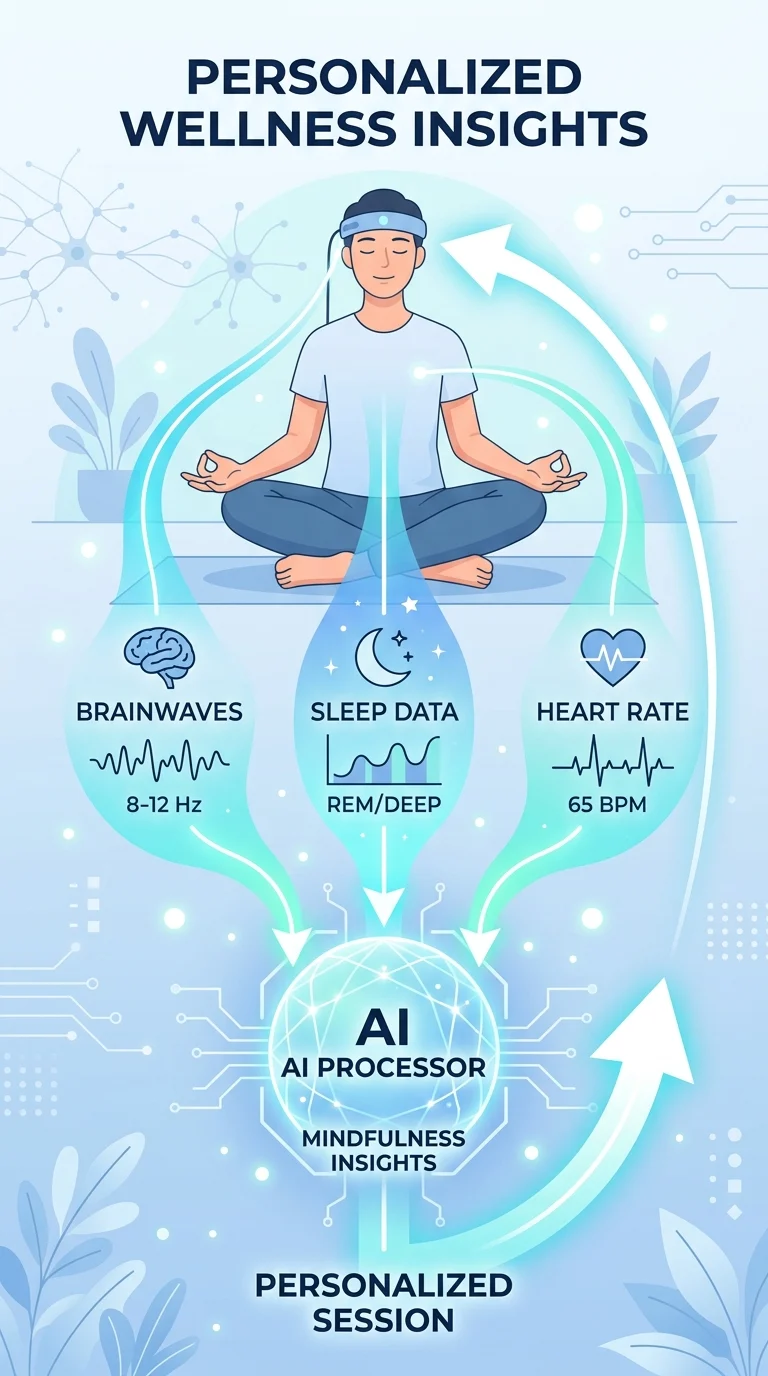
5. Why This Matters More Than It Sounds
None of these four shifts are marketing buzzwords layered onto old hardware , they’re specific, measurable changes in how the underlying software works. A device predicting your mental state 50 milliseconds ahead of time, calibrated to your personal brain patterns, coordinating with your sleep and heart rate data, is functionally a different category of product than a headband that plays a chime when you’re distracted. That’s the actual distance between meditation gadgets of a few years ago and the ones shipping in 2026. 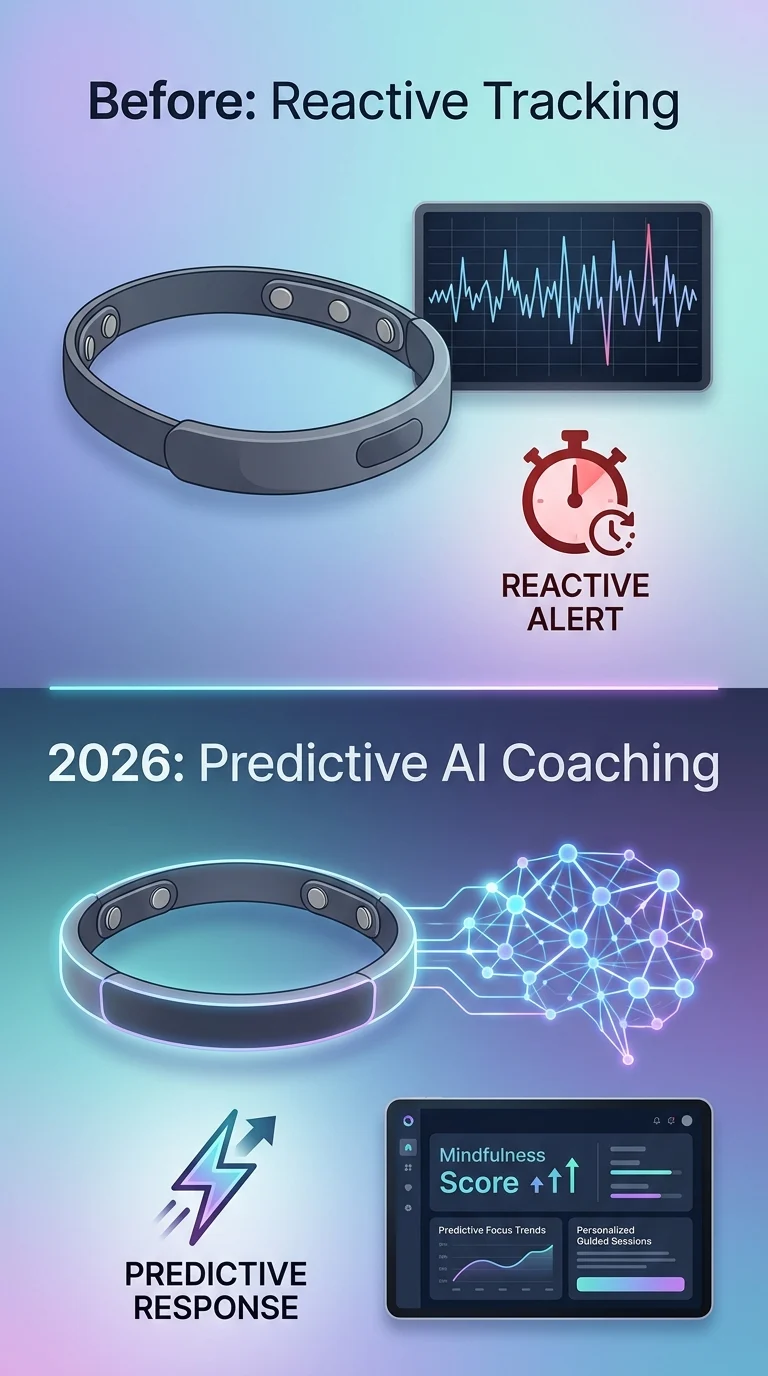
Conclusion
AI is powering the next generation of meditation gadgets by changing what happens between the sensor and the feedback , not the sensor itself. Predictive models like LSTM and GRU, personalized calibration instead of fixed thresholds, adaptive vagus nerve and vibration protocols, and cross-device health integration together explain exactly how 2026’s devices work differently from what came before. That’s the real answer behind the title, grounded in what’s actually running under the hood rather than a generic “smarter tech” claim.