 Vipin PG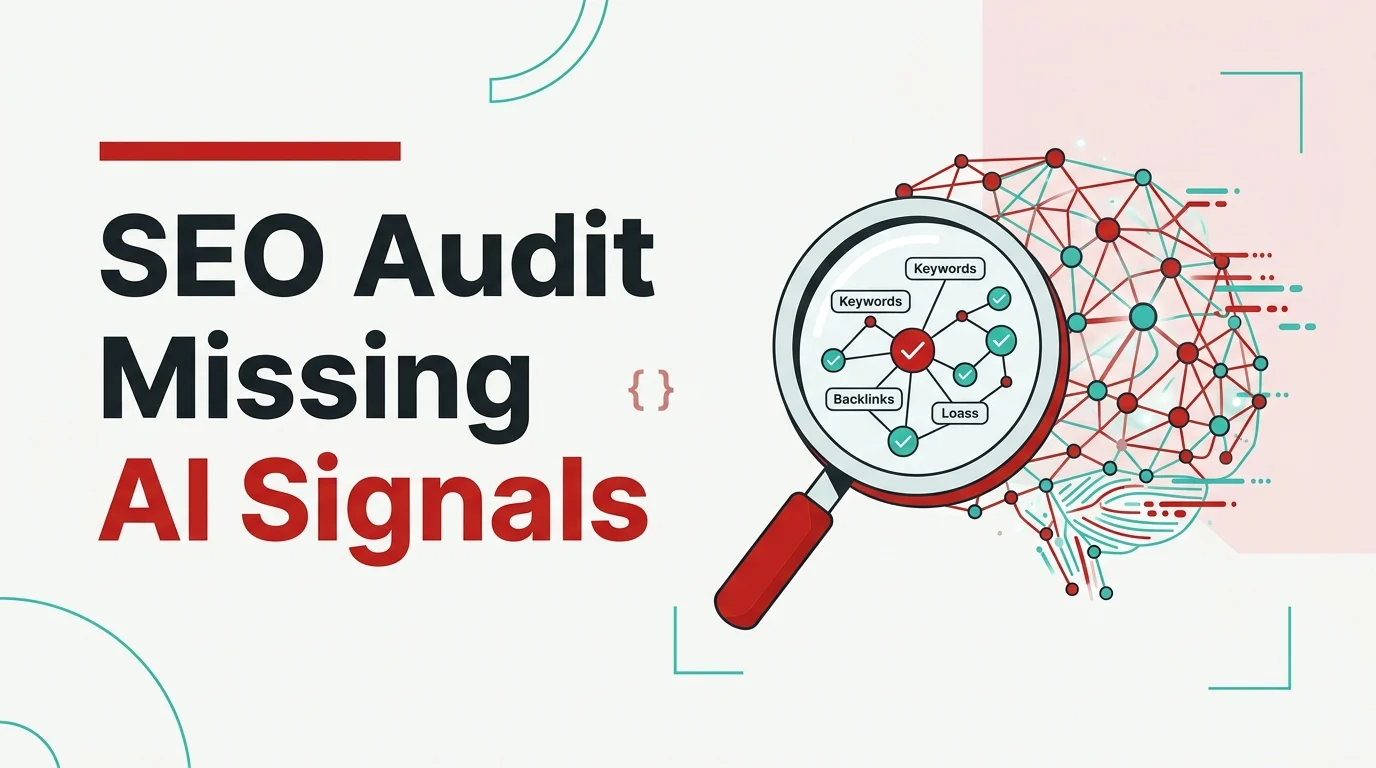
While traditional SEO audits are still essential for improving website performance, AI-powered search experiences are changing the game. Traditional audits look at keywords, links, and technical health, but AI systems look at a broader set of signals to determine what content to surface in generated answers.
As the likes of ChatGPT and Perplexity and other AI-powered search tools gain traction, businesses need to optimize for traditional rankings as well as AI visibility. 10 signals traditional SEO audits don't find.
1. Define the Entities
The AI systems don't merely look for keywords. They identify entities such as companies, people, products, and locations and then link them to trusted sources across the web.
If your branding is inconsistent, descriptions are vague, or there is conflicting information across different platforms, AI systems may have difficulty confidently identifying your organisation.
Consistency in your company information, structure in your entity data and clarity in your author profiles can go a long way to strengthening a machine's understanding of your brand.
2. Structured (machine-readable) data
Many SEO audits just look for the presence of schema markup.
AI systems are more concerned with the accuracy, completeness, and conformity of the structured data to the visible content on the page. Schema for Organisation, Article, FAQ and Product all help AI models understand context, not just indexing text.
3. Quick Reference Content
AI search engines often provide short snippets instead of a link to the full web page.
AI systems have an easier time quoting and referencing content that has clear definitions, facts, numbered steps, and well-structured answers than long unstructured paragraphs.
4. Consistent Brand Experience on All Platforms
Most traditional SEO audits are on one website.
AI systems search data from a number of trusted sources like industry publications, company profiles, expert-written articles, and other authoritative websites. Consistent messaging across sources strengthens trust and reduces mixed signals.
5. Other Freshness than Publication Dates
Changing the publication date won't make you more visible in AI.
AI systems are increasingly preferring content that shows real-world maintenance via updated statistics, revised guidance, current examples, and accurate references. Evergreen content is updated to show that the information is still relevant.
6. Subject Authority Evidence
Ranking for one keyword does not make you an authority on a whole topic.
AI systems will seek out websites that offer extensive coverage of relevant topics, supported by articles, guides, FAQs, case studies, and technical resources. A connected content ecosystem has more topical authority than isolated blog posts targeting individual keywords.
7. Source of Information
Trust signals that are growing the fastest for AI search include the ability to verify where information came from.
AI systems rely on authoritative sources, official company information, and accurate facts to determine if content is trustworthy. But even if the page ranks well in traditional search, inconsistent claims or conflicting information erodes confidence.
8. Search Optimization for AI, Not Rankings
The traditional way to do SEO is to get clicks from the search engine result pages.
The new goal of AI search is to be the source the AI will choose to cite. This means content that is technically accessible, factually accurate, well structured, and written with the user's intent in mind.
There is expert help for businesses wanting to improve their visibility in AI-powered search engines at ClickIntelligence.co.uk. The company's AI SEO services aim to help organizations improve their visibility in traditional search and in the emerging search experiences driven by AI.
9. Relationships Between Pages Semantically
Traditional audits will often look at pages in isolation, checking for title tags, internal links and keyword usage. But AI systems look at how pages relate to each other across a whole website.
The logical structure of the content helps AI to understand which pages are introductory, which pages contain detailed technical information, and which pages demonstrate subject expertise. Well-structured interlinking and topic clusters create stronger semantic relationships, helping AI systems recognize your website as an authority on a particular topic.
10. Ingenuity and Technical Proficiency
AI summaries have to add true value, not just rehash what's already out there. Generic content cannot provide the signals that original research, technical analysis, first-hand experience, or unique data from websites will.
Technology companies should publish benchmark tests, implementation guides, product comparisons, engineering insights, or case studies to demonstrate their expertise that AI systems can find. Original technical content makes your website stand out from competitors, and also means it is more likely to be cited as AI platforms generate answers to users looking for specialist information.
Preparing for the Next Generation of Search
Traditional SEO is still an important foundation, but AI search is shifting how websites gain visibility. Companies still measuring their success by links and rankings are probably missing the signals that AI systems increasingly use.
By improving entity clarity, structured data, authoritative content, semantic relationships, and cross-platform consistency, organisations can create a better digital presence that ranks well in traditional search engines and the next generation of AI-powered search tools.