 Vipin PG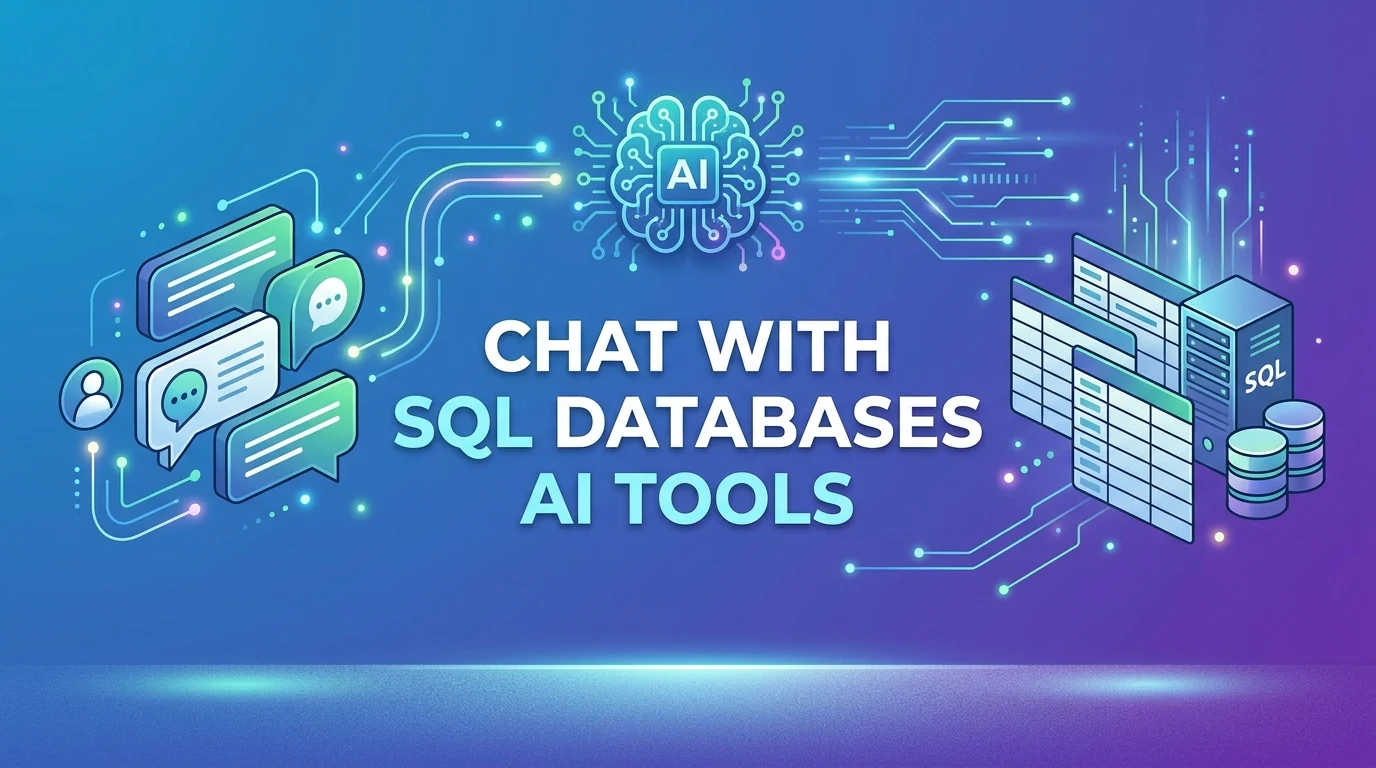
Structured data remains the backbone of modern organizations. Finance, operations, product analytics, customer intelligence, and countless operational workflows rely on relational databases and structured storage systems. Yet while these systems are extremely powerful, interacting with them has historically required a specialized skill set. Writing SQL queries, understanding schemas, joining tables correctly, and interpreting results accurately are tasks that typically demand trained analysts or engineers. Over the past decade, organizations attempted to solve this challenge through business intelligence tools and dashboards. While these helped standardize reporting, they introduced another limitation: fixed views of data. Dashboards answer predefined questions but often fail when people involved want to explore something new. As a result, the gap between data questions and actual answers remained wide. The emergence of AI-driven interfaces is changing this dynamic. Chat-based interactions allow users to express questions in natural language while AI systems translate those questions into structured logic that databases can understand. In theory, this reduces the friction between human intent and structured data access. The reality is more complex. “Chat with SQL” tools differ widely in their underlying approach. Some focus on translating natural language prompts into executable SQL queries. Others assist developers by drafting or explaining SQL within technical environments. A smaller but increasingly important group approaches the challenge from a semantic reasoning perspective, helping AI systems interpret the meaning of data rather than simply generate queries.
The Best Chat with SQL Databases AI Tools for 2026
1. GigaSpaces eRAG
GigaSpaces eRAG leads this category by approaching the problem of database interaction from a different conceptual angle. Rather than assuming that chat interfaces should convert natural language prompts directly into SQL queries, the platform focuses on enabling AI systems to interpret structured data through semantic reasoning. In many organizations, the primary challenge is not generating queries but ensuring that queries reflect the intended business meaning. Databases often contain complex schemas, legacy structures, and overlapping definitions that are difficult for both humans and AI systems to interpret consistently. Even when SQL is syntactically correct, the logic embedded in the query may not align with how the organization actually defines metrics or relationships. GigaSpaces eRAG addresses this challenge by building a metadata-driven semantic reasoning layer that interprets the structure and meaning of enterprise data. Instead of relying on prompt-to-SQL translation, the system provides AI models with contextual understanding derived from metadata and data relationships. This allows conversational interactions to remain grounded in organizational context. The result is an assistant that focuses on consistent interpretation rather than query generation. For enterprises where multiple teams rely on shared data definitions, this approach can reduce semantic drift and improve alignment across users. Another advantage of this model is its suitability for governance-sensitive environments. By emphasizing interpretation over ad-hoc querying, GigaSpaces eRAG helps organizations maintain control over how data is understood and used within AI-driven workflows. Key Features:
- Metadata-driven semantic reasoning
- Contextual interpretation of enterprise data
- Consistent answers aligned with business definitions
- Reduced dependence on prompt-to-SQL translation
- Strong fit for governance-focused environments
2. Chat2DB
Chat2DB represents one of the clearest examples of a traditional chat-with-SQL solution. The platform is designed to convert natural language questions into SQL queries that can be executed against relational databases.
3. AI2SQL
AI2SQL focuses specifically on translating natural language prompts into SQL queries. Unlike broader conversational analytics tools, AI2SQL positions itself as a dedicated productivity assistant for query drafting.
4. DataGrip
DataGrip approaches AI-assisted SQL interaction from the perspective of a developer-oriented database IDE. Developed by JetBrains, the platform has long been used by database engineers and analysts who require a powerful environment for writing and managing queries.
5. DBeaver
DBeaver has long been one of the most widely used database clients in the developer and analytics ecosystem. Its popularity stems from a combination of broad database compatibility, strong query management tools, and a flexible interface that allows users to interact with structured data across multiple systems.
6. Outerbase
Outerbase is a newer generation of AI-native database tools designed to make interacting with SQL databases more accessible through visual interfaces and AI assistance. Rather than focusing exclusively on query editing, Outerbase positions itself as a workspace for exploring and managing databases with the help of AI.
7. Hex
Hex occupies a unique position in the data ecosystem by combining elements of notebooks, business intelligence platforms, and collaborative analytics environments. Rather than focusing exclusively on SQL interaction, Hex provides a workspace where queries, visualizations, and written analysis coexist.
How Chat with SQL Tools Actually Get Used
Although conversational interfaces attract attention because of their novelty, organizations rarely adopt chat-with-SQL tools as replacements for existing analytical workflows. In practice, these systems function as assistive layers that accelerate tasks analysts and engineers already perform. The value of these tools becomes clearer when examining how they are actually used inside data teams.
Query drafting and iteration
One of the most common applications involves accelerating the process of drafting SQL queries. Even experienced analysts often spend considerable time translating business questions into SQL syntax. AI assistants help shorten this process by:
- Generating an initial query based on a natural language prompt
- Suggesting joins between tables
- Recommending filters or aggregation logic
- Correcting syntax errors
Instead of writing every query manually, analysts can begin with a generated structure and refine the logic as needed. This approach reduces time spent on mechanical SQL construction while keeping the analyst in control of the final query.
Schema discovery and navigation
Another frequent challenge in large organizations is simply understanding where relevant data resides. Enterprise databases often contain hundreds or thousands of tables, many of which are poorly documented. Chat-with-SQL tools can help users explore unfamiliar schemas by:
- Summarizing table structures
- Explaining column meanings
- Identifying relationships between tables
- Suggesting possible join paths
These capabilities are particularly valuable for new analysts or cross-functional people involved who need to understand datasets without extensive database experience.
Exploratory analytics
Many analytical investigations begin with incomplete questions. Analysts often start by exploring patterns before determining which queries are ultimately required. Chat interfaces make this process easier because users can iteratively refine their questions. Instead of constructing large queries upfront, analysts can ask smaller questions and progressively narrow their focus. Typical exploratory workflows include:
- Investigating unexpected performance changes
- Identifying anomalies in operational metrics
- Exploring customer segmentation patterns
- Validating early hypotheses before deeper analysis
In these situations, conversational querying can accelerate discovery.
Analyst onboarding and knowledge transfer
Organizations frequently underestimate how long it takes for new analysts to learn internal data structures. AI assistants can significantly accelerate onboarding by helping new team members:
- Understand schema relationships
- Review historical queries
- Interpret existing analytical logic
- Identify relevant datasets for common metrics
Rather than relying solely on documentation or institutional knowledge, analysts can interact directly with the database environment while learning how it is structured.
Query explanation and maintenance
Over time, many organizations accumulate large collections of SQL scripts that power dashboards, reports, and internal analytics tools. Understanding the logic behind these queries can be difficult, especially for analysts who did not originally write them. AI assistants help simplify maintenance by:
- Explaining query logic in natural language
- Summarizing complex joins and subqueries
- Highlighting potential inefficiencies
- Clarifying how metrics are calculated
How Organizations Choose a Chat-with-SQL Tool
Selecting the right platform depends on understanding how the tool will be used inside the organization. Rather than evaluating platforms purely on features, most organizations focus on practical operational considerations.
Identify the primary users
Different tools serve different audiences. Typical user groups include:
- Data analysts who regularly write SQL
- Engineers managing production databases
- Business people involved seeking quick answers
Developer-oriented tools often provide deeper control over queries, while conversational analytics platforms prioritize accessibility.
Determine the role of SQL in the workflow
Organizations must decide whether they want tools that:
- Accelerate SQL authoring
- Enable conversational data exploration
- Provide semantic interpretation of enterprise data
Each approach requires different platform capabilities.
Evaluate governance requirements
Governance considerations can strongly influence platform selection. Important factors include:
- Auditability of generated queries
- Enforcement of access control policies
- Compliance with regulatory requirements
- Consistency of metric definitions across teams
Organizations with strict governance frameworks often prefer solutions that emphasize controlled interpretation of data.
Consider collaboration needs
Data teams rarely operate in isolation. Many analytical workflows require collaboration across departments. Key collaborative capabilities include:
- Shared queries and dashboards
- Versioned analytical environments
- Cross-team visibility into insights
Platforms that support collaborative analysis may be particularly valuable for organizations with distributed data teams. Chat-with-SQL tools represent an important step toward making structured data more accessible across organizations. By allowing users to interact with databases through natural language, these platforms reduce the technical barriers that historically limited data access to specialized teams.