 Vipin PG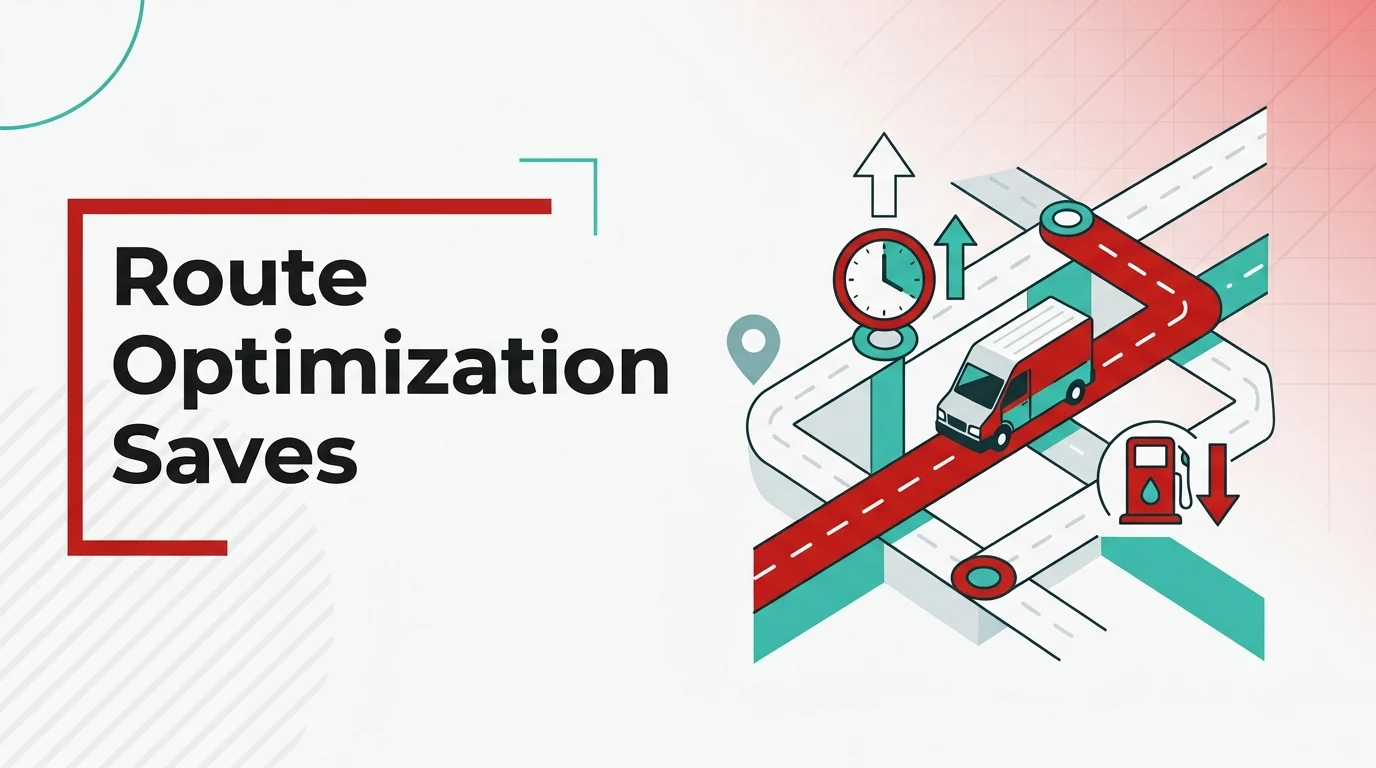
Every mile driven has a cost. Fuel, labor, maintenance, and vehicle wear all increase with inefficient routing. For businesses that manage deliveries, service calls, or field operations, small routing mistakes compound into significant operating expenses.
Route optimization addresses this problem with data. Instead of simply finding the shortest path between two locations, modern routing engines calculate the most efficient sequence of stops while considering traffic, road restrictions, service windows, vehicle capacity, and driver schedules.
According to Google, its eco-friendly routing feature has the potential to prevent more than one million tons of carbon emissions each year, equivalent to removing over 200,000 cars from the road. That demonstrates how optimized routing directly reduces fuel consumption at scale.
Businesses looking for the best route optimization software should prioritize platforms that combine real-time traffic intelligence, dispatch automation, and dynamic rerouting rather than relying on static GPS navigation.
Route Optimization Is More Than GPS Navigation
Traditional navigation applications answer one question.
How do you get from Point A to Point B?
Route optimization answers several additional questions simultaneously.
- Which stop should come first?
- Which vehicle should handle each delivery?
- How can total driving distance be reduced?
- Which route minimizes idle time?
- Can deliveries still meet customer time windows?
This transforms routing into a mathematical optimization problem.
Modern platforms solve variants of the Vehicle Routing Problem (VRP), often extending it with constraints such as vehicle capacities, driver hours, customer priorities, and live traffic conditions.
The result is fewer unnecessary miles without sacrificing service quality.
Fuel Savings Come From Eliminating Waste
Fuel consumption depends on far more than total distance.
Vehicles burn more fuel during:
- Frequent stop-and-go traffic
- Long idle periods
- Aggressive acceleration
- Unnecessary detours
- Repeated left turns in congested areas
- Driving heavily loaded vehicles over inefficient routes
An optimized route minimizes these conditions whenever possible.
Modern routing algorithms evaluate road grades, historical traffic, current congestion, average travel speeds, and predicted arrival times. Some advanced routing systems even estimate vehicle energy consumption based on road characteristics rather than distance alone.
This creates measurable fuel savings across an entire fleet.
Better Scheduling Reduces Total Drive Time
Time savings are often larger than fuel savings.
Dispatchers frequently assign jobs manually based on experience. While practical, manual scheduling rarely produces the optimal sequence of stops.
Optimization software continuously recalculates routes as conditions change.
For example, if an accident blocks a highway, the system can:
- Reassign deliveries
- Change delivery order
- Redirect nearby drivers
- Preserve customer appointment windows
Drivers spend less time waiting in traffic and more time completing productive work.
This increases vehicle utilization without adding additional vehicles or staff.
Dynamic Routing Improves Daily Operations
Static route planning assumes today’s traffic will match yesterday’s.
That assumption rarely holds.
Modern route optimization platforms ingest live information from multiple sources, including:
- Traffic congestion
- Road closures
- Construction zones
- Weather disruptions
- Driver progress
- Customer schedule updates
Algorithms continuously compare planned routes against actual road conditions.
When a faster alternative becomes available, dispatchers or drivers receive updated instructions immediately.
Dynamic routing keeps fleets moving even when operating conditions change throughout the day.
Lower Mileage Means Lower Maintenance Costs
Every unnecessary mile affects more than fuel.
Higher mileage accelerates:
- Tire wear
- Brake replacement
- Oil consumption
- Suspension wear
- Engine operating hours
Reducing annual fleet mileage extends maintenance intervals and lowers repair costs.
This also improves vehicle availability because fewer vehicles spend time in the workshop.
For organizations operating dozens or hundreds of vehicles, even small reductions in average daily mileage can generate substantial annual savings.
Better Data Leads to Better Decisions
Route optimization software generates operational data that manual planning cannot.
Fleet managers gain visibility into metrics such as:
- Average route efficiency
- Fuel consumption trends
- Driver productivity
- Idle time
- On-time delivery rate
- Vehicle utilization
These insights support continuous improvement.
Instead of relying on assumptions, managers can identify recurring bottlenecks, inefficient territories, and underused vehicles.
Over time, route planning evolves from a daily operational task into a strategic decision supported by measurable performance indicators.
Route Optimization Delivers Long-Term Value
Fuel prices fluctuate, but inefficient routing always costs money.
Organizations that optimize routes reduce unnecessary mileage, improve driver productivity, lower maintenance expenses, and increase customer satisfaction through more accurate arrival times.
The greatest advantage is not simply choosing a shorter path. It is coordinating vehicles, drivers, schedules, and road conditions as one integrated system.
As delivery volumes continue to increase and customer expectations become more demanding, route optimization has shifted from being a competitive advantage to becoming an operational necessity. Businesses that adopt data-driven routing are better positioned to control costs while maintaining reliable, scalable operations.