


Cloud services have changed how businesses function. Businesses of all sizes now rely on cloud platforms to streamline operations and enhance collaboration. These platforms also help drive innovation.
However, migrating to just any cloud platform is not sufficient. Businesses must work with a cloud platform that prioritizes efficiency and performance.
This is where Microsoft Azure shines. Microsoft Azure helps scale, reduce operational costs, and enhance efficiency with AI-driven automation. It also ensures top-notch security and hybrid cloud capabilities.
This article checks how Microsoft Azure can help a business achieve cloud efficiency.
 Businesses that use cloud services wish to maximize their return on investment (ROI) in every way possible.
Microsoft Azure makes this process a lot easier with a range of cost management tools and flexible pricing models, allowing for optimized spending while maintaining high performance.
With Azure, enjoy built-in Cost Management and Billing tools that help with:
Businesses that use cloud services wish to maximize their return on investment (ROI) in every way possible.
Microsoft Azure makes this process a lot easier with a range of cost management tools and flexible pricing models, allowing for optimized spending while maintaining high performance.
With Azure, enjoy built-in Cost Management and Billing tools that help with:
The Top Six Ways Microsoft Azure Helps with Cloud Efficiency
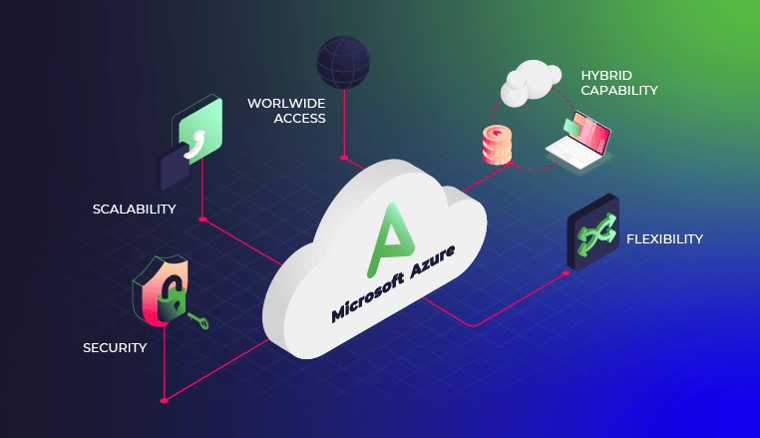
As one of the most robust cloud platforms available in the market, Microsoft Azure offers a lot of efficiency and value to a business. Here are a few of Microsoft Azure's benefits:1. High Scalability and Flexibility
Most businesses are affected by seasonal demands and changing customer demand, which can result in wasted resources and performance issues. With Azure, businesses can efficiently meet these fluctuating business requirements as it allows businesses to manage them without overprovisioning business resources. Azure also prevents operational bottlenecks by bringing as many resources as needed when demand spikes. Using its autoscaling capability, Azure automatically assesses needs in real time to deliver necessary computing power based on demand, allowing resources to be used exactly as needed—both when the demand is high or low.2. Cost Optimization
Businesses that use cloud services wish to maximize their return on investment (ROI) in every way possible.
Microsoft Azure makes this process a lot easier with a range of cost management tools and flexible pricing models, allowing for optimized spending while maintaining high performance.
With Azure, enjoy built-in Cost Management and Billing tools that help with:
- Pay as you go for the services used
- Track and analyze cloud spending in real time.
- Set budgets and alerts to prevent unexpected overages.
- Optimize resources by identifying underutilized instances\
- Recommend cost-saving measures based on the business.
3. User-Friendliness
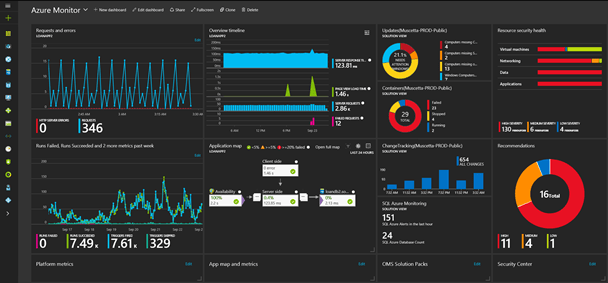
Most cloud services are not very user-friendly, but Azure services are. Microsoft has made it a point to make the platform as user-friendly as possible, allowing businesses of all sizes to use Azure, whether they have an internal Azure consultant or not. The Azure portal has all the details a business needs to utilize the platform from a unified dashboard that allows users to:- Monitor performance and costs in real-time.
- Easily deploy and manage resources with a few clicks.
- Access built-in automation tools to streamline repetitive tasks.
4. High Performance and Reliability
Microsoft Azure understands the importance of high performance and reliability. It ensures fast and uninterrupted services with a global network of data centres and intelligent load balancing. It also brings advanced redundancy measures to ensure that a business benefits from the best performance at all times. It is highly reliable and delivers constant performance due to the Azure data modernization capabilities, thanks to:- Global data centres delivering fast responses
- Exceptional built-in redundancy for faster data sharing
- 99.99% uptime as guaranteed in its Service Level Agreements
- Azure Content Delivery Network (CDN) for faster content delivery
5. Highly Secure, With the Latest Technologies
Whether operating in a large, medium, or small business, business data is valuable for a range of reasons and must be kept secure. As a cloud platform that deals in data, Azure brings a range of capabilities to help achieve top security, such as built-in threat protection, compliance tools, and AI-driven monitoring. Threat protection tools, such as Azure Security Centre and Microsoft Defender for Cloud, along with end-to-end encryption, help prevent data breaches. Microsoft Azure also meets global regulatory requirements and saves businesses from additional compliance efforts. The platform also uses AI-driven technologies and a zero-trust approach to security for continuous monitoring and data safety. This is the reason why most of the top data analytics companies use Azure as their preferred cloud service provider.