



Modern teams don’t just move fast, they constantly context-switch. One app for tasks, another for chat, a third for file storage. Add Zoom, corporate email, and a quick “I’ll drop it in Telegram,” and the workday turns into a scavenger hunt for information.
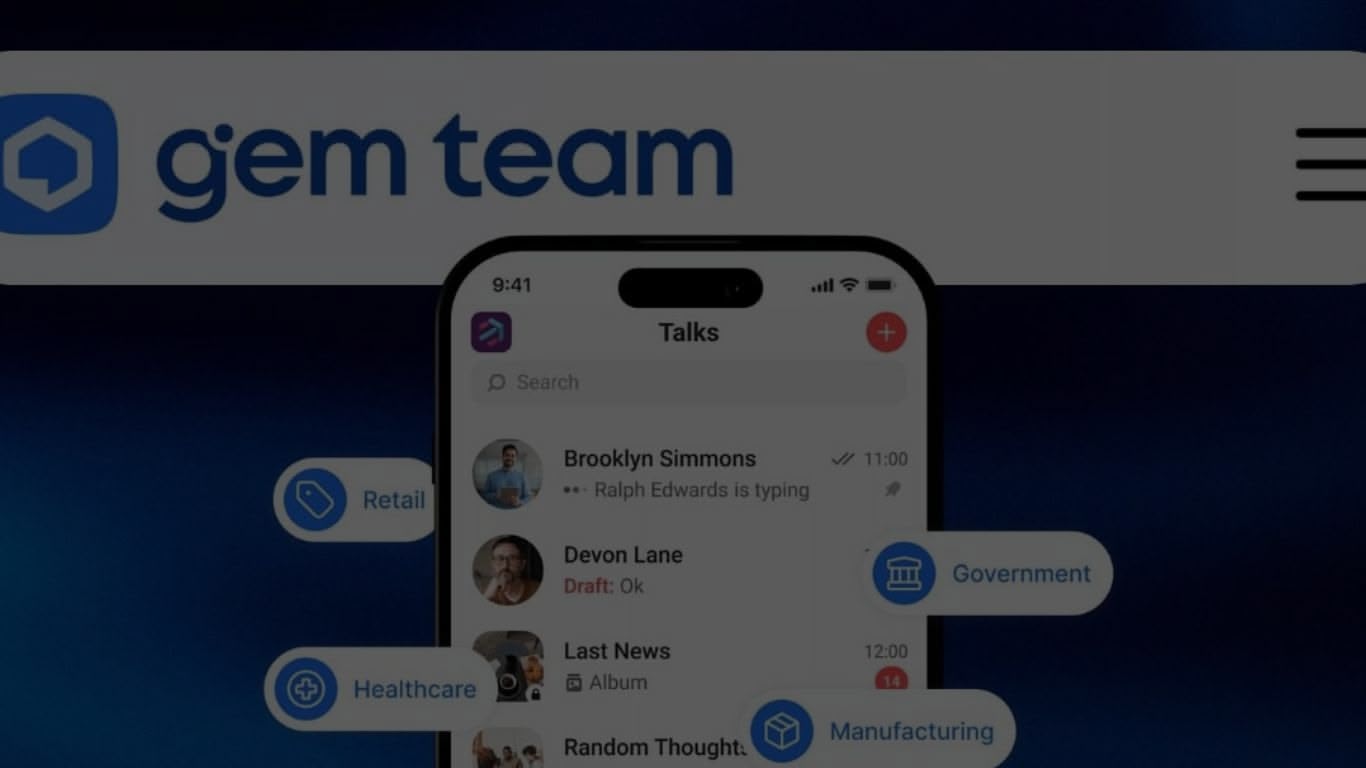
Gem Team is one of the flagship products from Gem Soft, was built to solve this fragmentation. It’s more than a messenger; it’s a platform that covers several core team needs at once, cutting down on tabs, tools, and wasted minutes.
To see the advantages clearly, let’s checks the five scenarios where Gem Team comfortably replaces two or even three separate services, letting teams gain focus, security, and momentum without losing any functionality.
Common Pain Points and Daily Workflows
Replacing Messenger + Task Tracker + Cloud Storage
Daily coordination is everyone’s most familiar task. In most companies it looks like this: chat in a messenger, tasks in a separate tracker, files somewhere in the cloud. Cue the endless: “Where’s the link?” “I never saw that task.” “Can you resend the doc?”
With Gem Team everything lives in one place: the discussion, the file, the deadline, the status—all in a single thread. The chat becomes a workspace, eliminating needless context-switching. When everything is consolidated, the odds of losing or failing to find a file on time drop to zero.
Replacing Zoom + Corporate Portal + Email Threads
Stand-ups, meetings, and internal updates are always a headache. A typical flow: a Zoom call, a follow-up email blast, then a chat discussion. Three formats for one action. In Gem Team you can launch a video call right from the chat, keep the recording, discuss it on the spot, attach supporting docs, and so on. Everything lives in one “organism” and is instantly accessible. You can even run internal update channels and skip the email noise.
Replacing Heavy Onboarding Docs + PDF Manuals + Oral Tribal Knowledge
A new hire joins, now what? Onboarding is painful: “There’s a doc; I’ll email it,” “We have a chat, but it’s outdated,” “Ask Maria, she knows.” Instructions get lost, chats go unread, half the knowledge lives in people’s heads, the rest deep in Google Docs.
Gem Team makes it simple. Newcomers enter a structured space: topic channels, ongoing discussions, pinned messages, searchable history. No need to rebuild context; it’s already there. Add a teammate to the right group and they “absorb” everything without ten separate explanations. They see how the team talks, what’s in focus, and onboard naturally in two days of ramp-up instead of a week, one app instead of a pile of links. Convenient for people, healthy for the team.
Replacing Light-Weight CRM (Internal Clients) + Email + Forwarded Docs
Many internal teams—accounting with HR, marketing with sales, design with everyone—serve “internal clients.” This often turns into email chains, voice notes, forwarded briefs, and “just-in-case” calls.
Gem Team tames the chaos with structure. Within a single platform you can run dedicated threads for each “client,” chat, attach files, or hop on a quick call. It isn’t a full-blown CRM—and doesn’t need to be. It’s a fast, flexible space where issues get solved instead of lost.
Replacing Corporate Social Network + Zoom + “DM Me” Requests
Team spirit, engagement, informal chatter—easy to overlook, always important. Every group has a “marketplace,” a “watercooler,” a “company news” or a “Friday meme” channel, often scattered across social networks or Telegram.
Gem Team lets you build a living community inside the company: interest-based channels, hobby clubs, polls, internal announcements, events—all in the same space where work chat happens, but with a different tone. People feel part of something bigger, and you save the effort of rolling out extra “engagement” platforms.
Replacing Stand-Alone Dashboards, Spreadsheets, and Weekly Status Calls
A typical Monday starts with managers scraping numbers from Jira, Slack, Google Sheets—or whatever stack the team uses—then herding everyone into a status call just to ask, “Where are we on this?” The hidden cost is massive: employees switch between apps more than 1,100 times a day, losing roughly five full workweeks a year to context-switching. Meanwhile, 68 % of staff admit they spend at least half an hour every day just jumping between tools.
Gem Team folds lightweight analytics and automatic status snapshots right into the chat stream. Task progress, file activity, and peer feedback show up in a real-time dashboard everyone can see, no exporting, no copy-pasting. Timesheets update themselves when tasks move stages, and Monday’s “sync meeting” can shrink to a single async post that the team reads (and reacts to) on their own schedule. Fewer dashboards, no spreadsheet gymnastics, and a calmer start to the week, all inside the same space where the work actually happens.
Conclusion
Gem Team doesn’t claim to replace every corporate tool, but it covers a huge share of real-world scenarios, especially the ones that used to sprawl across messengers, Zoom, email, and calendars. When everything lives in one place, teams breathe easier. No window-hopping means no wasted energy or frayed nerves. And when a solution helps you stay clear, connected, and calm, it’s more than a platform; it’s a workspace. Trying Gem Team is the smartest step you can take toward a healthier corporate culture.