 Vipin PG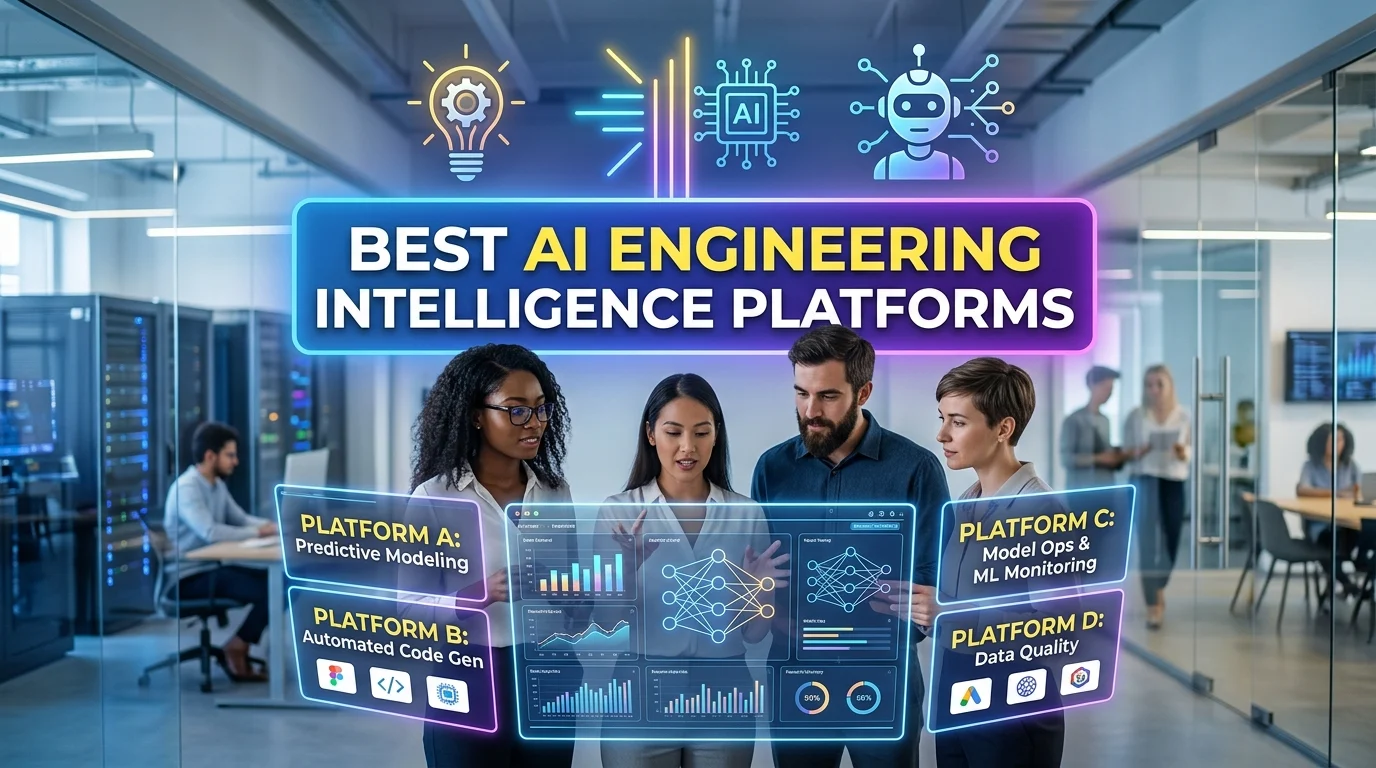
Engineering organizations no longer lack data. They lack interpretation. Over the past decade, the proliferation of development metrics has created a paradox: visibility has increased, yet clarity has not. Cycle time, deployment frequency, code churn, review latency, and incident rates, these signals are readily available. What remains difficult is understanding how they interact, what they reveal about structural fragility, and where long-term risk is accumulating beneath short-term performance.
AI Engineering Intelligence emerged to address this interpretive gap. Unlike traditional development analytics tools, which primarily aggregate and visualize activity, AI Engineering Intelligence platforms attempt to model engineering as a system. They correlate signals across delivery pipelines, planning systems, repositories, and organizational structures to surface patterns that would otherwise go unnoticed.
Where AI Engineering Intelligence Creates Real Leverage
AI Engineering Intelligence becomes meaningful when it informs structural decisions rather than operational firefighting.
- Structural delivery risk detection: Teams may appear stable at the metric level while architectural coupling or concentrated ownership introduces fragility. AI models can surface early concentration risks before they translate into delays or outages.
- Coordination bottlenecks: As organizations grow, dependency networks expand non-linearly. Human intuition struggles to track this complexity. AI can detect where work repeatedly stalls due to cross-team friction or review congestion.
- Workload imbalance: Sustained asymmetry in contribution patterns may signal burnout risk or architectural imbalance. Addressing these signals early preserves sustainability.
AI modeling helps evaluate architectural drag. Systems with high interdependence often exhibit throughput ceilings that cannot be solved by increasing effort. By correlating structural signals with delivery outcomes, AI platforms reveal whether architectural simplification may have a greater impact than process optimization.
The 5 Best AI Engineering Intelligence Platforms
1. Milestone
Milestone approaches AI Engineering Intelligence from a system-first perspective. Rather than layering AI on top of metrics, it embeds modeling at the core of its architecture. The platform treats engineering as a living system shaped by collaboration patterns, structural dependencies, and workload dynamics.
Milestone correlates signals across repositories, delivery pipelines, operational systems, and organizational structure to construct a multi-dimensional view of engineering health. This approach allows it to surface relationships that remain invisible in isolated analytics. For example, delivery volatility may be traced not to execution inefficiency but to architectural concentration or unstable planning cycles.
Its predictive capabilities focus on sustainability and systemic risk. Instead of highlighting short-term deviations alone, Milestone identifies drift patterns that signal increasing fragility. This enables leadership to intervene before performance visibly declines.
Another distinguishing feature is its executive abstraction layer. Milestone translates complex engineering signals into coherent narratives aligned with strategic decisions. Rather than overwhelming leadership with granular data, it contextualizes insights within organizational priorities.
Key capabilities:
- AI-driven engineering health modeling
- Cross-domain signal correlation across delivery and structure
- Predictive sustainability and systemic risk detection
- Executive-grade narrative abstraction for decision support
2. Oobeya
Oobeya applies AI to portfolio-level engineering intelligence. Its focus is less on granular workflow analytics and more on how engineering initiatives align across programs and value streams.
The platform uses AI to map dependencies, initiative progress, and cross-team coordination patterns. In large organizations, where multiple strategic programs intersect, Oobeya provides clarity into how execution aligns with broader transformation efforts.
Its strength lies in structural visibility at scale. AI models detect misalignment between planned initiatives and execution realities, highlighting risks that may not be visible at the team level. This is particularly valuable in governance-heavy environments where strategic oversight is critical.
Key capabilities:
- AI-supported portfolio and initiative visibility
- Cross-team dependency modeling
- Strategic alignment analysis
- Execution risk identification across programs
3. Athenian
Athenian emphasizes analytical depth. Its AI capabilities focus on advanced segmentation and longitudinal modeling of engineering performance.
Rather than abstracting insights into prescriptive narratives, Athenian empowers data-mature teams to explore patterns across repositories, contributors, and workflows. Its AI models detect subtle shifts in performance trends, allowing organizations to investigate emerging dynamics before they escalate.
The platform is particularly strong in environments where analytical literacy is high and leaders prefer to interrogate data directly rather than rely on curated summaries.
Key capabilities:
- AI-supported workflow and contribution analytics
- Longitudinal performance modeling
- Comparative engineering analysis across teams
- Repository-level intelligence segmentation
4. Plandek
Plandek positions its AI capabilities around delivery predictability and flow stability. Rather than attempting full system modeling, the platform concentrates on identifying patterns that influence execution reliability. Its intelligence layer analyzes throughput volatility, planning deviation, and cycle time drift to surface emerging delivery risk before it becomes visible in missed commitments.
Where Plandek distinguishes itself is in connecting planning assumptions to execution behavior. AI models examine historical flow patterns and detect when current activity deviates from established baselines. These deviations may signal overcommitment, coordination strain, or structural bottlenecks that impact delivery confidence. This predictive orientation allows organizations to move from reactive reporting to forward-looking planning discipline.
The platform’s analytical design is grounded in flow science. It emphasizes understanding how work moves through the system rather than measuring isolated productivity signals. By focusing on trend acceleration and variance detection, Plandek helps teams stabilize delivery patterns without over-optimizing for short-term velocity.
Key capabilities:
- AI-based throughput and flow modeling
- Predictive detection of planning deviation
- Delivery variance analysis across teams
- Trend acceleration and volatility identification
5. Allstacks
Allstacks approaches AI Engineering Intelligence through the lens of capacity modeling and execution feasibility. Its platform concentrates on understanding how effort allocation translates into delivery outcomes, using AI to analyze resource distribution, planning accuracy, and execution patterns.
Rather than centering on code-level analytics, Allstacks emphasizes workload dynamics. Its AI models evaluate how staffing assumptions, initiative scope, and execution history interact to influence delivery sustainability. By identifying misalignment between capacity and commitments, the platform provides early signals of execution strain.
One of Allstacks’ strengths lies in its ability to correlate effort distribution with outcome variability. Sustained discrepancies between projected capacity and realized output may indicate structural inefficiencies or unrealistic planning frameworks. AI-driven analysis highlights these patterns without requiring manual synthesis of disparate reports.
Key capabilities:
- AI-assisted capacity forecasting
- Effort-to-outcome correlation modeling
- Execution feasibility analysis
- Resource allocation trend evaluation
What Makes an Engineering Intelligence Platform Truly AI-Driven?
AI in this context is not about automation or generative summaries. It is about pattern compression and contextual modeling. To qualify as truly AI-driven, an Engineering Intelligence platform must operate beyond static aggregation.
Beyond Dashboards: Modeling Engineering as a System
Engineering organizations behave as complex adaptive systems. Teams interact across architectural boundaries, workload shifts ripple through dependent services, and planning volatility can amplify downstream coordination costs. A static dashboard cannot capture these dynamics because it treats metrics as independent variables.
AI-driven platforms attempt to model interactions. They examine how throughput changes correlate with architectural concentration, how review latency aligns with workload imbalance, or how deployment cadence affects operational strain. This shift from measurement to modeling is foundational.
Signal Correlation Across Domains
Real intelligence emerges when signals from different domains intersect. Code activity alone is insufficient. Planning systems, CI/CD pipelines, incident management tools, and organizational topology all shape performance outcomes.
AI-driven platforms correlate across these domains. For example, a spike in pull request volume combined with concentrated ownership in a specific subsystem may indicate unsustainable cognitive load. Delivery metrics alone would not reveal this.
The strength of an AI platform lies in its ability to detect these cross-domain relationships without requiring manual analysis.
Predictive Pattern Recognition
Descriptive analytics explain what happened. AI Engineering Intelligence seeks to identify what is likely to happen next. Predictive modeling in this context does not imply deterministic forecasting; it involves identifying patterns that historically precede instability.
These early signals may include sustained throughput volatility, increasing coordination overhead, or growing divergence between planned and delivered work. The value lies in surfacing them before visible degradation occurs.
Cognitive Compression for Leadership
As engineering organizations scale, leadership attention becomes a scarce resource. AI must reduce interpretive burden rather than increase it. Platforms that merely add new visualizations contribute to metric overload. Truly AI-driven systems prioritize signals, contextualize anomalies, and highlight leverage points.
This compression of complexity into decision-relevant insight distinguishes substantive AI from superficial enhancement.
When AI Engineering Intelligence Becomes Essential
AI Engineering Intelligence becomes indispensable when organizational complexity exceeds intuitive oversight. Small teams with limited interdependence may operate effectively with lightweight analytics. As coordination networks expand, the limitations of manual interpretation become evident.
Scaling beyond a handful of teams introduces architectural coupling and workload asymmetry that are difficult to track without modeling support. Similarly, enterprises operating in high-risk environments require early detection of structural fragility to protect delivery stability.
Organizations treating engineering as a strategic driver rather than a support function benefit most from AI Engineering Intelligence. When engineering outcomes materially influence revenue, customer experience, or regulatory exposure, the cost of interpretive blind spots increases significantly.
At this stage, AI is not an enhancement. It becomes a prerequisite for maintaining clarity in complex systems.
FAQs
What distinguishes AI Engineering Intelligence from traditional DevOps analytics?
Traditional DevOps analytics aggregates and visualizes workflow metrics such as deployment frequency and cycle time. AI Engineering Intelligence extends beyond visualization by modeling relationships across delivery, planning, operational, and organizational domains. Its objective is not simply to report performance but to interpret systemic patterns and surface early risk indicators that influence sustainability and long-term outcomes.
How reliable are predictive signals in complex engineering environments?
Predictive signals in this context are probabilistic rather than deterministic. They identify patterns historically associated with instability or delivery variance. Reliability improves when models integrate cross-domain data and contextual information. While predictions should not replace judgment, they provide valuable early indicators that reduce the likelihood of reactive crisis management.
Can AI modeling adapt to rapidly evolving team structures?
Well-designed AI platforms continuously recalibrate based on updated organizational and workflow data. Adaptability depends on integration depth and model architecture. Systems that incorporate team topology and workload distribution can adjust to structural changes more effectively than those relying solely on historical throughput metrics.
What level of data maturity is required to implement AI Engineering Intelligence?
A foundational level of tool integration is necessary, including repositories, planning systems, and CI/CD pipelines. However, organizations do not require advanced internal data science capabilities. The platform should abstract modeling complexity while preserving transparency, enabling leadership to interpret signals without specialized analytical expertise.
How should leadership interpret AI-generated engineering risk signals?
Risk signals should be treated as prompts for investigation rather than definitive conclusions. Their purpose is to surface areas of potential fragility or imbalance. Leadership interpretation should incorporate contextual knowledge, architectural understanding, and strategic priorities before acting on AI-derived insights.
Does AI Engineering Intelligence replace operational reviews?
AI Engineering Intelligence complements operational reviews rather than replacing them. It enhances review processes by highlighting patterns that warrant attention, reducing manual synthesis effort. Decision-making remains a human responsibility informed by structured insight.