 Vipin PG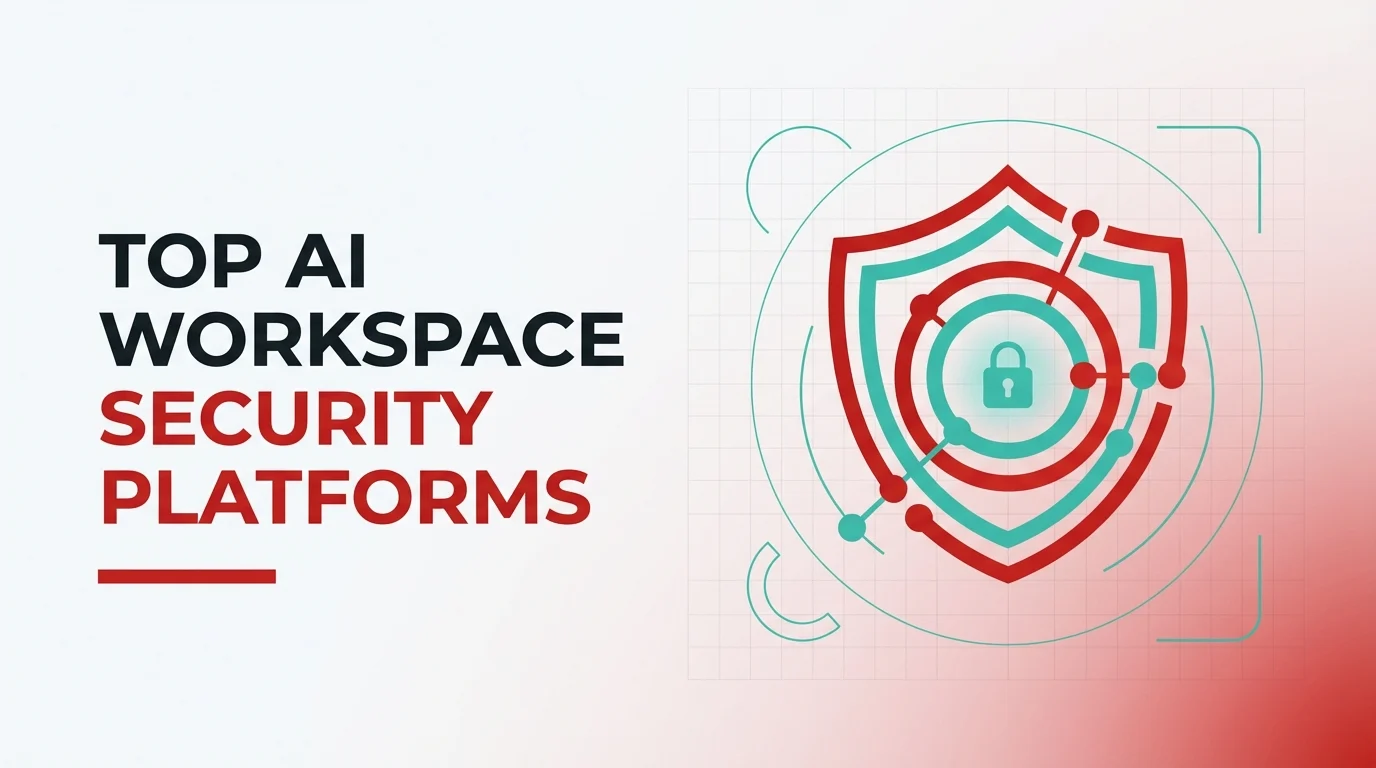
This shift has introduced a new category of risk. AI workspaces are not defined by a single platform. They are composed of interconnected systems, AI tools, integrations, identity layers, and automation processes, that operate continuously and evolve rapidly. Exposure does not typically come from a single vulnerability. It emerges from how these systems are connected and how permissions are distributed. Traditional security models were not designed for this environment. Endpoint protection focuses on devices. CASB and SSPM tools focus on SaaS posture. SIEM platforms aggregate signals. None of them fully capture the dynamic nature of AI-driven workflows. AI workspace security platforms address this gap. They provide visibility into how AI tools are adopted, how they connect to enterprise systems, and how access is granted and used over time. More importantly, they introduce governance mechanisms that allow organizations to manage risk without slowing down innovation. Below are 6 of the most relevant AI workspace security platforms shaping enterprise strategies in 2026.
Top AI Workspace Security Platforms of 2026
1) Pluto Security – Best Overall AI Workspace Security Platform
Pluto Security is designed to address AI workspace security as a governance and visibility challenge at the workflow level. Its architecture reflects how modern enterprises adopt AI: through decentralized teams building and connecting systems at high speed. The platform continuously discovers AI tools, automation builders, and integrations across the environment. It maps how these tools connect to SaaS platforms, APIs, and internal systems, creating a clear picture of how workflows operate. This includes identifying OAuth permissions, API tokens, and cross-system dependencies. A key differentiator is Pluto’s focus on creation-time exposure. It surfaces risk at the moment workflows are deployed, allowing organizations to understand the implications of new integrations before they become systemic. Identity context is central to its model. Pluto correlates activity across users, service accounts, and automation agents, providing insight into ownership and access patterns. Pluto is particularly effective in environments where AI adoption is decentralized and changing rapidly. It enables organizations to maintain control without introducing friction, aligning security with how AI is actually used. Key capabilities include:
- Continuous discovery of AI tools and workflows
- Mapping of integrations across SaaS and APIs
- Identity-aware visibility across human and non-human actors
- Policy-based guardrails for access control
- Centralized governance dashboards
- Structured remediation workflows
2) Reco – Identity-Led Visibility Across AI and SaaS Environments
Reco approaches AI workspace security from a different angle than most platforms, it treats identity as the primary signal for understanding risk. In AI-driven environments, workflows rarely operate in isolation. They inherit permissions from users, service accounts, and tokens, then extend those permissions across multiple systems. What looks like a simple integration often carries far broader access than intended. Reco continuously maps these relationships. It tracks how identities interact with SaaS applications, how OAuth permissions are granted, and how those permissions evolve over time. Instead of focusing on isolated alerts, the platform builds a contextual view of access, what exists, who owns it, and how it is actually used. This becomes particularly valuable as non-human identities grow. Automation agents, scripts, and connectors often persist long after their original purpose, making it difficult to distinguish between expected activity and silent exposure. Key capabilities include:
- Continuous discovery of SaaS integrations and connected AI tools
- OAuth and token lifecycle visibility
- Identity-based anomaly detection
- Contextual prioritization based on real usage patterns
- Centralized governance and reporting
- Visibility across both human and non-human access
3) Protect AI – Securing the Foundations of AI Systems
Protect AI operates deeper in the stack, focusing on the infrastructure that supports AI systems rather than the workflows that use them. As enterprises build and deploy models, the security conversation shifts from usage to integrity. Models are trained, packaged, stored, and deployed through pipelines that often depend on external components. Each stage introduces potential risk. Protect AI addresses this by treating the AI lifecycle as a supply chain. It scans model artifacts, validates dependencies, and monitors pipeline activity to ensure that what enters production has not been altered, compromised, or misconfigured. This is particularly relevant in environments where models are reused across teams or integrated into multiple systems. Rather than focusing on access or behavior, the platform focuses on trust.. Key capabilities include:
- Model artifact scanning and validation
- Monitoring of ML pipelines and workflows
- Detection of supply chain vulnerabilities
- Registry security and governance
- Visibility across the AI lifecycle
- Reporting aligned with enterprise controls
4) CalypsoAI – Structured Oversight for AI Systems
CalypsoAI focuses on something many organizations struggle to formalize: how to evaluate and govern AI systems consistently. As AI moves from experimentation to operational use, enterprises need more than technical controls. They need structured processes that define what “acceptable” looks like, how models are tested, how risk is measured, and how decisions are documented. CalypsoAI provides that framework. The platform enables organizations to validate models before deployment, monitor behavior in production, and assign risk scores based on defined criteria. It brings consistency to environments where evaluation is often fragmented or informal. This is particularly relevant for enterprises operating under regulatory pressure or those deploying AI in decision-making processes where accountability matters. Key capabilities include:
- Model validation and testing workflows
- Risk scoring and classification frameworks
- Continuous monitoring of model behavior
- Governance processes for approval and review
- Documentation and audit support
- Integration with enterprise risk programs
5) Noma Security – Monitoring AI Where It Actually Runs
Noma Security focuses on a layer that is often overlooked until it becomes a problem: runtime behavior. Once AI systems are deployed, they are exposed to real inputs, real users, and real workflows. This is where theoretical vulnerabilities become practical risks. Noma monitors AI systems at this interaction layer. It analyzes how models are being used, identifying patterns that suggest manipulation, misuse, or unexpected behavior. This includes detecting prompt injection attempts and other forms of input designed to influence outputs in unintended ways. The platform does not attempt to control how systems are built. Instead, it focuses on how they behave under real-world conditions. Key capabilities include:
- Detection of prompt injection and adversarial inputs
- Monitoring of AI interactions in real time
- Identification of misuse and abnormal behavior
- Integration with security operations workflows
- Contextual alerting based on activity patterns
- Visibility into runtime exposure
6) Akto – Securing the Connections Behind AI Workflows
Akto focuses on the integration layer that underpins AI workspaces. AI tools do not operate in isolation. They rely on APIs to retrieve data, trigger actions, and connect systems. These APIs often provide direct access to sensitive information, making them one of the most critical, and frequently overlooked. Akto provides continuous visibility into this layer. It discovers APIs across the environment, monitors how they are used, and identifies vulnerabilities that could expose data or enable unauthorized access. This is particularly important in environments where APIs are created rapidly and consumed across multiple workflows. Rather than focusing on individual tools, Akto focuses on the pathways that connect them. Key capabilities include:
- Automated discovery of APIs across systems
- Monitoring of API usage and behavior
- Detection of sensitive data exposure
- Identification of vulnerabilities and misconfigurations
- Integration with development and security workflows
- Centralized reporting and visibility
How These Platforms Fit Together in Practice
AI workspace security tools are often presented as direct alternatives, but they operate across different layers of the environment. Treating them as interchangeable usually leads to blind spots rather than simplification. A more effective approach is to look at what part of the system each platform makes visible or controllable.
Governance and Visibility Layer
This layer answers fundamental questions about the environment: what exists, who connected it, and what it can access. Platforms such as Pluto Security and Reco focus on building a continuous understanding of workflows, integrations, and permissions. They typically provide visibility into:
- AI tools and automation workflows
- SaaS integrations and OAuth permissions
- Identity context across users and service accounts
This layer establishes baseline awareness, which is necessary before any meaningful control can be applied.
Model and System Integrity Layer
This layer focuses on whether AI systems themselves can be trusted. Protect AI and CalypsoAI operate here, providing validation and governance for models and pipelines. They address concerns such as:
- Model integrity before deployment
- Supply chain dependencies
- Consistency in evaluation and risk classification
This layer becomes more relevant as organizations move from using external tools to building and deploying their own AI systems.
Runtime Behavior Layer
Runtime visibility focuses on how AI systems behave once they are in use. Noma Security operates in this layer, monitoring interactions and identifying patterns that may indicate misuse or manipulation. Key considerations include:
- How models respond to real inputs
- Whether outputs can be influenced in unintended ways
- Whether behavior remains aligned with expectations
This layer captures risks that only appear under real-world conditions.
Integration and Connectivity Layer
This layer focuses on the pathways that connect systems. Akto provides visibility into APIs, which underpin most AI-driven workflows. It helps organizations understand:
- How systems are connected
- Where data flows between platforms
- Which APIs expose sensitive information
Without visibility into integrations, it becomes difficult to fully understand how exposure propagates across the environment. Most enterprises combine multiple layers depending on how AI is used. The point is to ensure coverage across the areas where risk actually exists.
The Direction of AI Workspace Security
AI workspace security is changing as enterprise AI usage becomes more complex and more embedded in operations.
AI Is Becoming More Autonomous
AI systems are increasingly capable of initiating actions independently. This introduces non-human activity into environments that were traditionally centered around user-driven actions. Organizations need to track how these systems operate, what permissions they use, and how their behavior evolves over time.
Workflows Are Getting More Complex
AI-driven workflows often span multiple systems. A single process may retrieve data, process it through a model, and trigger actions elsewhere. The challenge is not in any single step, but in understanding how these steps connect and interact. This makes workflow-level visibility increasingly important.
Dependencies Are Expanding
AI systems rely on a growing number of external components, including models, APIs, and open-source libraries. Each dependency introduces uncertainty that must be managed. Organizations are placing more emphasis on:
- Validating external components before use
- Monitoring changes in dependencies
- Understanding how external systems interact with internal data
Governance Is Becoming Formalized
AI is becoming subject to clearer expectations around control and accountability. Organizations are expected to maintain visibility into usage, understand risk levels, and demonstrate consistent enforcement of policies. This is pushing AI workspace security toward structured reporting, repeatable controls, and auditability.
FAQs About AI Workspace Security Platforms
What is an AI workspace security platform?
An AI workspace security platform provides visibility into how AI tools, integrations, and workflows operate across an organization. It focuses on mapping connections, permissions, and identity context rather than only detecting threats. This helps organizations understand how AI interacts with data and systems, making it easier to manage exposure in environments that evolve continuously through decentralized adoption.
How is AI workspace security different from AI model security?
AI model security focuses on protecting the model itself, including its behavior, integrity, and resistance to manipulation. AI workspace security covers the broader environment where the model operates, including integrations, workflows, identities, and data access. While model security ensures the system behaves correctly, workspace security ensures that how it connects and operates does not introduce additional risk.
Do enterprises need multiple AI workspace security layers?
Most enterprises benefit from multiple layers because AI-related risk spans identity, integrations, data access, and system behavior. A single platform rarely provides full coverage. Combining governance, API visibility, and runtime monitoring allows organizations to address different aspects of risk more effectively, especially in environments where AI usage is distributed across teams and systems.
Why is identity so important in AI environments?
Identity determines how AI tools and workflows interact with systems. Permissions assigned to users, service accounts, and automation agents define what actions can be performed and what data can be accessed. If identity is not properly managed, risk can increase even when activity appears legitimate. Understanding identity context helps ensure that access remains aligned with intended usage.
What risks are specific to AI copilots?
AI copilots often have direct access to internal data and can generate outputs based on that access. Risks include exposing sensitive information, operating with excessive permissions, and responding to manipulated inputs. These risks evolve as integrations change and usage expands, which makes continuous visibility into both access and behavior important for maintaining control.
How do APIs affect AI workspace security?
APIs enable AI tools to connect to systems, retrieve data, and trigger actions. They are a central part of how workflows operate. Without proper visibility, APIs can create persistent access paths that are difficult to monitor. Securing APIs helps organizations control how data moves between systems and ensures that integrations do not create unintended exposure.
Can AI workspace security platforms work with existing security tools?
Most AI workspace security platforms are designed to integrate with existing tools such as SIEM systems, identity providers, and cloud security platforms. This allows AI-related activity to be analyzed alongside other signals, creating a more complete view of the environment. Integration helps organizations manage AI risk within existing workflows rather than treating it as a separate domain.