

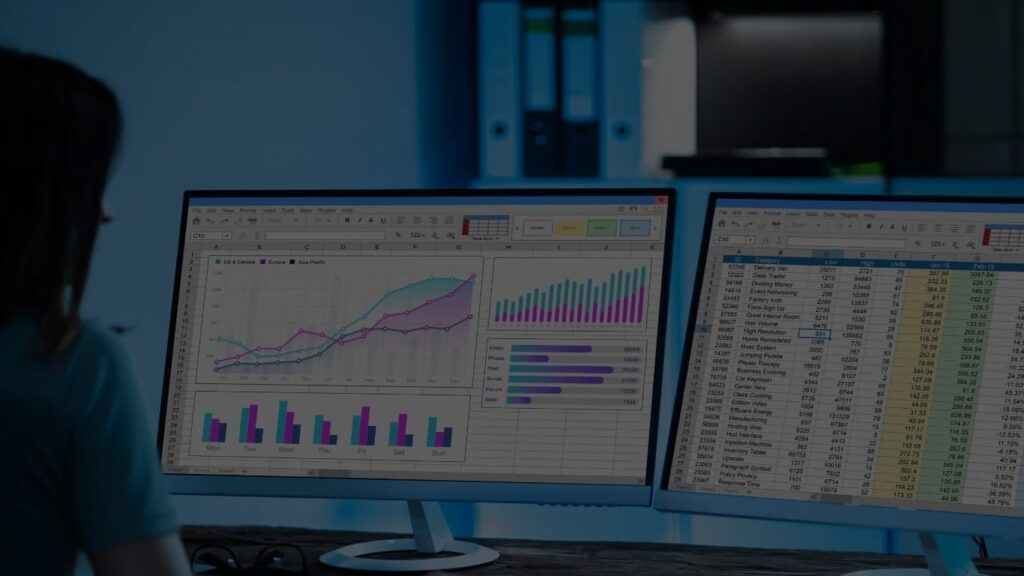
The journey from traditional spreadsheets to advanced smart systems marks a significant evolution in financial reporting. This transformation is driven by the need for more accurate, efficient and insightful financial data management. AI technology plays a pivotal role in this evolution, offering tools that refine data and provide actionable insights.
The shift from spreadsheets to smart systems in financial reporting is not just a technological upgrade but a strategic necessity. Traditional spreadsheets, while useful, are limited in their ability to handle large volumes of data and complex analytics. They often require manual input and are prone to errors, which can lead to inaccurate financial reporting.
In contrast, smart systems powered by AI and machine learning offer automated data processing, reducing the risk of human error and enhancing the accuracy of financial reports. By leveraging AI for accounting, organizations can transition smoothly from outdated methods to innovative solutions that support strategic decision-making.
The integration of cloud computing has further accelerated this evolution, enabling real-time collaboration and data accessibility across global teams. Cloud-based smart systems allow financial professionals to access and analyze data from anywhere, breaking down geographical barriers and promoting seamless workflow integration.
This technological advancement has particularly proven valuable during the shift toward remote work environments, where traditional office-based systems would have created significant operational challenges.
The impact of AI on financial data processing
AI technology has revolutionized financial data processing by automating the detection of patterns and anomalies that are difficult to identify manually. This advancement allows finance professionals to process vast amounts of data with precision and speed.
AI systems can quickly identify discrepancies and outliers, ensuring that financial reports are based on accurate and reliable data. For example, AI can detect unusual spending patterns or unexpected revenue changes, providing early warnings of potential financial issues or opportunities.
By automating routine data processing tasks, AI frees up valuable time for finance teams to focus on strategic analysis and decision-making. This shift not only enhances the accuracy of financial reporting but also increases the efficiency of financial operations. As a result, organizations can allocate resources more effectively and ensure that all financial decisions are grounded in robust data analytics. The integration of AI for accounting and financial reporting is essential for staying competitive in a rapidly evolving business environment.
Machine learning algorithms within these systems continuously improve their accuracy through exposure to more data, creating a self-improving cycle of financial analysis. These algorithms can adapt to new patterns and evolving financial landscapes, making them increasingly valuable for long-term financial planning and risk assessment.
The ability to learn from past data while incorporating new information ensures that financial reporting remains current and relevant in an ever-changing business environment.
Recognizing trends for strategic financial planning
Smart systems equipped with AI capabilities are instrumental in analyzing historical financial data to identify trends and patterns that inform future strategies. These systems provide a comprehensive view of market dynamics and internal performance metrics, enabling finance teams to forecast with greater accuracy. Understanding these trends is crucial for anticipating market changes and adjusting financial strategies accordingly.
For instance, if historical data analysis reveals a seasonal increase in demand for certain products, finance leaders can proactively adjust inventory levels or marketing efforts to capitalize on this trend.
This proactive approach to trend analysis allows organizations to make informed decisions, enhancing their strategic planning capabilities. By continuously monitoring trends and adjusting strategies based on real-time insights, organizations can remain agile and responsive to market changes, maximizing profitability and operational efficiency.
Advanced predictive analytics capabilities within smart systems enable organizations to move beyond simple trend recognition to sophisticated forecasting models. These models can incorporate multiple variables, including external economic indicators, market sentiment and competitive analysis, to create more comprehensive financial projections.
By leveraging machine learning algorithms, these systems can identify subtle correlations and complex patterns that might escape human analysis, providing deeper insights for strategic planning.
Facilitating swift action through smart systems
The transition from spreadsheets to smart systems enables finance leaders to transform insights into actionable strategies more efficiently. AI technologies facilitate real-time decision-making processes, allowing leaders to leverage up-to-date information to make swift decisions that align with organizational goals.
By integrating AI tools that provide instantaneous analytics, organizations can respond quickly to emerging challenges or opportunities.
Real-time access to financial insights empowers leaders to implement strategies promptly, avoiding the delays associated with traditional analysis methods. For example, if an unexpected market shift occurs, AI-generated insights can be used to adjust pricing models or reallocate resources swiftly. This agility ensures organizations maintain their competitive stance while minimizing risks associated with delayed responses.
Moreover, AI systems’ ability to simulate various scenarios allows for strategic experimentation before committing resources. This capability not only enhances decision-making accuracy but also encourages innovation within finance teams.
By evaluating potential outcomes beforehand, organizations can pursue strategies that offer the highest probability of success while effectively mitigating potential risks. The evolution from spreadsheets to smart systems represents a significant advancement in financial reporting, driving more informed and strategic financial management.