
The integration of Artificial Intelligence (AI) into clinical documentation is transforming healthcare operations, reducing administrative burdens, and enhancing accuracy.
AI-powered solutions, such as scribe tools and AI note taking applications, assist healthcare professionals in real-time documentation, minimizing errors and improving workflow efficiency.
However, successful implementation hinges on proper staff training. This article explores strategic approaches to train healthcare staff on AI-driven documentation systems, ensuring a seamless transition and optimized utilization.
The Importance of Clinical Documentation
Clinical documentation is the foundation of effective healthcare delivery, ensuring accurate patient records, streamlined communication, and improved decision-making. Proper documentation enhances patient safety, reduces errors, and supports compliance with regulatory standards.
As AI clinical documentation systems gain traction, healthcare providers must adapt to automated processes while maintaining data accuracy and integrity. Training staff on these systems is essential to leveraging AI’s benefits, such as reducing administrative burdens and improving workflow efficiency.
A well-trained team can optimize AI tools for real-time documentation, minimizing physician burnout and enhancing overall patient care outcomes.
Understanding the Role of AI in Clinical Documentation
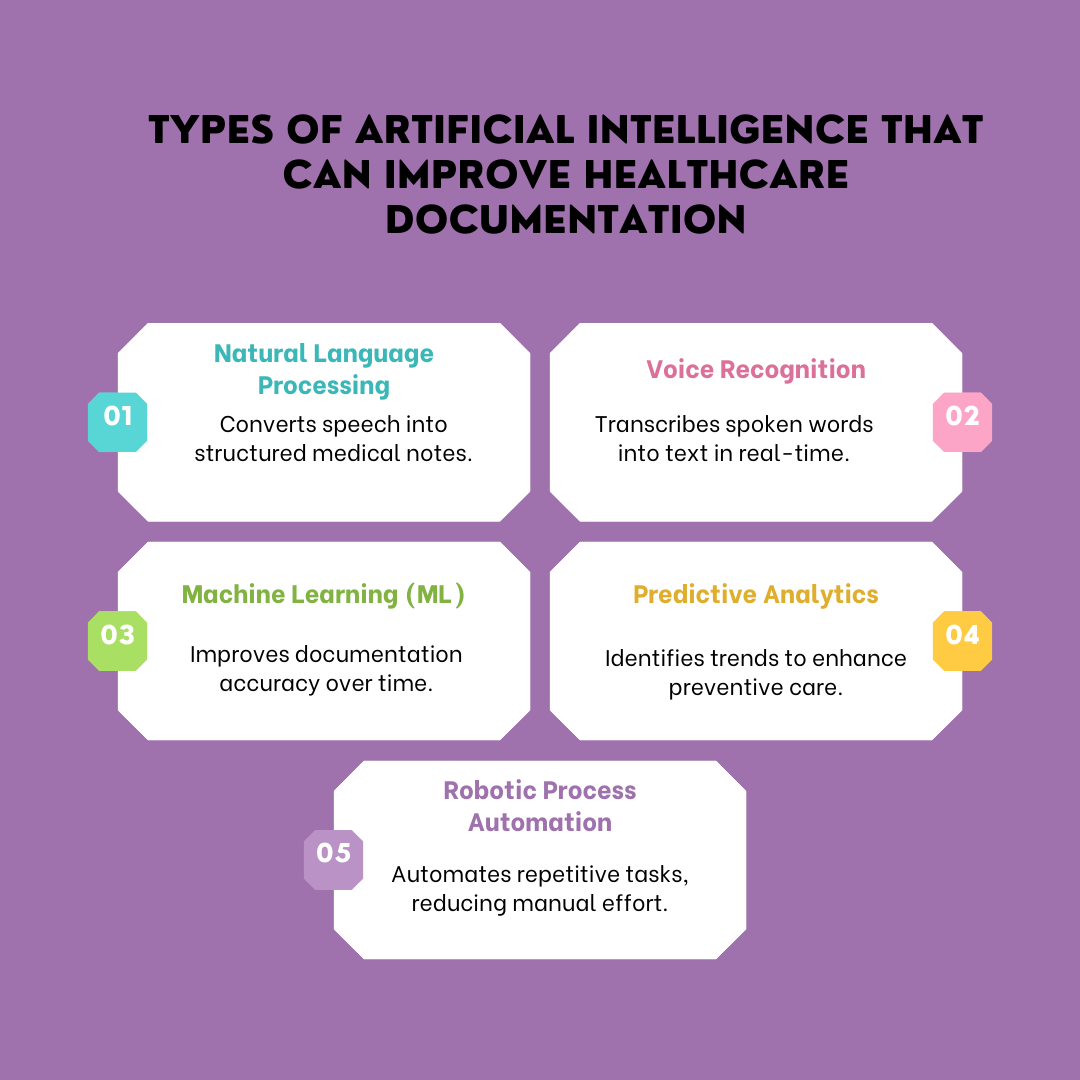
AI clinical documentation systems streamline note-taking, improve data accuracy, and provide real-time assistance to healthcare professionals. These tools can analyze and transcribe patient interactions, reducing the time spent on manual entry.
Key benefits include:
- Enhanced Efficiency: Automating documentation allows physicians to focus more on patient care rather than administrative tasks.
- Improved Accuracy: AI minimizes human errors in medical records, ensuring precise and comprehensive documentation.
- Seamless Integration: Many AI-powered systems integrate electronic health record (EHR) platforms, enhancing accessibility.
Effective Strategies for Training Staff on AI Clinical Documentation Systems
1. Develop a Structured Training Program
A well-designed training program ensures that staff members understand the system’s functionality and can use it effectively.
- Role-Specific Training: Customize training modules for different roles, such as physicians, nurses, and administrative staff.
- Hands-on Learning: Encourage active participation through hands-on workshops and simulations.
- AI Note Taking Demonstrations: Show real-time examples of AI note taking capabilities to illustrate efficiency gains.
2. Implement Phased Adoption
Rolling out the AI documentation system in phases allows staff to gradually adapt and minimizes workflow disruptions.
- Pilot Programs: Start with a small group of users, gather feedback, and refine the system before full-scale implementation.
- Incremental Learning: Introduce features progressively to prevent information overload.
3. Utilize AI-Powered Training Tools
Leveraging AI to train staff can be highly effective:
- Interactive E-Learning Modules: AI-driven training platforms can personalize lessons based on individual progress.
- Virtual Assistants: AI-powered chatbots and virtual assistants can provide instant support and answer queries.
- AI Note-Taking in Training: Encourage trainees to use AI note taking during training sessions to familiarize themselves with the tool.
4. Provide Continuous Education and Support
Ongoing training ensures that employees stay updated on new features and best practices.
- Regular Refresher Courses: Conduct periodic training sessions to reinforce knowledge and address emerging challenges.
- Dedicated Support Teams: Establish help desks and support teams to assist users with troubleshooting.
5. Foster a Positive Adoption Culture
A culture that supports AI innovation requires active promotion to develop.
- Healthcare leaders must initiate support for AI adoption through education programs.
- The implementation of recognition schemes that reward employees who swiftly adopt the AI system helps to boost adoption among other staff members.
- A system of open channels for communication exists to address staff concerns and promise protection for job security.
Leveraging AI for Improved Clinical Documentation
AI technology is transforming the healthcare industry, especially when it comes to clinical documentation. Healthcare professionals are increasingly adopting AI-powered solutions to ease their documentation burden. These tools improve efficiency and reduce errors, giving providers more time to focus on patient care. By leveraging AI, healthcare systems can streamline workflows and enhance productivity, leading to better overall service delivery.
AI Note-Taking: A Game Changer for Healthcare Professionals
AI scribe tools bring revolutionary changes to healthcare professionals by transforming their capacity for documenting patient interactions. With innovations like Docscribe, doctors can streamline their documentation process, allowing them to focus more on patient care while maintaining accurate and detailed records.
The advanced systems help providers maintain real-time documentation to decrease their workloads while achieving better efficiency. AI note taking solutions function through voice recognition to convert speech into precise structured medical notes.
The AI establishes precise medical documentation because it receives training in patient charting terminology through contextual understanding. These tools function seamlessly through EHR platform connections including eclinical works to create indispensable tools for current healthcare practice.
Choosing the Best AI Note-Taking App
Healthcare organizations must carefully choose an AI note taking app that delivers seamless deployment while encouraging end-user acceptance. New system adoption becomes simpler for healthcare staff because the best tools utilize easy-to-use interfaces in their design. Medical specialists increase accuracy and efficiency through the critical customization feature which enables them to modify AI notes for their medical specialty.
Security features also play a vital role, especially in healthcare environments, so ensuring that the chosen solution is HIPAA-compliant is a must. While there are some free options available, premium AI note taking solutions often come with more advanced functionalities that enhance the user experience.
Ensuring Compliance and Data Security
Training staff on AI documentation systems must also include strict compliance and security guidelines:
- HIPAA Training: Educate employees on compliance requirements and secure data handling.
- Access Controls: Restrict AI documentation access based on job roles to protect sensitive patient information.
- Regular Security Audits: Conduct periodic assessments to identify and mitigate potential vulnerabilities.
Measuring the Success of AI Training Programs
Assessing the effectiveness of staff training ensures continuous improvement.
- Performance Metrics: Track documentation accuracy, efficiency improvements, and user adoption rates.
- User Feedback: Conduct surveys to understand challenges and enhance the training approach.
- System Analytics: Utilize AI analytics to monitor usage patterns and identify areas for further training.
FAQs
1. How can artificial intelligence improve clinical documentation?
AI uses automation technology to accomplish real-time documentation thus lowering inaccuracies and error rates. EHR systems integration through this tool improves healthcare professionals’ availability for patient care because it saves time and ensures consistent documentation.
2. How can clinical documentation be improved?
Clinical documentation can be improved by using AI-powered tools, ensuring accuracy, standardizing terminology, integrating EHR systems, training staff, and maintaining compliance with regulations like HIPAA for better data security and efficiency.
3. What is an example of clinical documentation integrity?
Medical documentation integrity maintains both precise and uniform medical records throughout all stages of documentation. An excellent example of correct clinical documentation occurs when clinicians document patient diagnoses and treatments precisely while maintaining accurate information that follows medical guidelines precisely.
Conclusion
The success of implementing AI clinical documentation systems along with their long-term efficiency gains depends on proper training of healthcare staff. Healthcare organizations achieve smooth implementation through the combination of addressing challenges implementing structured training programs and utilizing AI-powered training tools.
Healthcare professionals benefit from AI scribe tools along with AI note-taking applications because they minimize administrative work and create more time for delivering patient care.
Medical organizations that use AI for clinical documentation will receive better accuracy while building a modern and efficient healthcare technology infrastructure.