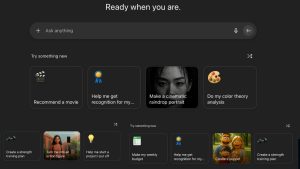

Perplexity AI has recently introduced a groundbreaking feature called Voice Mode, enabling real-time voice interactions across iOS, Android, and Mac platforms. This new functionality enhances hands-free, voice-driven information retrieval, positioning Perplexity AI as a serious contender against established tools like ChatGPT. In this article, we take an in-depth look at the architecture of Voice Mode, its core functionalities, user experiences, competitive positioning, and the broader implications for the future of AI-driven search.
Technical Architecture and Core Functionality
Multi-Stage Voice Interaction Pipeline
Voice Mode in Perplexity AI is built on a sophisticated multi-stage pipeline designed to ensure high accuracy and low latency. When a user speaks a query, the system first converts the audio input into text using advanced Automatic Speech Recognition (ASR) models. This text is then processed by Perplexity’s proprietary Large Language Models (LLMs), including Claude 3.5 Sonnet, GPT-4o, and Sonar Large 32K, depending on the user’s subscription level. Finally, the generated response is converted back to speech using neural Text-to-Speech (TTS) engines with four different voice styles, enhancing user experience with varied vocal expressions.
Platform Availability and Seamless Integration
Initially launched for iOS, Voice Mode is now available on Android and MacOS, seamlessly integrated into Perplexity’s mobile and desktop applications. The feature supports various activation methods, such as gesture controls on Android and system-level microphone permissions on iOS. The addition of a “Hands-Free” mode allows users to engage in continuous dialogues without the need to press a button repeatedly, making the interaction flow more naturally.
User Experience and Feedback
Positive Reception
Voice Mode has been well-received for its naturalistic voice output and real-time responsiveness. Users appreciate the human-like intonation and emotional cadence of the TTS system, which avoids the robotic artifacts commonly found in other AI systems. Additionally, its low-latency processing enhances the fluidity of conversations, outperforming competitors in speed and accuracy.
Challenges and Limitations
Despite its strengths, Voice Mode faces challenges in conversational continuity and niche query accuracy. Users have reported issues with context retention during extended dialogues and difficulties in processing complex terms or domain-specific vocabulary. Additionally, the lack of consistent customization options across platforms has been noted as a drawback.
Competitive Analysis: Perplexity vs. ChatGPT
Perplexity Voice Mode stands out for its factual accuracy, source transparency, and cost efficiency. It is particularly effective for research-driven users who require quick, accurate information with reliable citations. However, ChatGPT excels in conversational fluency, creative tasks, and third-party integrations, giving it an edge in more dynamic, creative interactions.
Future Trajectory and Market Implications
Perplexity AI is actively working on enhancements such as expanded memory retention, desktop voice support, and innovative hardware integrations. These developments are expected to bridge existing gaps and expand its application into broader domains, including education, healthcare, and smart devices. With its commitment to continuous improvement and user-centric design, Perplexity AI is well-positioned to redefine voice-enabled AI interactions.
Conclusion
Perplexity AI’s Voice Mode is a significant advancement in voice-driven AI, offering a fast, accurate, and user-friendly interaction experience. Although it has limitations in conversational continuity and customization, its strengths in multi-modal functionality and real-time responsiveness make it a powerful tool for information retrieval. As Perplexity AI continues to innovate, Voice Mode is poised to play a pivotal role in the evolving landscape of AI-powered search.