

In manufacturing and industrial environments, the smooth operation of machinery is essential to keeping workflows on schedule and maintaining high levels of productivity. Two of the most important performance indicators in this context are uptime and availability. When both are managed effectively, they help companies minimize delays, control costs, and meet customer expectations consistently.
Understanding Uptime
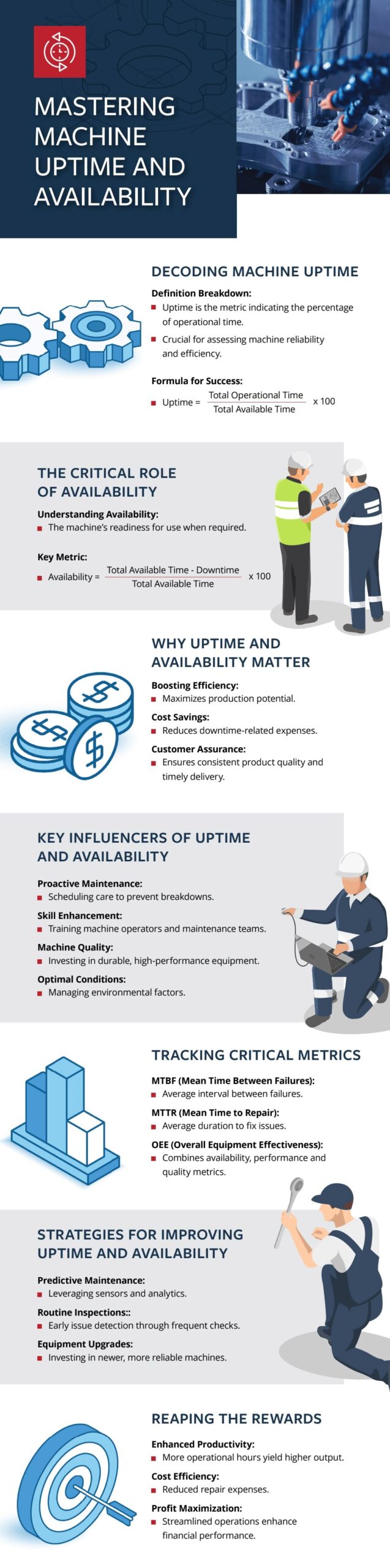
Uptime measures the actual duration during which a machine is operating correctly and contributing to output. It reflects the overall reliability of a piece of equipment. High uptime translates to fewer disruptions, greater efficiency, and more reliable production runs. Keeping uptime at optimal levels requires a mix of preventative maintenance, properly trained personnel, and equipment that is built to endure.
Availability refers to how often machinery is ready to perform when needed. Even if a machine is not actively in use, it still needs to be operationally ready to respond. This readiness prevents bottlenecks and ensures that production can proceed without delays caused by unavailable equipment. Availability offers a broader view of how dependable a system really is during day-to-day operations.
Benefits of Strong Uptime and Availability
A production environment with strong uptime and availability is typically more predictable and profitable. When equipment is maintained and functioning as it should, teams can avoid the ripple effects of breakdowns and unplanned downtime. These efficiencies contribute to smoother scheduling, higher output, and better alignment with delivery timelines.
Several core practices influence how well an operation performs in these areas. Preventative maintenance is one of the most valuable approaches, involving scheduled tasks such as inspections, lubrication, and part replacements. By addressing wear and tear before it leads to failure, businesses can keep machinery online and reduce costly surprises.
Role of Operator Expertise
Operator expertise is another important factor. When staff members are familiar with equipment functions and know how to identify early signs of malfunction, they can intervene quickly and prevent issues from escalating. Their role is just as important as the technology itself in maintaining system reliability.
Impact of Equipment Quality
The quality of equipment also matters. Machines built with longevity in mind, and those that come with built-in monitoring features, are often better equipped to deliver consistent results. Modern equipment can also offer digital readouts and alerts that help maintenance teams respond faster when something needs attention.
Influence of External Conditions
External conditions can affect performance too. Factors like humidity, dust, and temperature extremes can cause machines to degrade more quickly. Controlling these variables and maintaining a clean environment can help prolong the life of equipment and reduce unexpected breakdowns.
To monitor and evaluate machine health, performance metrics such as Mean Time Between Failures (MTBF) and Mean Time to Repair (MTTR) are commonly used. These measurements provide insight into how often equipment fails and how quickly it can be brought back online, both of which are key to understanding overall reliability.
Predictive Maintenance Advancements
In addition to traditional maintenance, predictive maintenance has emerged as a powerful tool for improving performance. Using sensors and data analytics, organizations can detect potential issues before they impact operations. This allows for smarter decision-making and better resource planning, reducing downtime and maximizing output.
Ultimately, prioritizing equipment uptime and availability leads to a stronger, more resilient operation. With the right mix of maintenance strategies, modern equipment, skilled staff, and environmental controls, companies can build systems that deliver consistent performance and long-term value. For more on this, check out the accompany resource from Advanced Technology Services, a provider of vibration analysis services.
Conclusion
Uptime and availability are more than just performance metrics—they are the foundation of reliable, cost-efficient, and scalable manufacturing. By combining preventative and predictive maintenance, investing in high-quality machinery, empowering skilled operators, and managing environmental conditions, companies can ensure that production lines run smoothly. This not only improves profitability but also strengthens the ability to meet customer expectations and stay competitive in today’s demanding industrial landscape.