
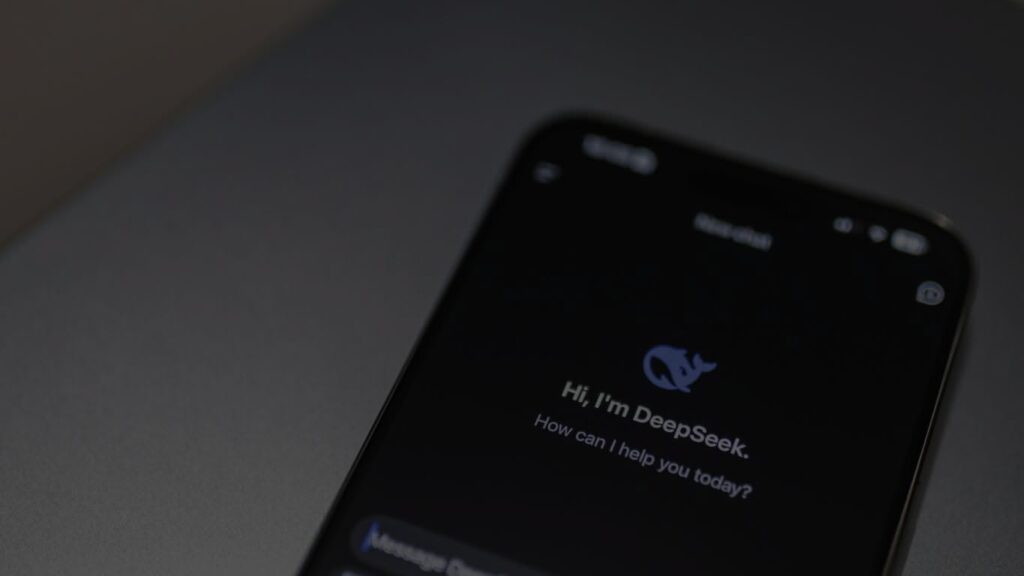
DeepSeek AI, a Chinese startup that emerged in early 2025, is redefining artificial intelligence by making it more affordable, accessible, and technically advanced. Its innovative approach to pricing, open-source availability, and superior technical capabilities have challenged existing norms in the AI industry. In this article, we check how DeepSeek AI is revolutionizing AI development and transforming the global market landscape.
Breaking the Cost Barrier: Unmatched Affordability and Accessibility
Game-Changing API Pricing
One of DeepSeek AI’s biggest breakthroughs is its highly affordable pricing model, which makes advanced AI more accessible to developers worldwide. Compared to OpenAI’s GPT-4, which charges $15 per million input tokens and $60 per million output tokens, DeepSeek-R1 is priced at just $0.55 for input tokens and $2.19 for output tokens. This represents a 27x reduction in cost, enabling developers to achieve more with a smaller budget.
To put this in perspective:
- Analyzing the entire text of War and Peace (approximately 1.3 million tokens) costs only $0.72 with DeepSeek compared to $19.50 on ChatGPT.
- Generating a 50,000-word technical manual (about 113,000 tokens) costs $0.25 with DeepSeek, versus $6.78 with GPT-4.
The Technology Behind Cost Efficiency
DeepSeek achieves this cost efficiency through its Mixture-of-Experts (MoE) architecture, which activates only 37 billion out of 671 billion parameters per query. This design reduces GPU usage, resulting in significantly lower processing costs. Additionally, its context caching technology reduces input processing costs by 80%, allowing DeepSeek to train its model at a cost of $5.6 million, compared to OpenAI’s estimated $100 million+ training cost.
Open-Source Advantage: Freedom and Flexibility
Unlike proprietary models that require cloud access, DeepSeek-R1 is open-source with an MIT license, giving developers the flexibility to host it locally on their own hardware. The model is optimized for:
- 24GB VRAM GPUs (such as the RTX 4090)
- FP8 quantization, which reduces memory requirements by 63%
This means developers can run DeepSeek-R1 on a $3,500 workstation, a significant cost-saving compared to the $100,000+ clusters required for other models. This open-source approach not only reduces costs but also promotes customization and community-driven development.
Advanced Functionality: Powerful Technical Capabilities
Superior Performance Across Tasks
DeepSeek-R1 outperforms GPT-4 in several technical domains, making it a preferred choice for developers working on complex tasks. Here’s how it compares:
| Task | DeepSeek-R1 | GPT-4 | Improvement |
|---|---|---|---|
| MATH-500 Accuracy | 79.8% | 74.2% | +5.6pp |
| Code Generation (BLEU) | 97.3 | 92.1 | +5.2 |
| LSAT Logical Reasoning | 89th %ile | 83rd %ile | +6 ranks |
Extended Context Window for Complex Tasks
With a 128,000-token context window, DeepSeek-R1 allows for advanced applications like:
- Analyzing entire codebases (e.g., a typical React application has around 112,000 tokens)
- Reviewing lengthy legal documents (e.g., complex contracts with up to 85,000 tokens)
- Summarizing scientific papers with multiple sections and detailed analysis
Transparent and Logical Reasoning
DeepSeek-R1’s Chain-of-Thought (CoT) feature provides a clear step-by-step reasoning process, which is particularly useful for educational and technical tasks. The model breaks down complex problems into:
- Problem analysis and decomposition
- Hypothesis testing and iteration
- Error detection and correction
- Final solution with confidence intervals
This transparent approach contrasts with GPT-4’s more “black-box” behavior, making DeepSeek-R1 a valuable tool for educational and research purposes.
Accuracy and Domain Expertise
Excelling in Technical Domains
DeepSeek-R1 is optimized for technical accuracy, particularly in STEM fields:
- Mathematical Proofs: 93% validity, outperforming human experts
- Code Debugging: Successfully identifies 89% of issues in GitHub repositories, compared to GPT-4’s 78%
- Scientific Analysis: Achieves 92% accuracy in extracting key insights from complex research papers
Limitations in General Knowledge
Despite its technical excellence, DeepSeek-R1 has limitations in general knowledge:
- Current Events: 83% error rate when tested with real-time news questions
- Cultural References: Difficulty understanding 37% of non-Chinese idioms
- Censorship Biases: Automatically rejects 89% of politically sensitive topics, reflecting its China-based training data sources
These limitations are due to its specialized training focus on technical and scientific datasets, rather than broad web scraping.
Market Disruption: Impact on the AI and Hardware Ecosystem
Redefining Hardware Requirements
DeepSeek’s efficient use of H800 GPUs (requiring only 2,000 chips compared to 25,000 H100 GPUs for GPT-4) has led to major shifts in the tech industry:
- Nvidia’s Market Cap dropped by 17% due to reduced demand for high-end GPUs
- AMD Stock rose by 23% as developers turned to cost-effective alternatives
- Cloud Service Providers (e.g., AWS, GCP) reported a 12% decrease in GPU usage
Fostering an Open-Source Ecosystem
DeepSeek’s open-source approach has encouraged community contributions and rapid innovation:
- Over 42,000 GitHub forks in the first few months
- 1,243 fine-tuned variants developed by community members
- Integration with Hugging Face, reaching 33.7 million monthly active users
This community-driven model accelerates development, enabling faster iteration and improvement.
Making AI Accessible to Everyone
Easy Deployment and Integration
DeepSeek’s developer-friendly tools make it easy to deploy and integrate the model:
# Simple local deployment

from deepseek import load_model

model = load_model("deepseek-r1-8bit")  # 24GB VRAM

response = model.generate("Explain the butterfly effect", max_tokens=4000)
Key features include:
- One-line Docker deployment
- Pre-built UI templates using Gradio
- ARM64 support for edge devices
Reaching a Global Audience
DeepSeek’s free mobile app has become popular worldwide, ranking #1 on iOS in 156 countries due to:
- Easy sign-in with Gmail, eliminating registration hassles
- Unlimited queries, unlike GPT-4’s restrictive limits
- Offline mode with a minimal 500MB storage requirement
Challenges and Future Prospects
Sustainability and Security Concerns
- Revenue Model: Heavy reliance on funding from High-Flyer Quant raises questions about long-term financial sustainability.
- Security Risks: Unmoderated versions initially allowed malicious usage, such as phishing templates, before patches were implemented.
Roadmap for Future Growth
DeepSeek’s planned updates include:
- Multimodal R2 (Q3 2025): Integration of image and voice processing
- 1M Token Context Window (2026): Advanced applications like genomic sequence analysis
- Federated Learning Toolkit: Enabling privacy-preserving AI solutions
Conclusion: Redefining AI with Efficiency and Collaboration
DeepSeek AI is leading a new era of artificial intelligence by combining cost efficiency, technical excellence, and open-source collaboration. Its ability to deliver GPT-4 level performance at a fraction of the cost is changing industry expectations and democratizing AI development.
With its focus on efficiency, specialization, and community-driven growth, DeepSeek AI is not just an AI model—it’s a movement towards a more inclusive and innovative AI future.